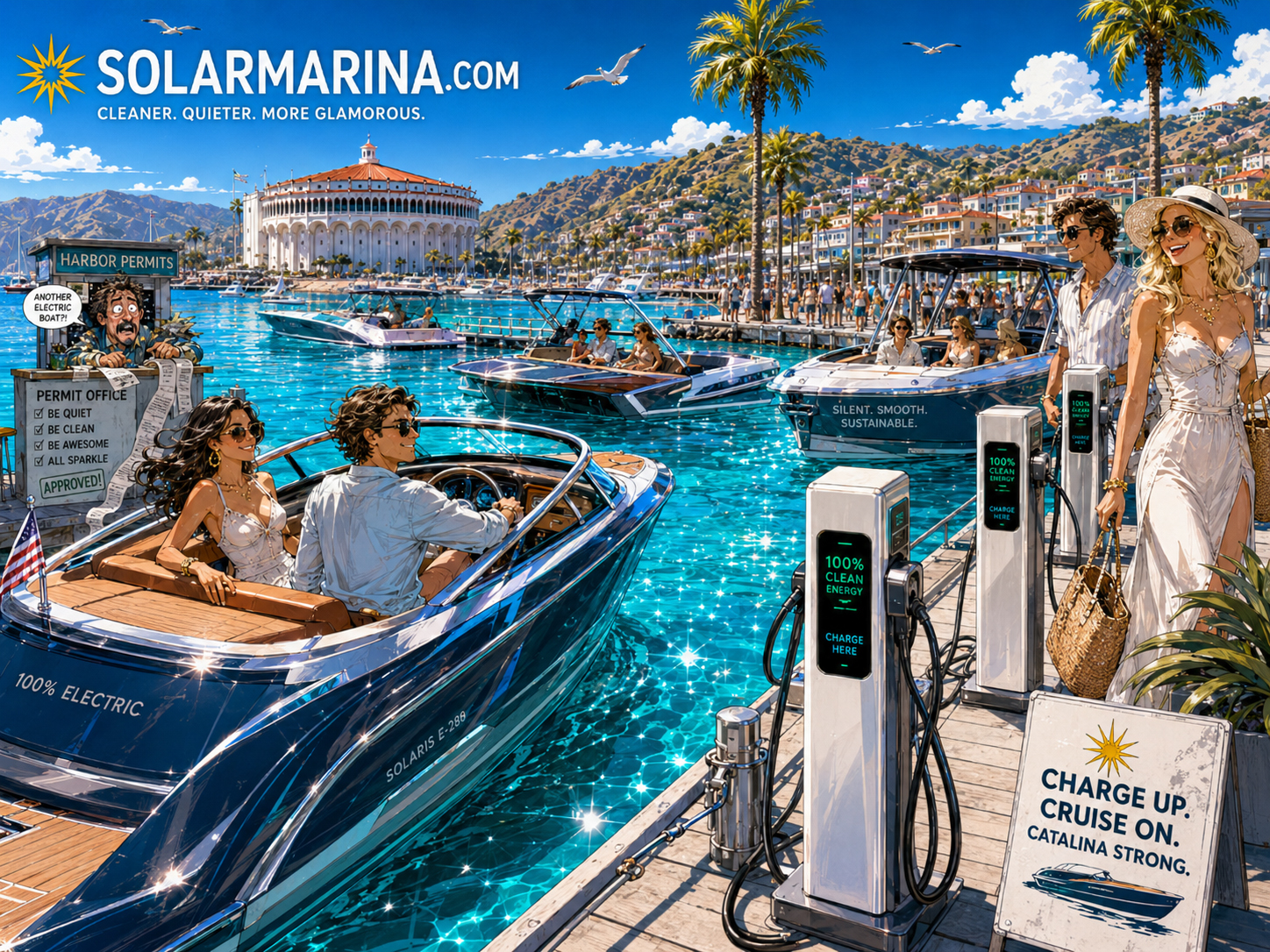
Electric Boat Charging
Quiet boats need clean, marine-rated charging infrastructure with load management, metering, safety controls, and user-friendly operation.
Boat Charging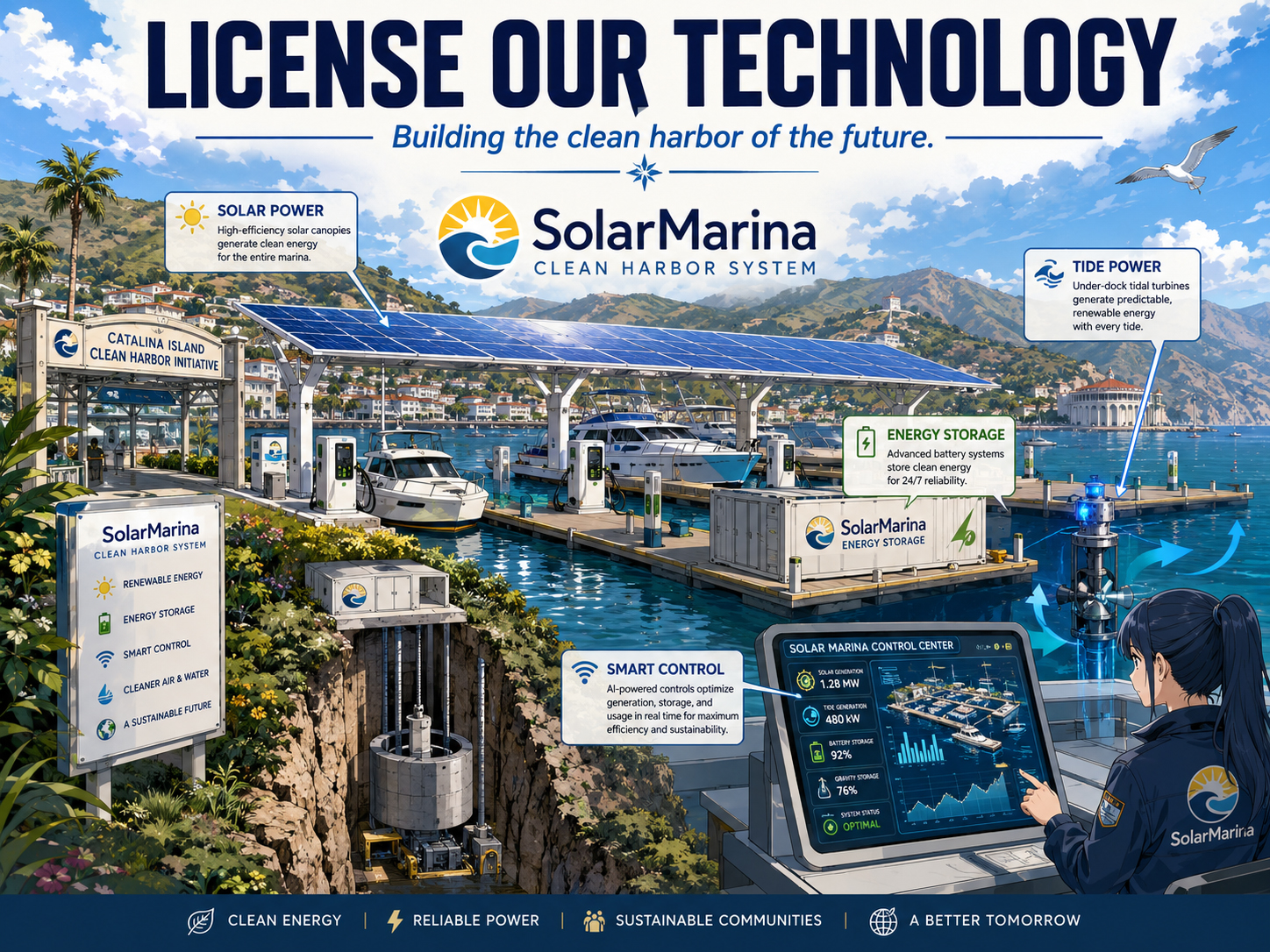
SolarMarina is comedy on top, engineering underneath: electric boat charging, EV Jet Ski harbor valets, no-generator shore power, floating solar, batteries, gravity storage, tide-powered docks, smart controls, and enough safety discipline to make Quarry Ojisan stop sighing for three seconds.
The clean marina future requires coordinated technology: clean generation, energy storage, safe dockside power, smart charging, electric transition services, and real operating procedures. The manga is ridiculous. The system must not be.
Quiet boats need clean, marine-rated charging infrastructure with load management, metering, safety controls, and user-friendly operation.
Boat Charging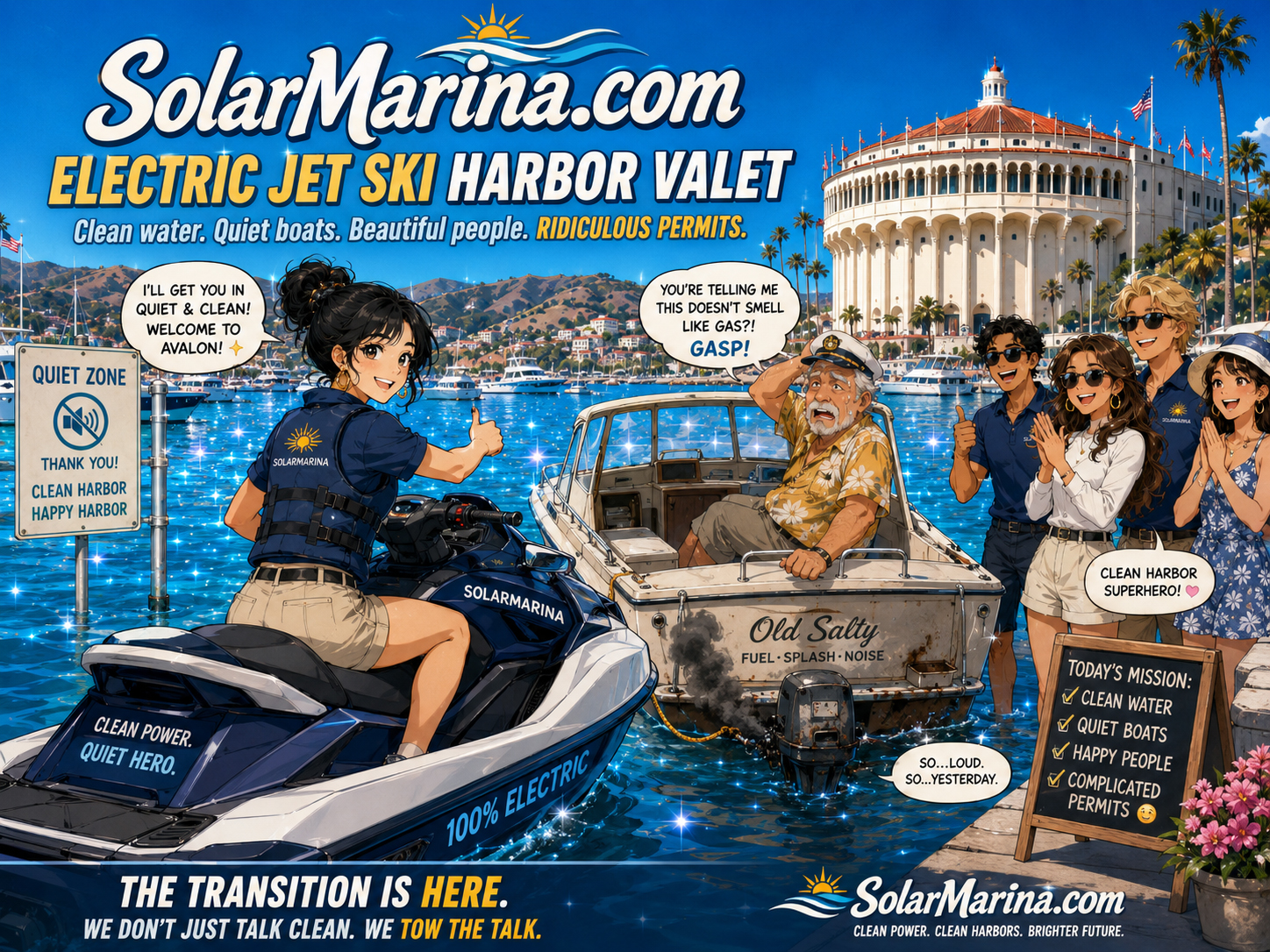
Electric watercraft help older boats enter the clean harbor zone quietly while turning transition into a concierge service.
Jet Ski Valet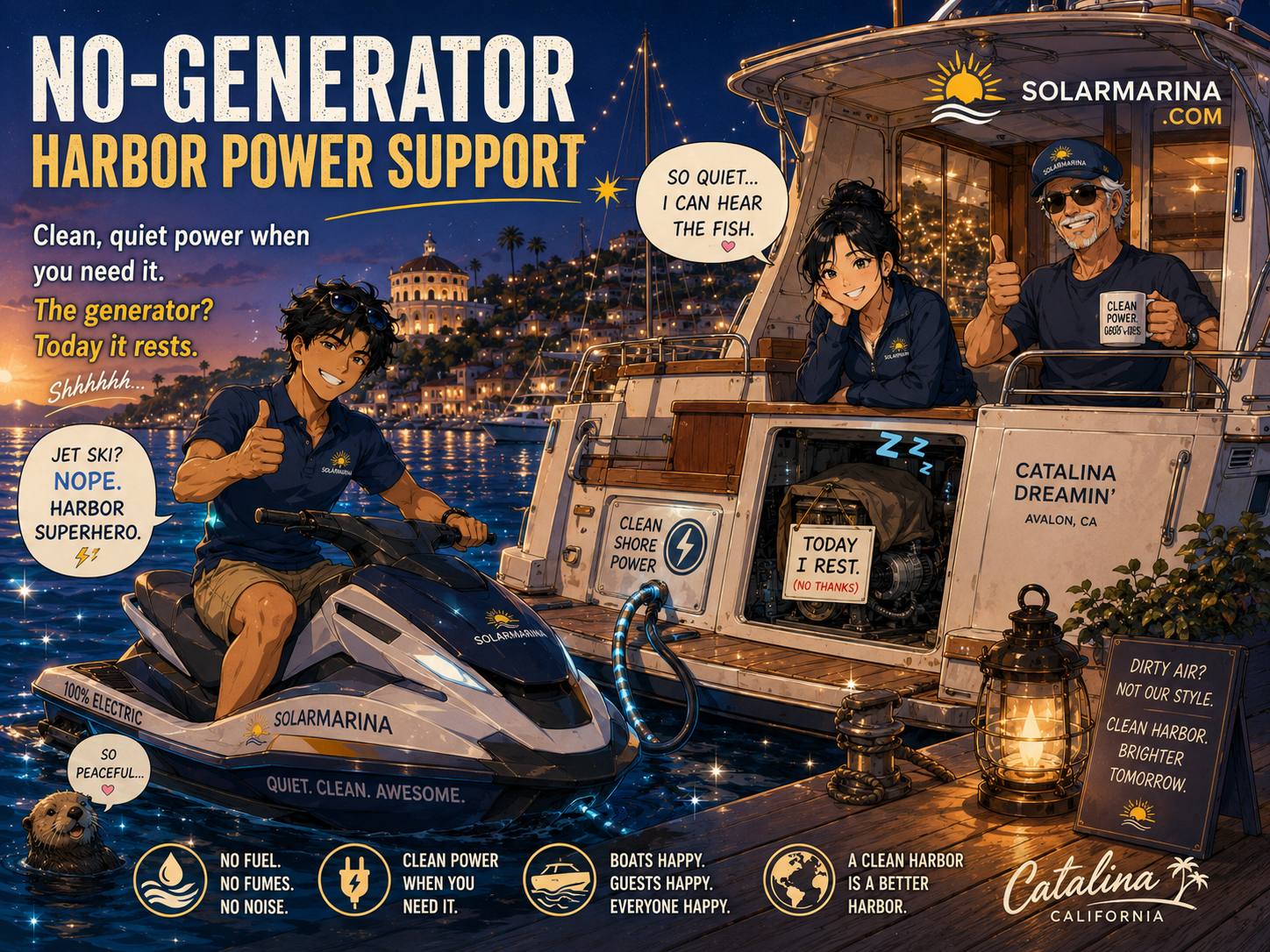
Properly engineered dockside or mobile support helps keep onboard generators off so sunset sounds like water again.
No Generator Power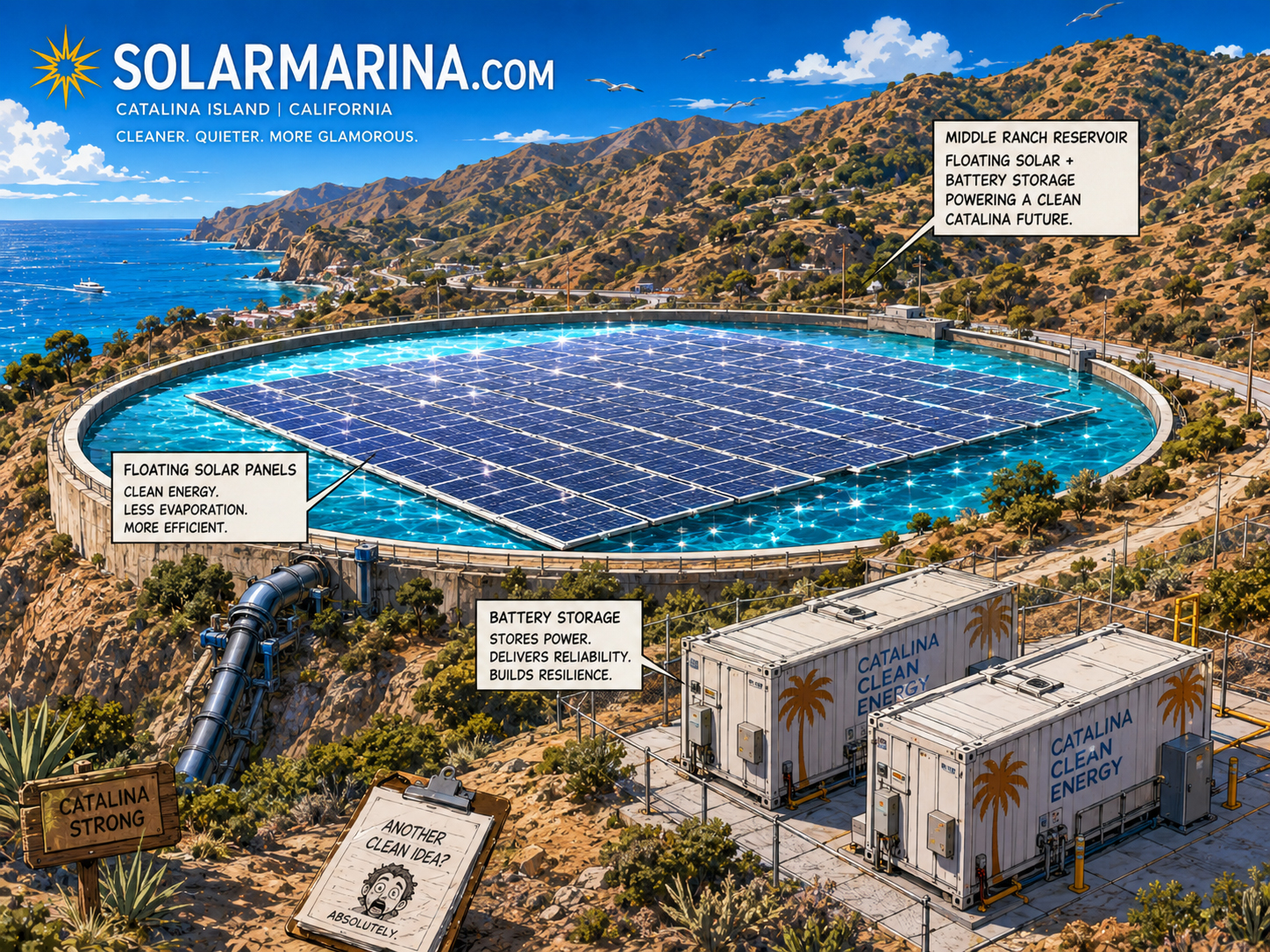
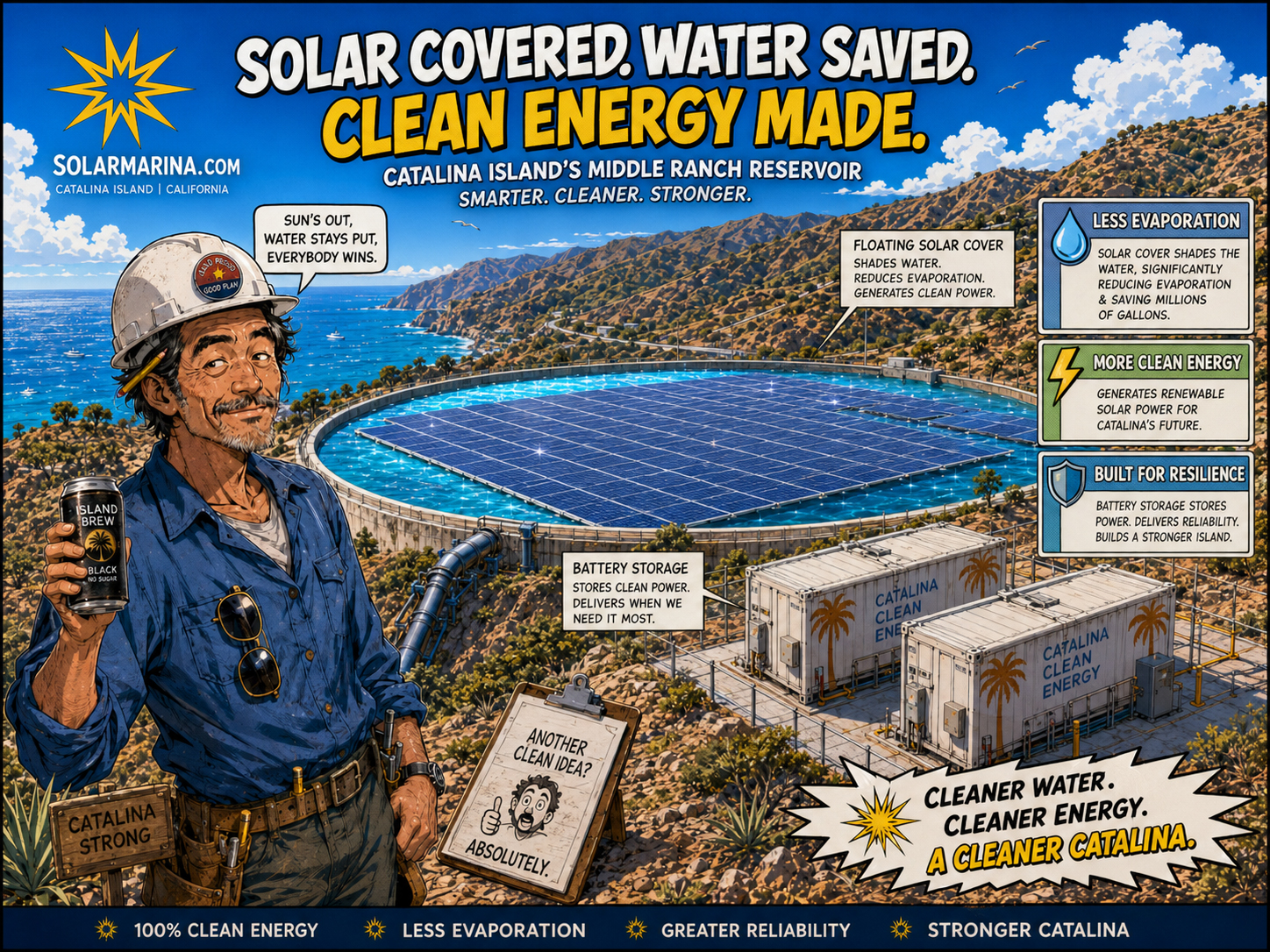
The reservoir wears solar sunglasses: clean generation on water, with potential shading and evaporation benefits where practical.
Floating Solar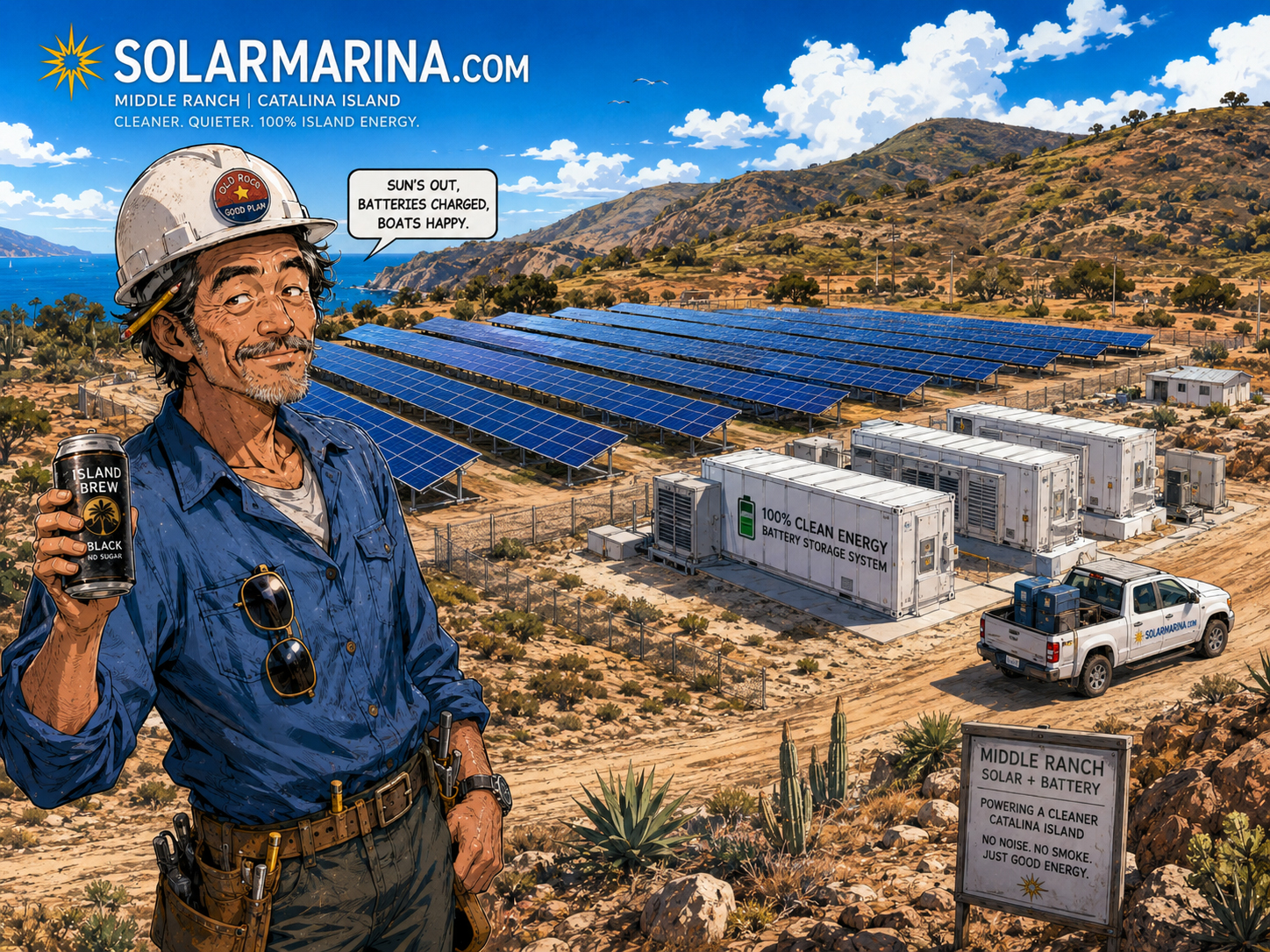
Stored sunshine helps shift daytime generation into evening marina use, flattening drama before Madame Kilowatt enters.
Solar + Battery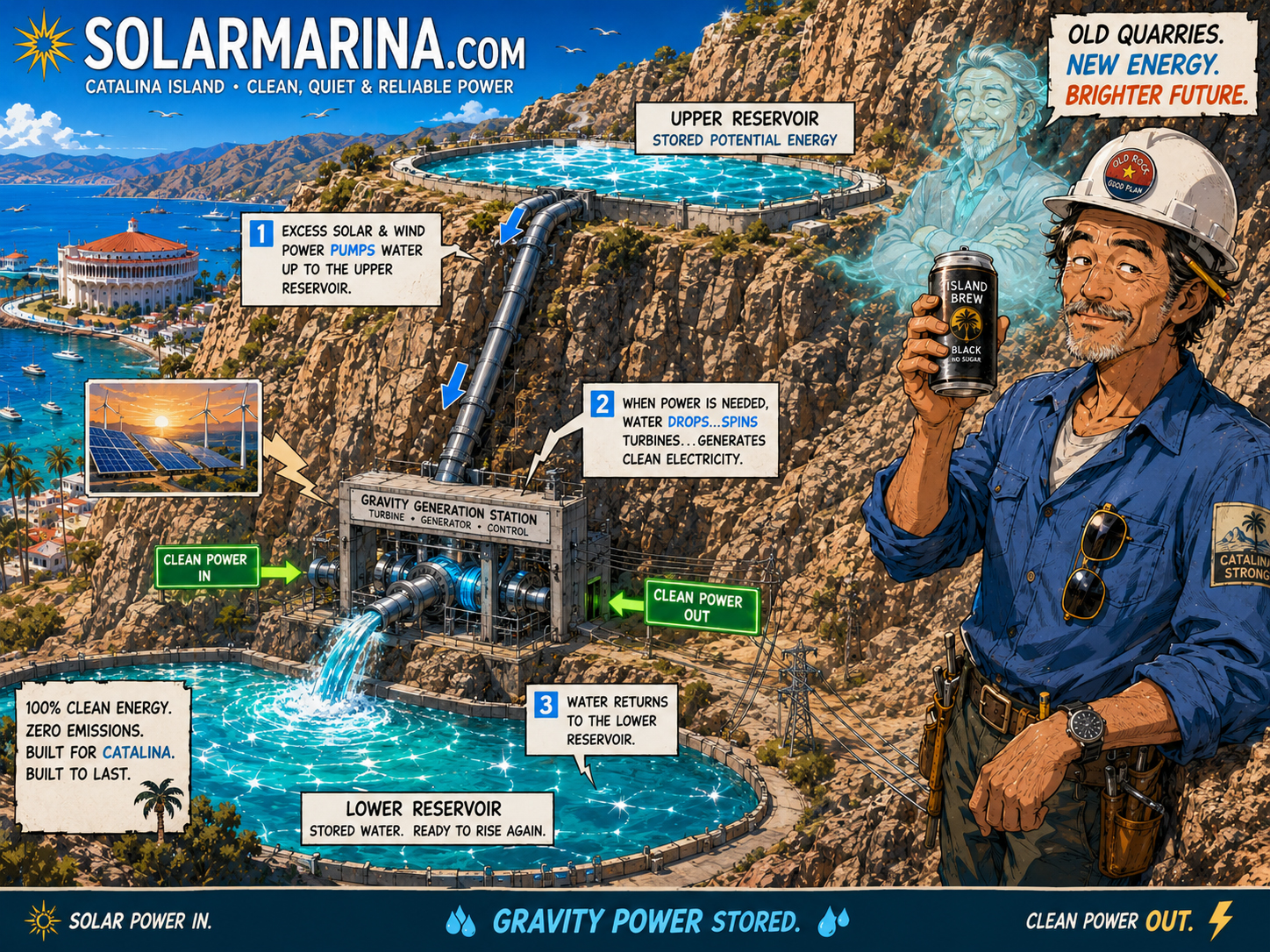
Water uphill when clean power is abundant. Power downhill when the harbor wants quiet evening energy.
Gravity Storage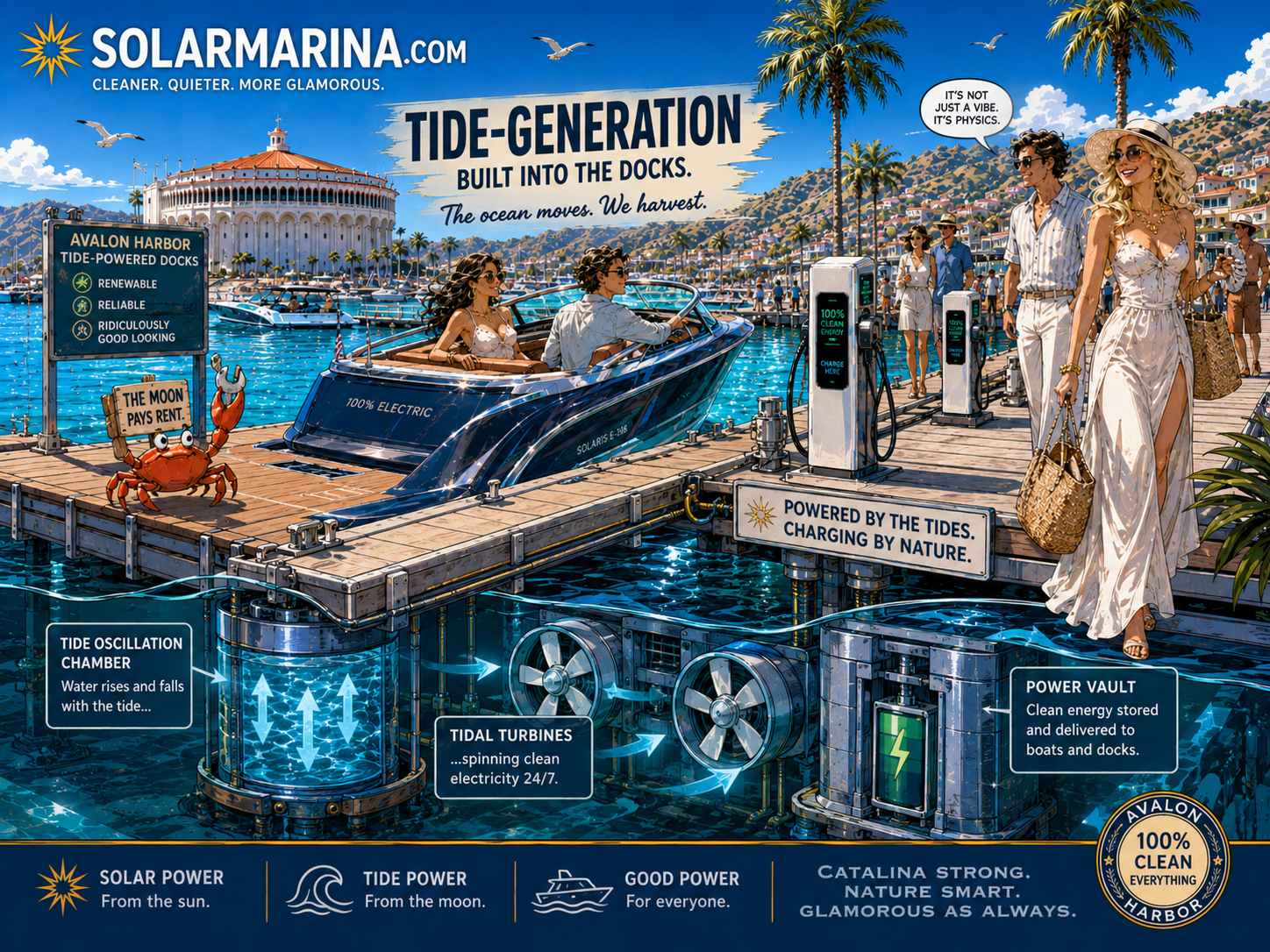
The moon pays rent through the dock, where site conditions and careful marine engineering make motion capture practical.
Tide Docks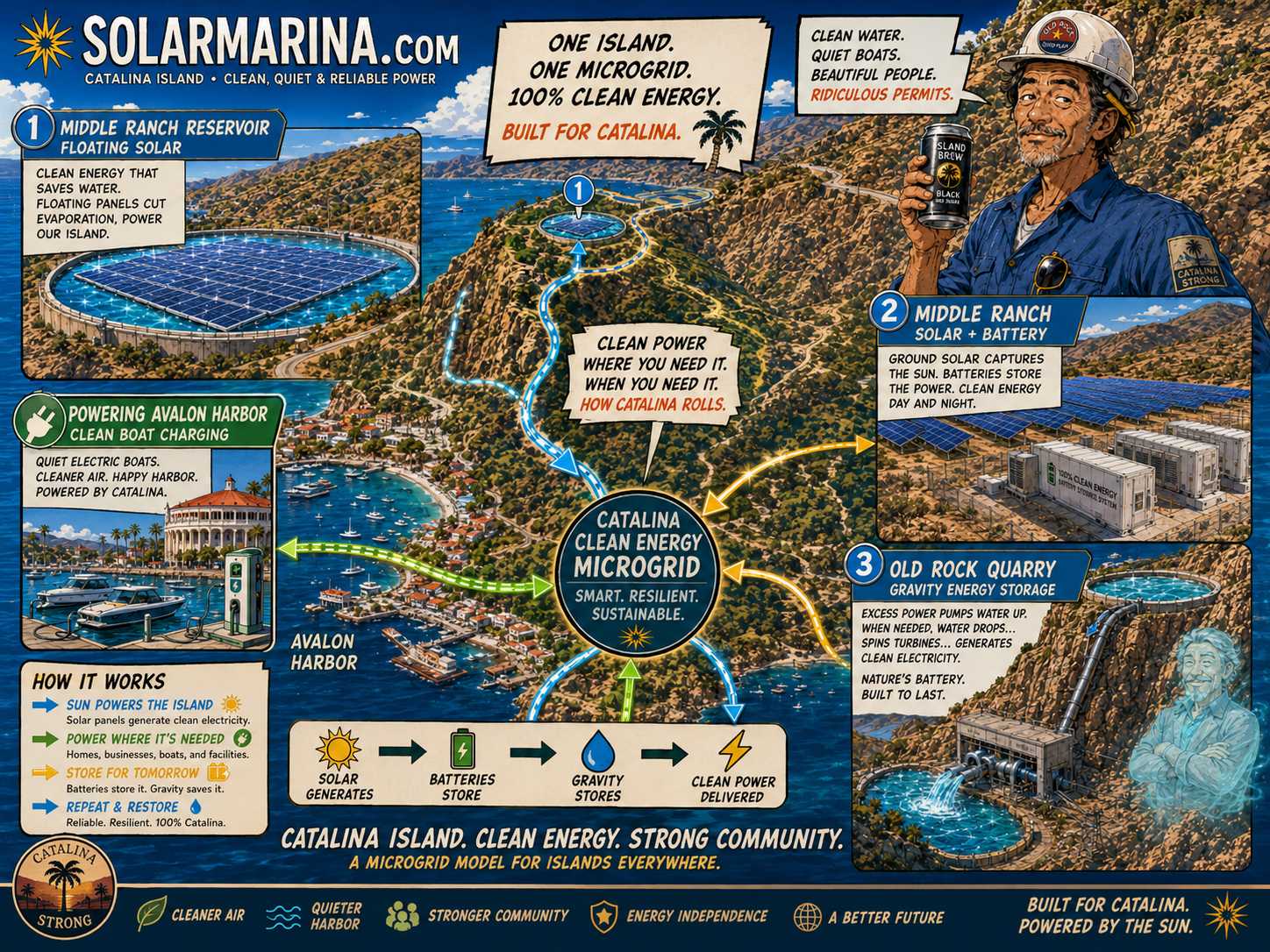
Controls coordinate solar, storage, charging, shore power, tides, pumps, safety systems, and load priorities.
Clean Microgrid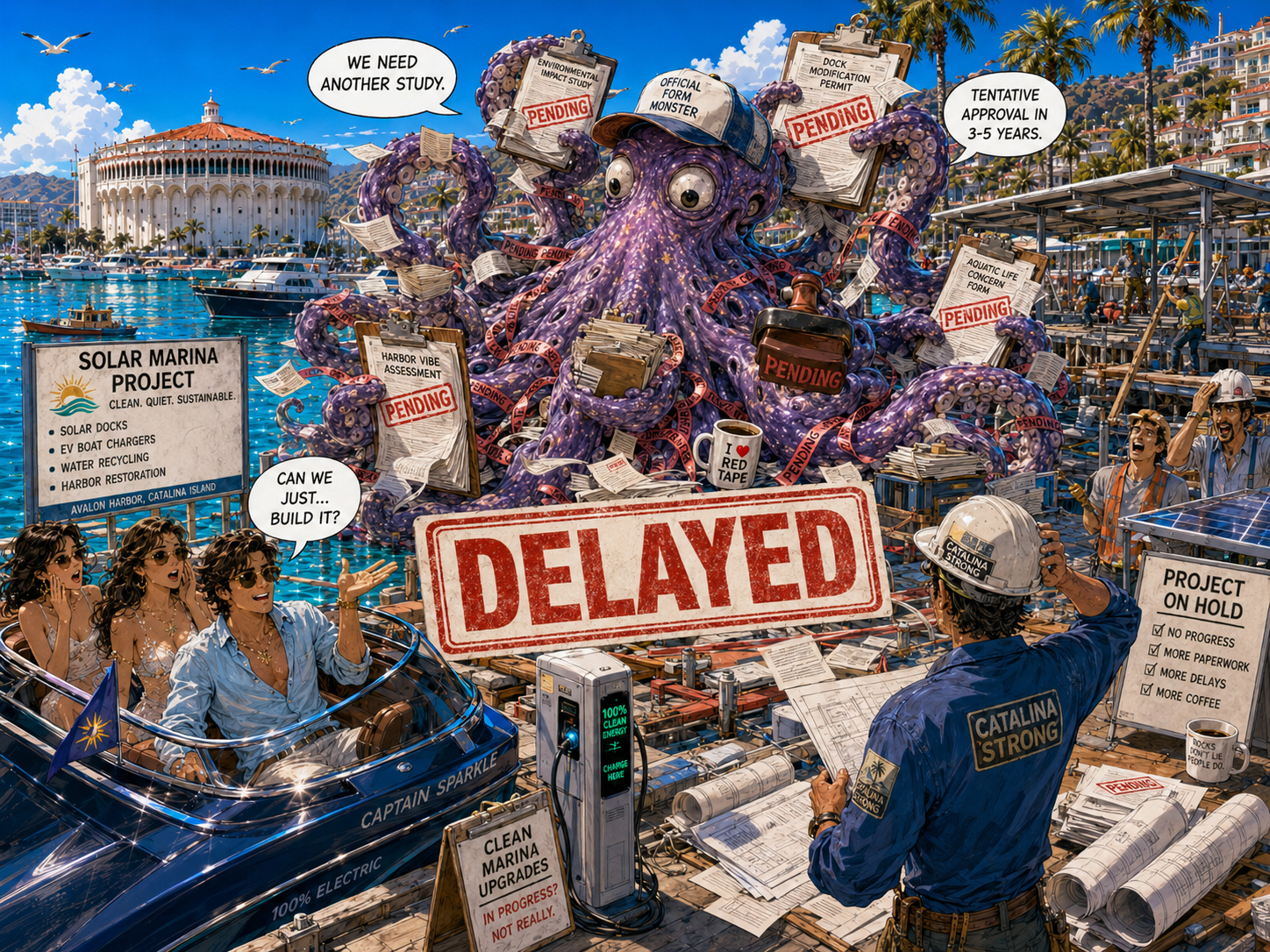
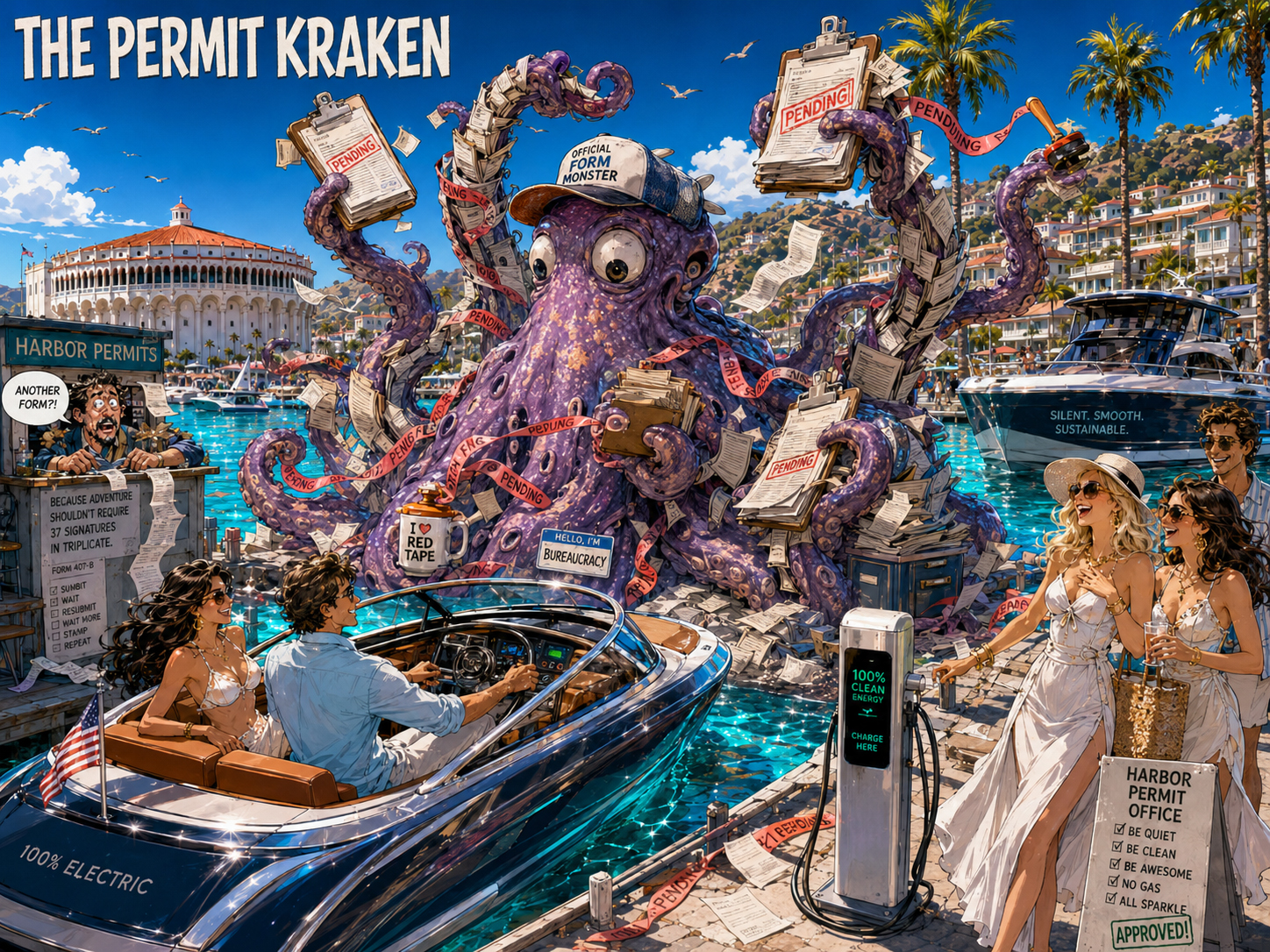
Every clean technology must survive marine safety, electrical code, environmental review, utility coordination, and the Permit Kraken.
Permit KrakenSolarMarina begins with local clean generation. The island has sun, limited land, reservoir surfaces, docks, and elevation. The technology plan should treat those as assets instead of pretending the old fuel system is the only serious answer.
Floating solar, ground-mounted solar, and tide-powered dock concepts give the clean harbor something visible and memorable behind the plug.
SolarMarina technology connects clean generation, storage, controls, marina operations, electric boats, and transition services into one story the public can understand.
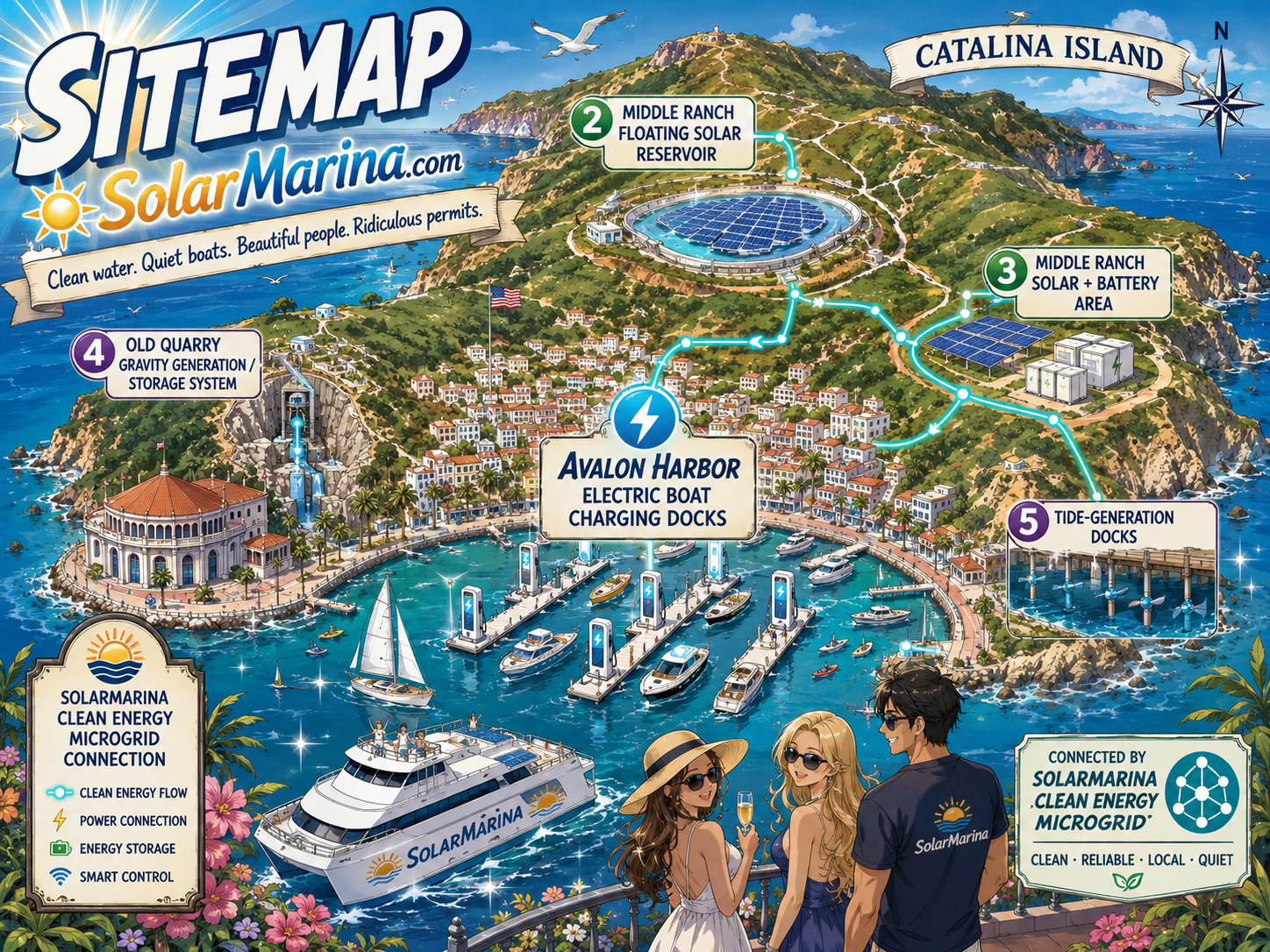 How It Works
The system overview: generation, storage, charging, controls, and comedy.
How It Works
The system overview: generation, storage, charging, controls, and comedy.
 Quarry Ojisan Explains
Hardhat. Canned coffee. No patience for vague technology claims.
Quarry Ojisan Explains
Hardhat. Canned coffee. No patience for vague technology claims.
 Madame Kilowatt
She appears whenever smart load management fails.
Madame Kilowatt
She appears whenever smart load management fails.
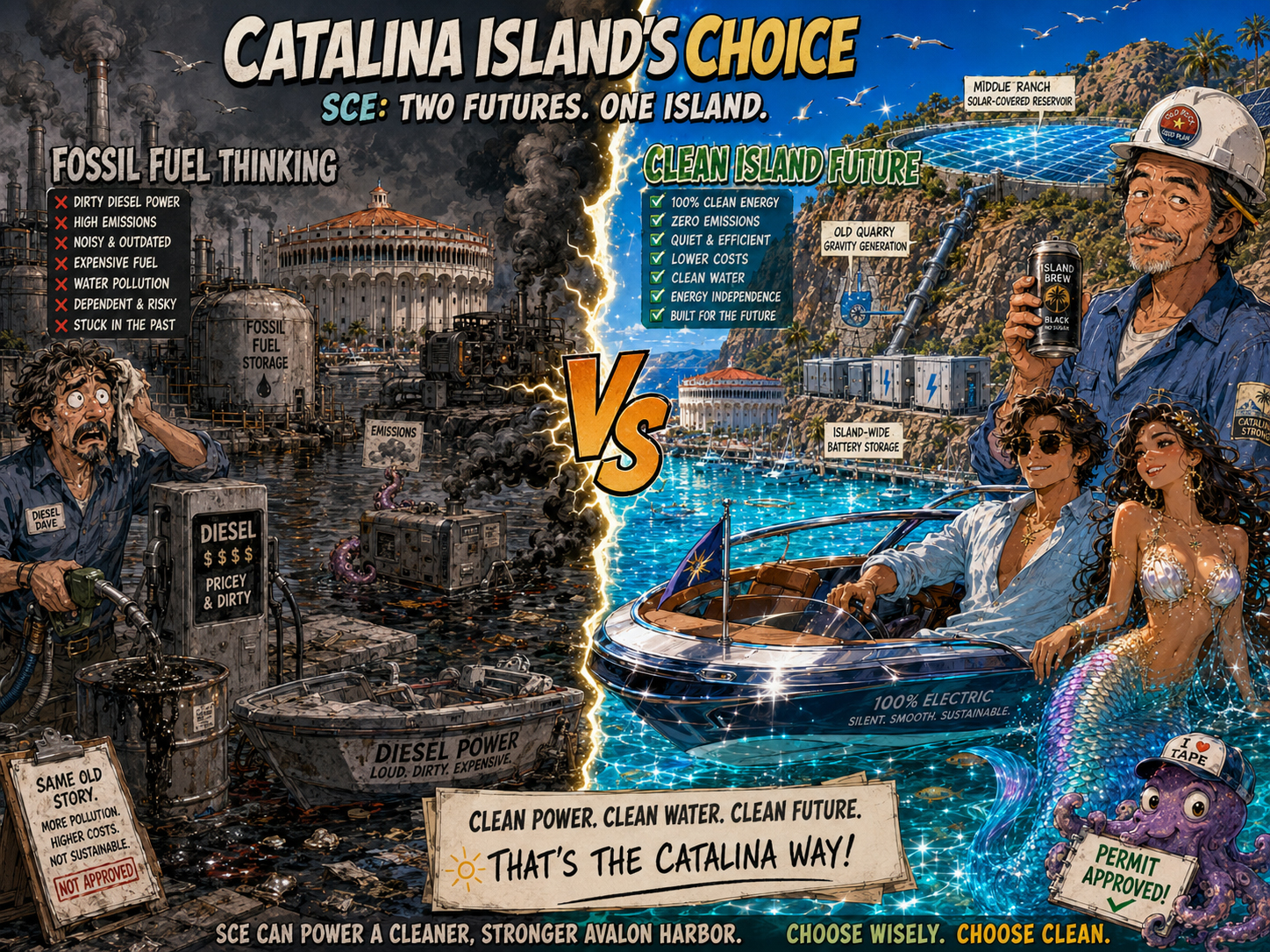 Fossil-Fuel Thinking
The old assumption: familiar fuel must be serious and clean systems must be risky.
Fossil-Fuel Thinking
The old assumption: familiar fuel must be serious and clean systems must be risky.
Storage is where the clean marina becomes practical. Batteries can respond quickly and shift daily energy. Gravity storage concepts can add longer-duration imagination where site conditions work. Together, storage helps turn solar production into evening harbor usefulness.
In the SolarMarina universe, storage is the thing that makes Madame Kilowatt lose her dramatic entrance.
The page can be glamorous. The engineering must be boringly competent.
Every component depends on actual conditions: loads, weather, salt air, water levels, dock geometry, traffic, terrain, utility capacity, and maintenance access.
Boat charging and shore power require proper grounding, isolation, GFCI/ELCI protection, listed equipment, disconnects, interlocks, and emergency procedures.
Charging, shore power, batteries, lighting, pumps, controls, and visitor demand must be coordinated so the marina does not become peak-demand theater.
Clean systems still require serious review: harbor operations, coastal impacts, water quality, habitat, fire safety, electrical code, and utility coordination.
The system must be inspectable, maintainable, understandable, and operated by trained people. The future fails if nobody can service it.
Real-world note: This page is concept storytelling, not engineering instruction. Actual SolarMarina-type systems require qualified marine, electrical, civil, structural, environmental, utility, fire, and permitting professionals.
Most visitors do not want to think about load curves. They want a beautiful harbor, a quiet dinner, clean water, safe docks, and electric boats that feel like the future without making the vacation feel like a seminar.
Good technology makes the experience simpler. Boats plug in. Generators stay off. The dock is quiet. The water sparkles. The Permit Kraken remains backstage where it belongs.
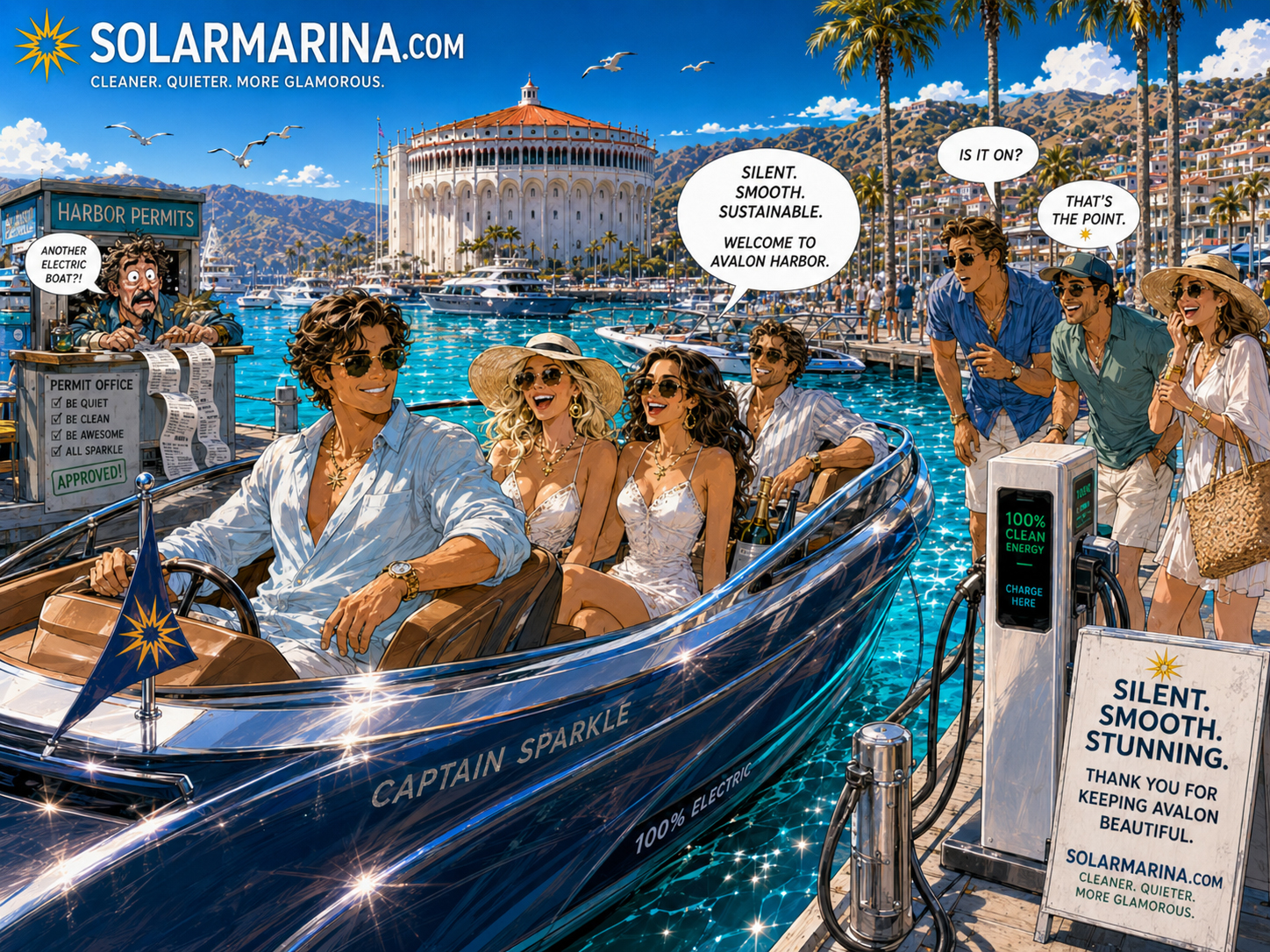
Every technology page eventually meets the same monster: permits, studies, interconnection, inspections, reviews, drawings, revisions, and one mysterious request for something already submitted but now in a different format.
SolarMarina respects safety and review. It mocks the fog. The answer is clarity, good engineering, visual communication, and jokes sharp enough to keep people awake during the meeting.
Each page takes one part of the clean marina technology stack and turns it into a story people can remember.