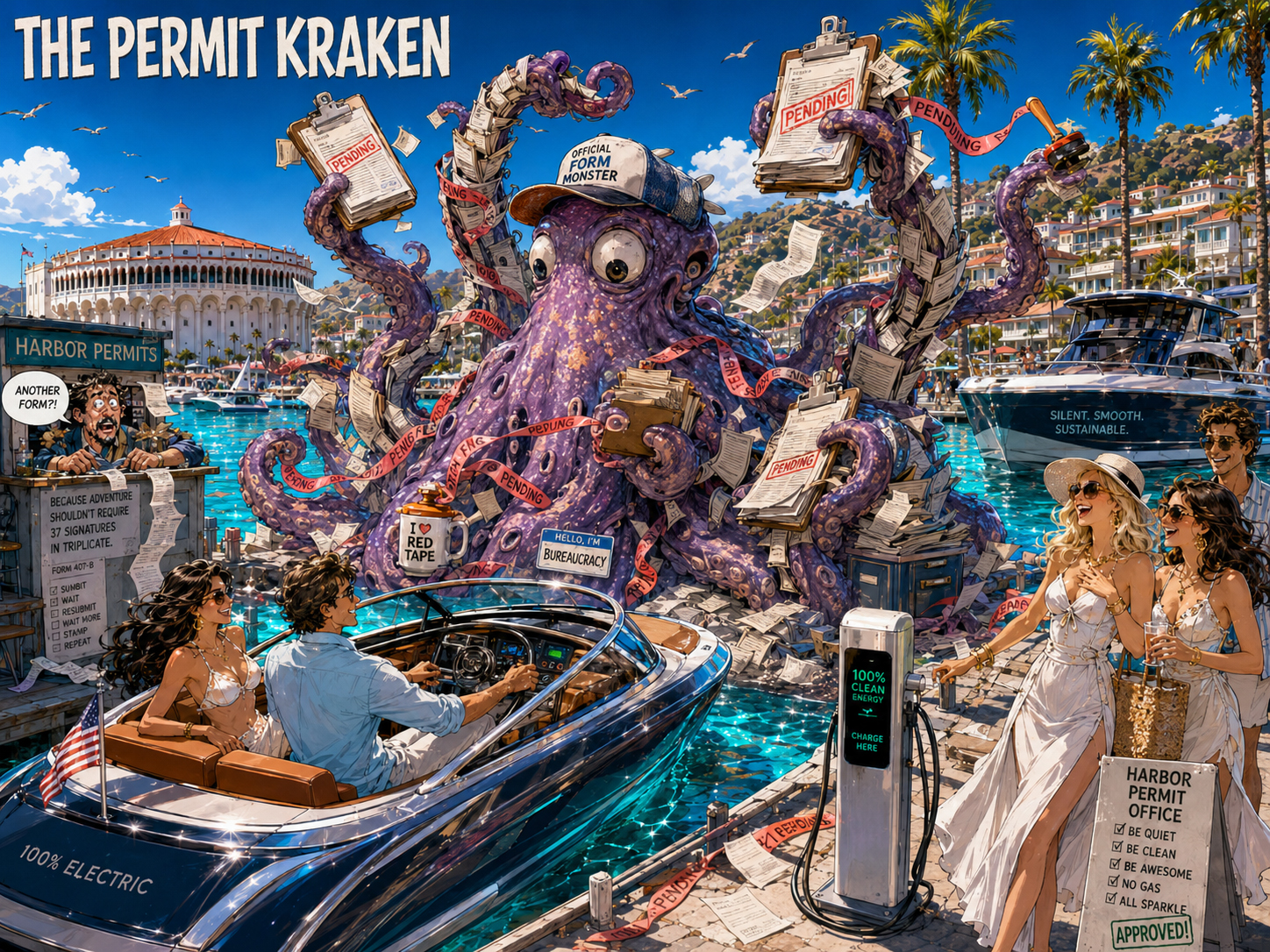
Reliable Charging
Electric boats need clean, predictable dockside charging so the captain does not arrive whispering prayers to the battery gauge.
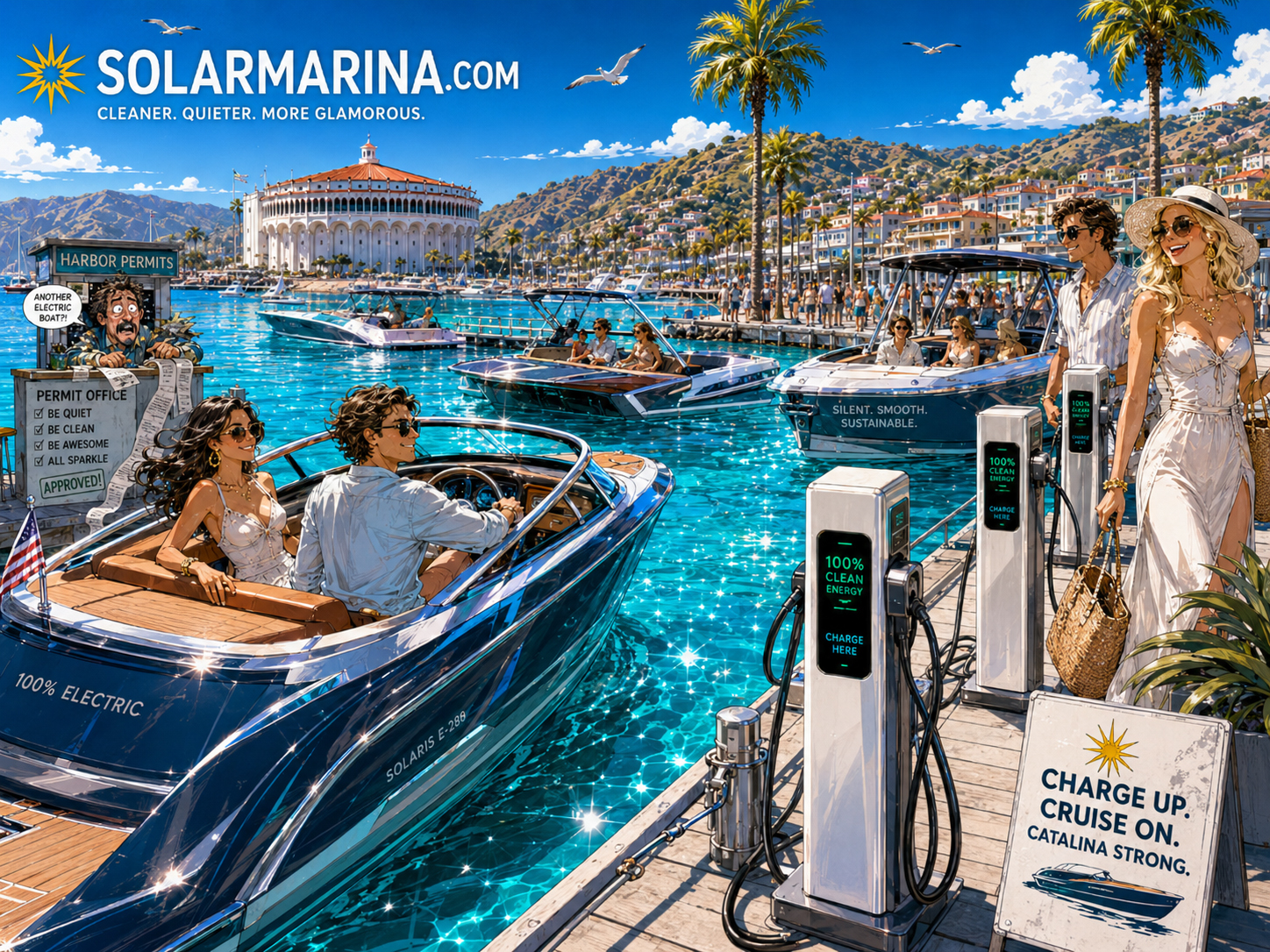
Avalon Harbor should not have to choose between beauty and power. Electric boat charging turns the dock into a clean-energy runway where boats arrive silently, plug in politely, and stop auditioning for the role of “floating generator.”
A clean electric harbor needs visible, reliable boat charging. Without charging, the future becomes a speech. With charging, the future becomes a place to dock, dine, flirt, shop, sleep, and leave without making the harbor cough.
In the SolarMarina manga, Captain Sparkle treats the charging dock like a red carpet. Diesel Dan treats it like witchcraft. Madame Kilowatt Marina treats it like a personal betrayal.
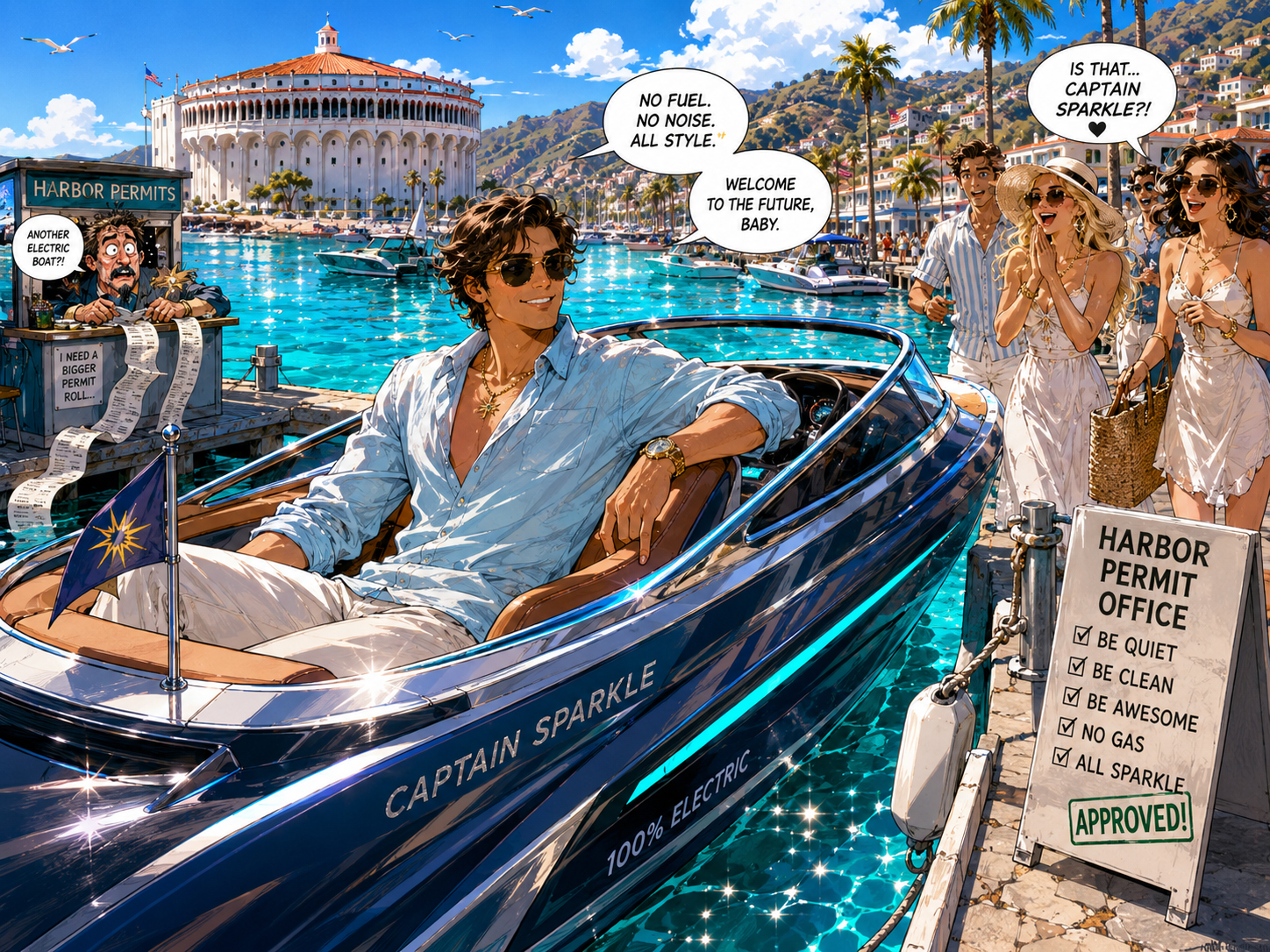
Boat charging is not decoration. It is the infrastructure that lets Avalon reduce engine idling, reduce generator use, support electric arrivals, and make quiet boating feel ordinary.
Electric boats need clean, predictable dockside charging so the captain does not arrive whispering prayers to the battery gauge.
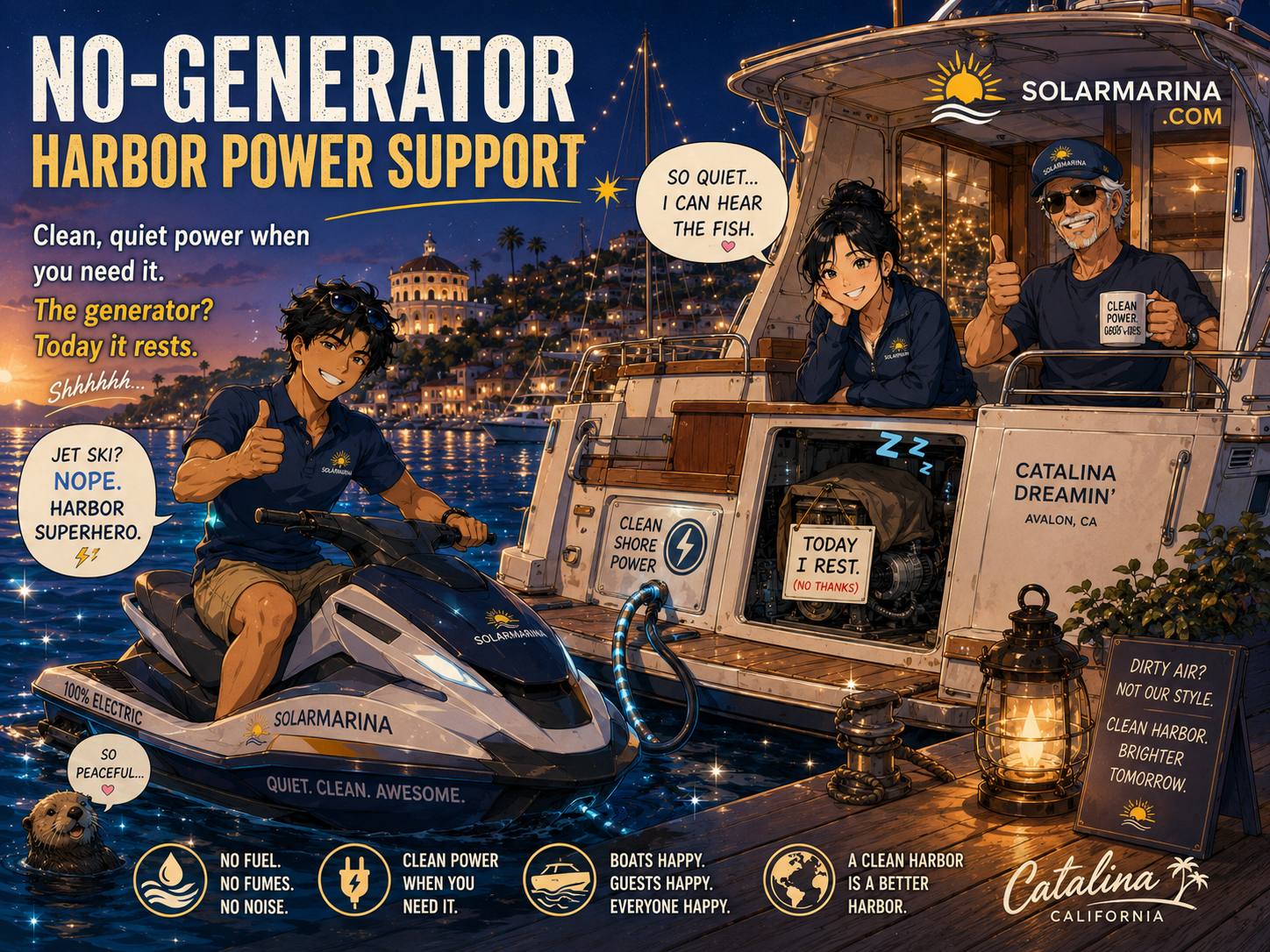
Shore power is romance insurance. Nobody wants dinner with a generator coughing through the bread course.

Once clean charging is normal, noisy behavior starts looking rude. The mermaid calls this “social progress.”
In the old world, boats lined up for fuel. In the SolarMarina world, boats glide in for electrons, coffee, dinner, and a smug little battery icon.
Electric boat charging should be connected to the bigger Catalina clean-energy story: floating solar, ground-mounted solar, batteries, tide-powered docks, and gravity storage. The point is not to move emissions from the boat to the island. The point is to make the whole system cleaner.
SolarMarina makes that technical idea funny by turning the island into a cast of characters: the lake wears solar sunglasses, the moon pays rent through tide docks, and the old quarry becomes a battery with better retirement plans than most people.
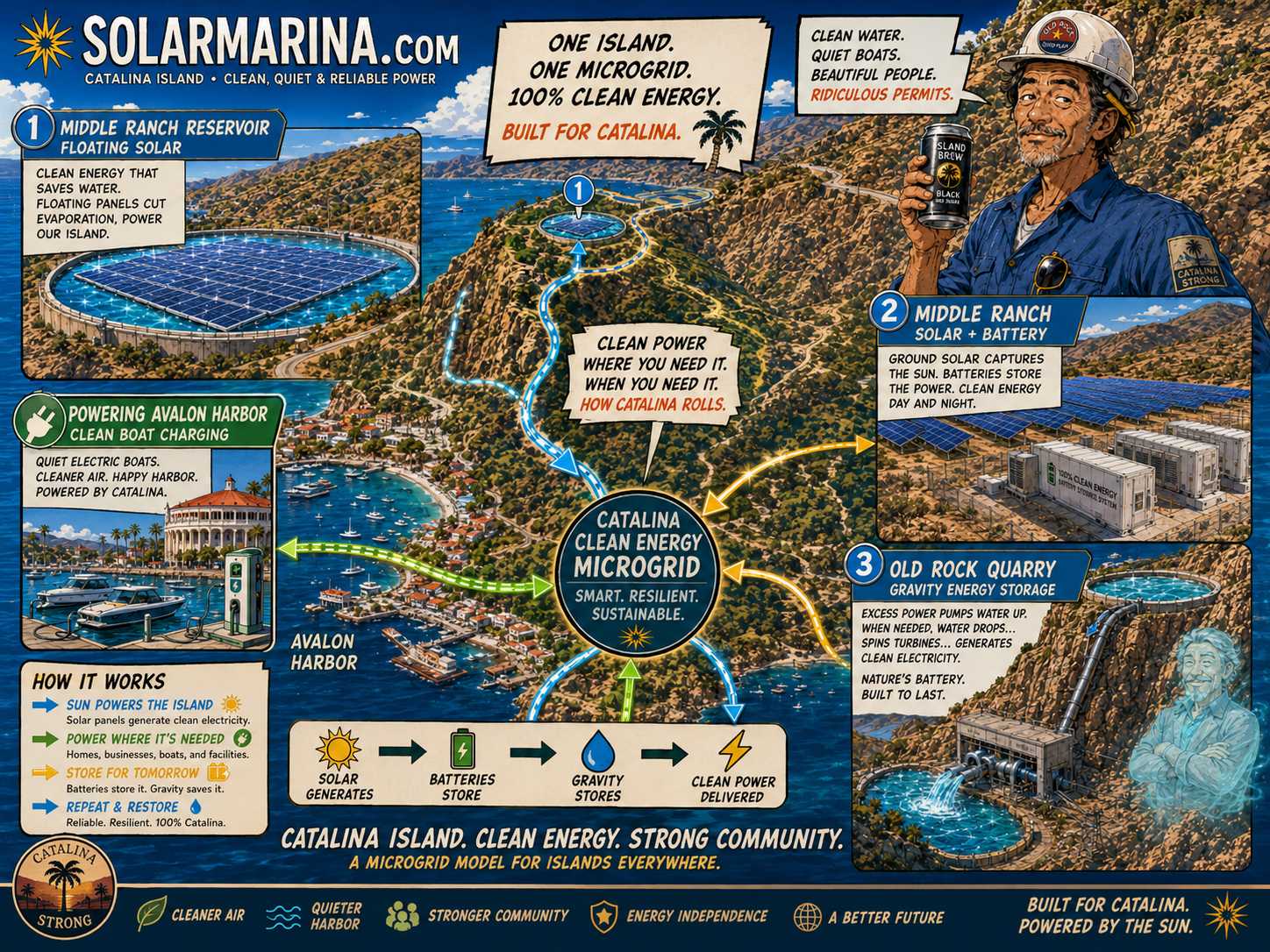
The manga can be ridiculous. The charging system has to be boringly safe, reliable, marine-rated, and maintained.
Salt air, motion, moisture, corrosion, and public use demand hardware designed for the marine environment.
Charging boats should not create a new peak-demand monster wearing a marina hat. Smart controls matter.
Grounding, isolation, GFCI/ELCI protection, interlocks, connectors, signage, and load limits are not optional.
Charging works best when paired with local clean generation and storage instead of old fossil-fuel thinking.
Beautiful people do not want a 47-step charging ritual. Plug in, confirm, charge, sparkle, leave.
Real-world note: electric boat charging and shore-power systems must be designed by qualified marine electrical professionals and comply with applicable marina, electrical, fire, utility, and harbor requirements.
SolarMarina’s transition idea uses electric Jet Skis as clean harbor support. They help older fossil-fuel boats move quietly, then provide clean temporary power support through the boat’s shore-power system so generators can remain off where practical and properly engineered.
Diesel Dan calls it humiliating. Captain Sparkle calls it “marina manners.”
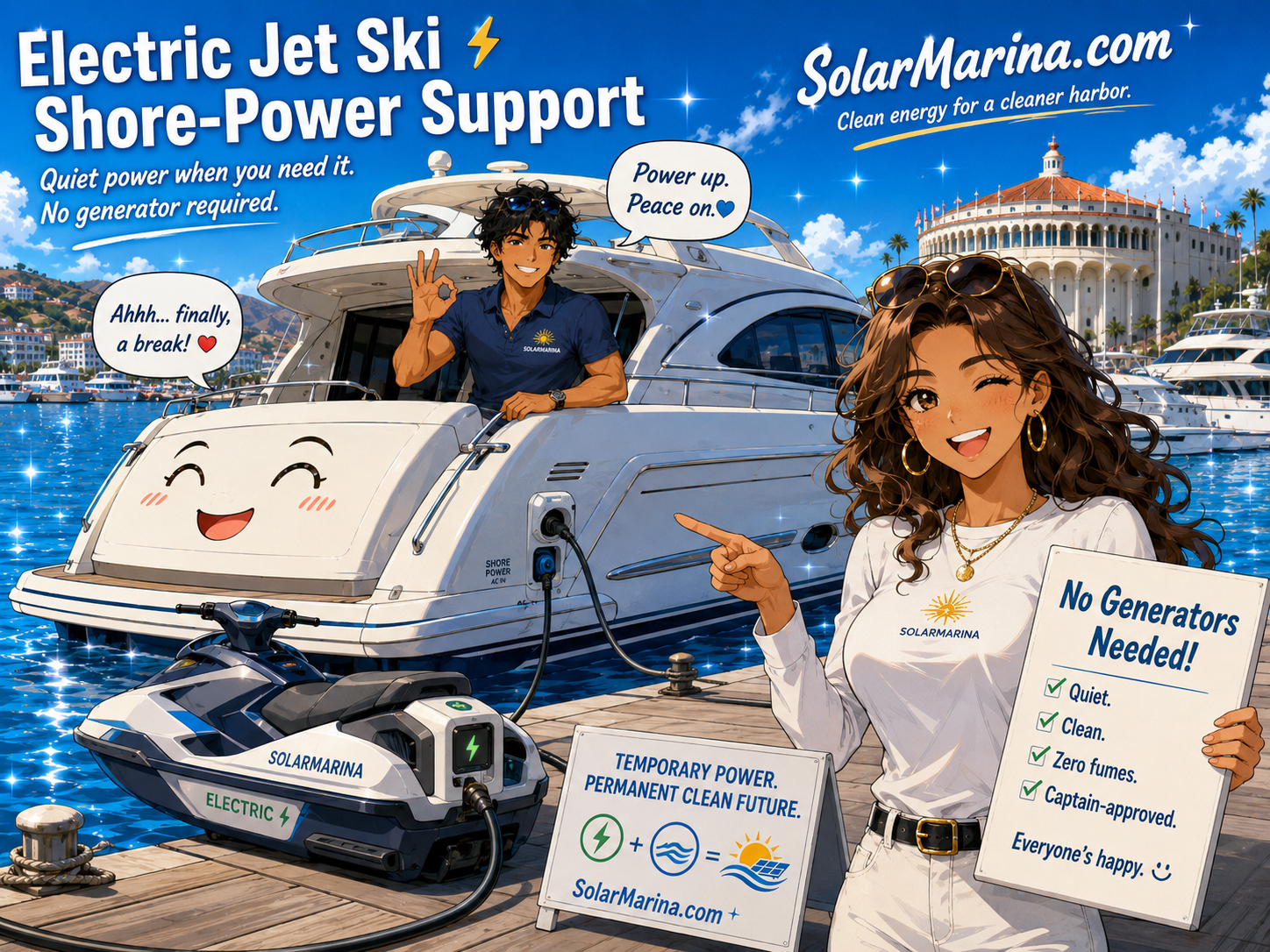
The sound of the harbor should be water, gulls, music, people, and glasses clinking — not generators performing mechanical throat-clearing. Electric boat charging gives Avalon a quieter soundtrack.
This is why the SolarMarina story is glamorous. The clean harbor future is not a downgrade. It is the version of Avalon everyone already wishes existed.
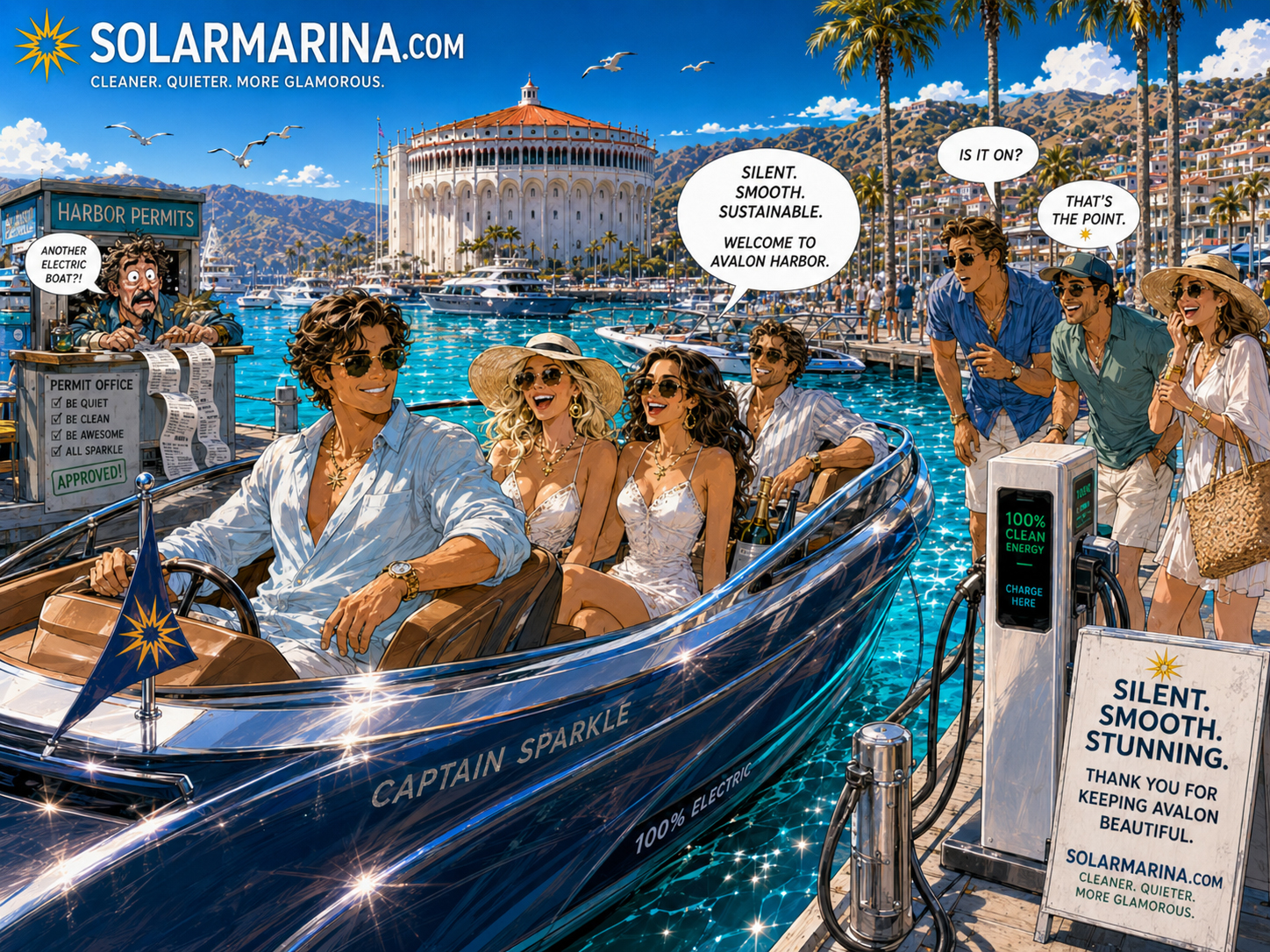
Electric boat charging is the plug. The rest of SolarMarina is the island-scale comedy around it.