Elevation Storage
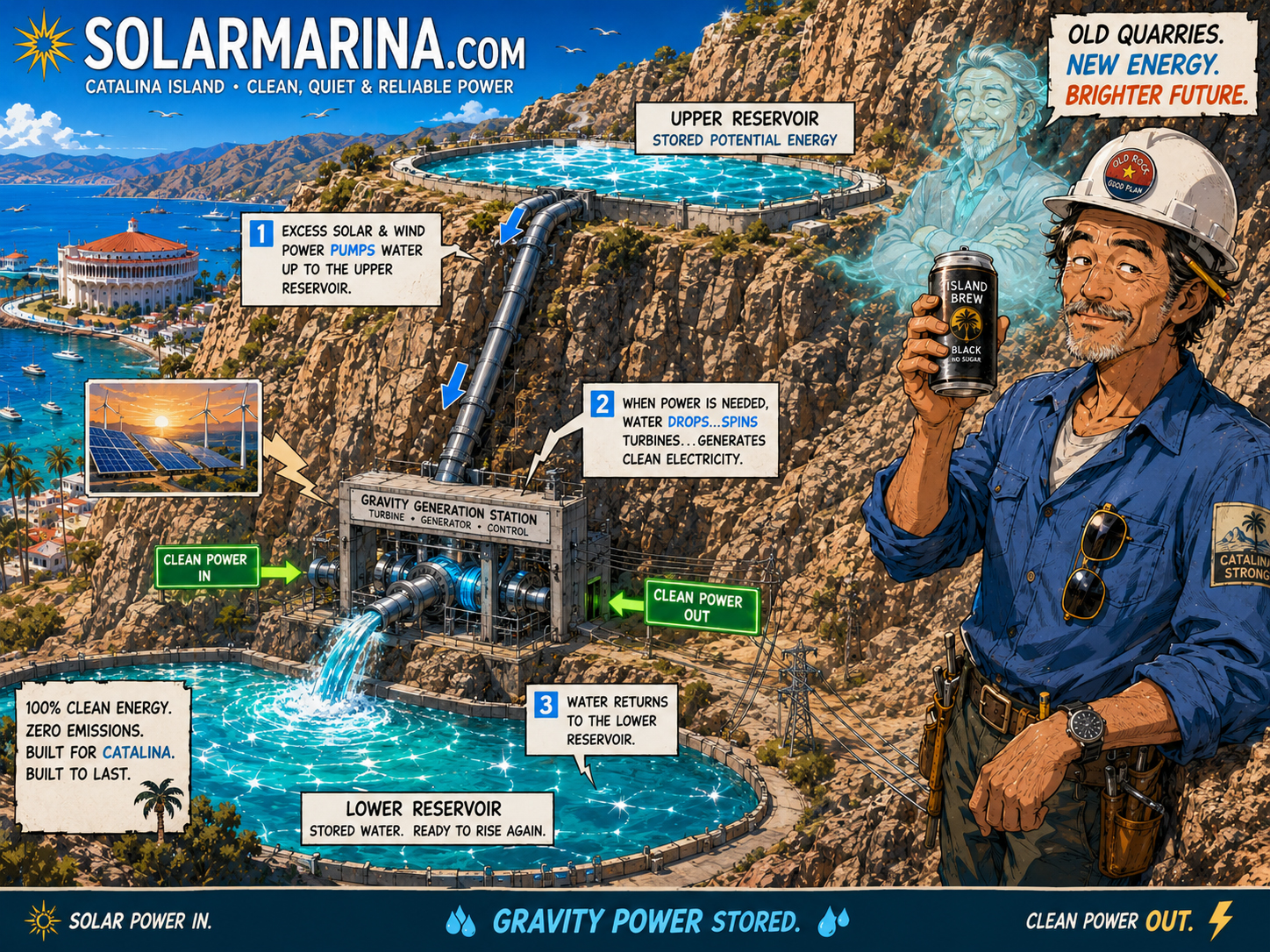
The island’s height becomes useful. Water goes up when clean energy is available and comes down when power is needed.
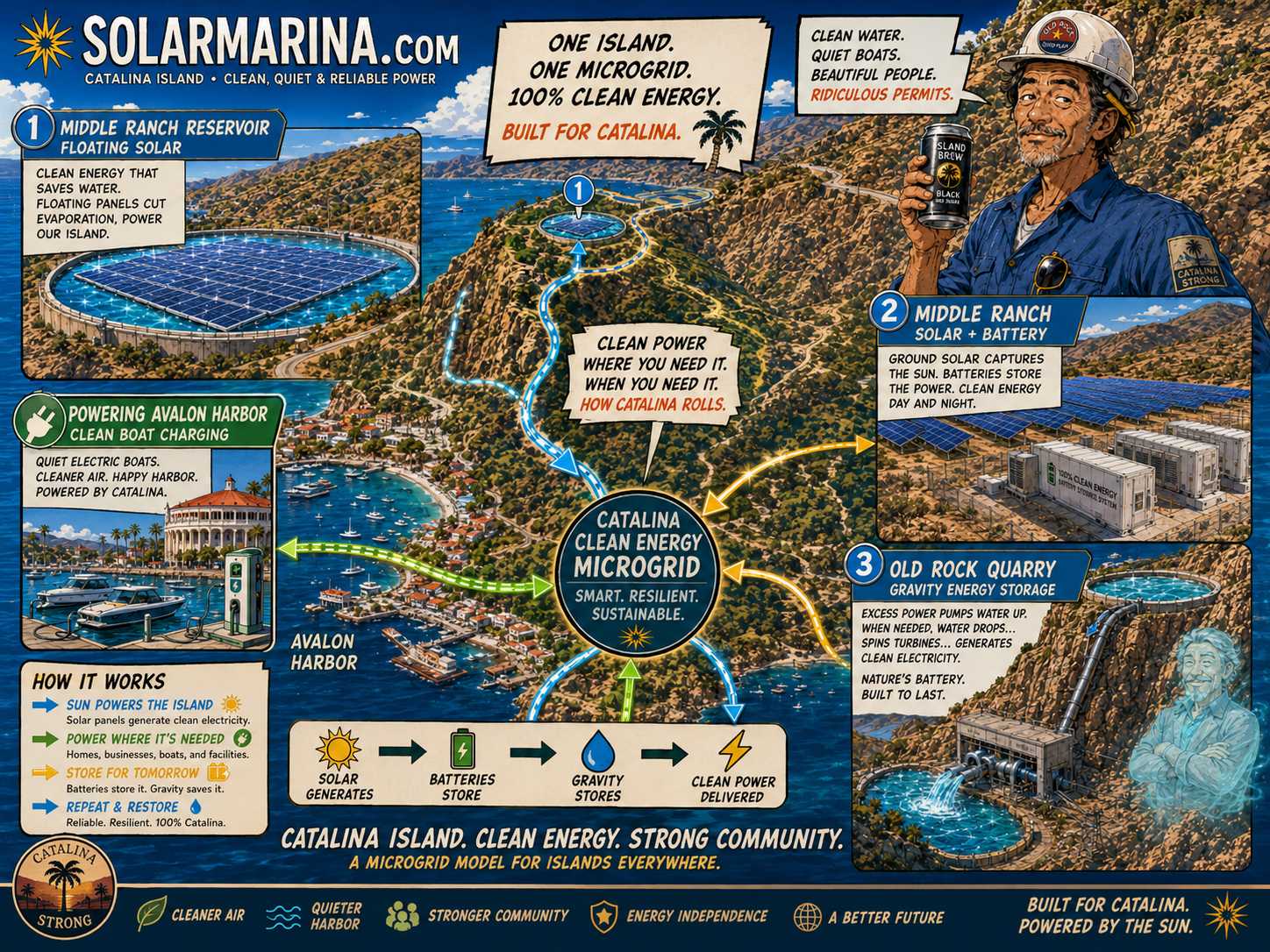
Pump water uphill when solar power is rich. Let it fall downhill when Avalon Harbor wants lights, boat charging, shore power, dinner, romance, and zero generator coughing. Quarry Ojisan calls this “not magic, just Tuesday.”
Gravity storage is a simple idea with serious potential: use extra clean power to move mass uphill, then recover power when that mass moves downhill. On an island with elevation, limited land, and a marina that needs reliable power after sunset, the old quarry becomes more than a scar. It becomes a character.
In SolarMarina, Quarry Ojisan explains it with a bucket, a hill, and visible disappointment in everyone who needed a consultant to understand gravity.
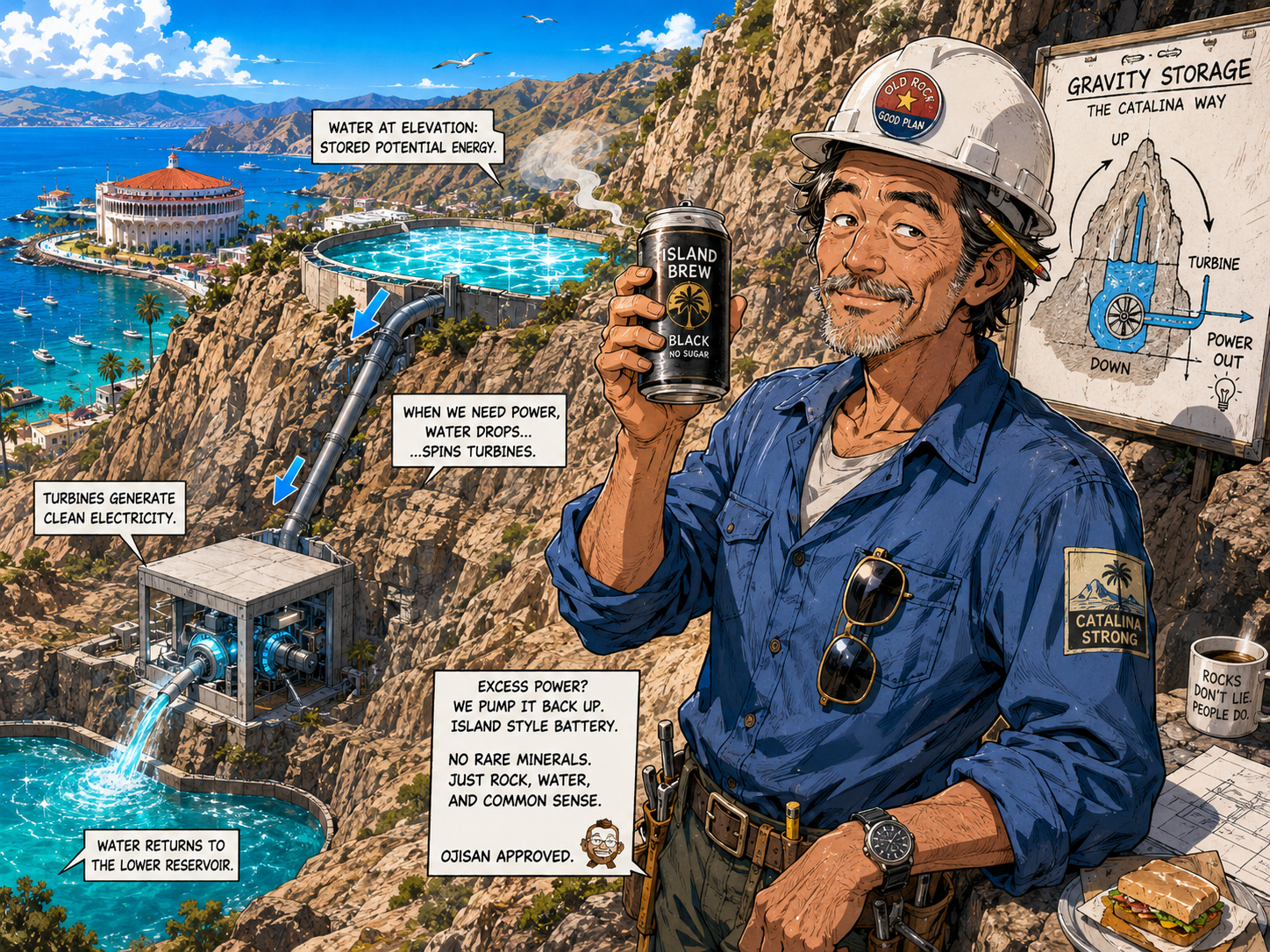
SolarMarina imagines the old quarry landscape as part of a clean island power system: solar makes power, pumps move water, elevation stores energy, turbines recover it, and Avalon Harbor gets a quieter evening.
The island’s height becomes useful. Water goes up when clean energy is available and comes down when power is needed.
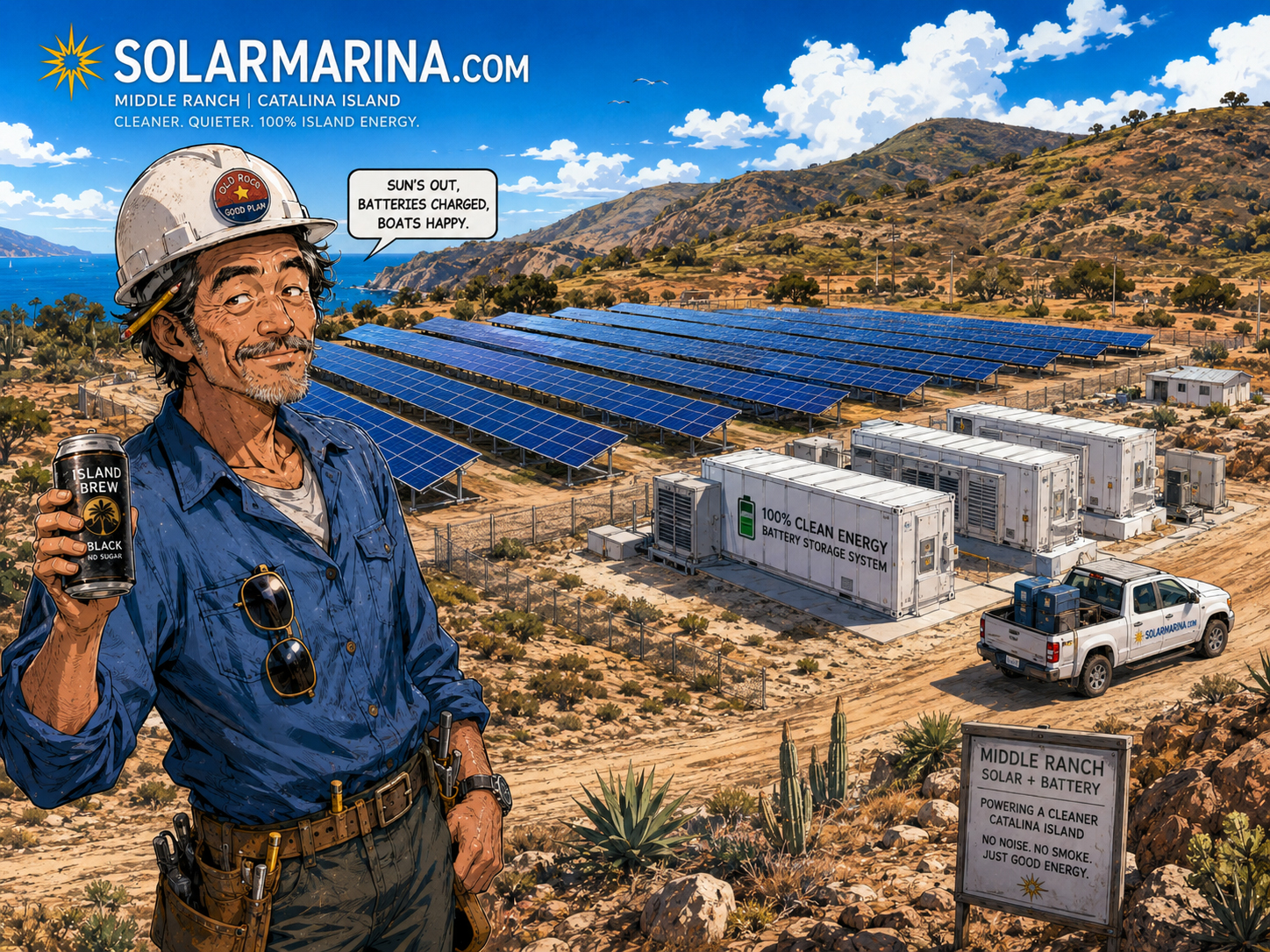
Daytime solar can support pumping schedules. The sun does the lifting, which is rude to Madame Kilowatt.
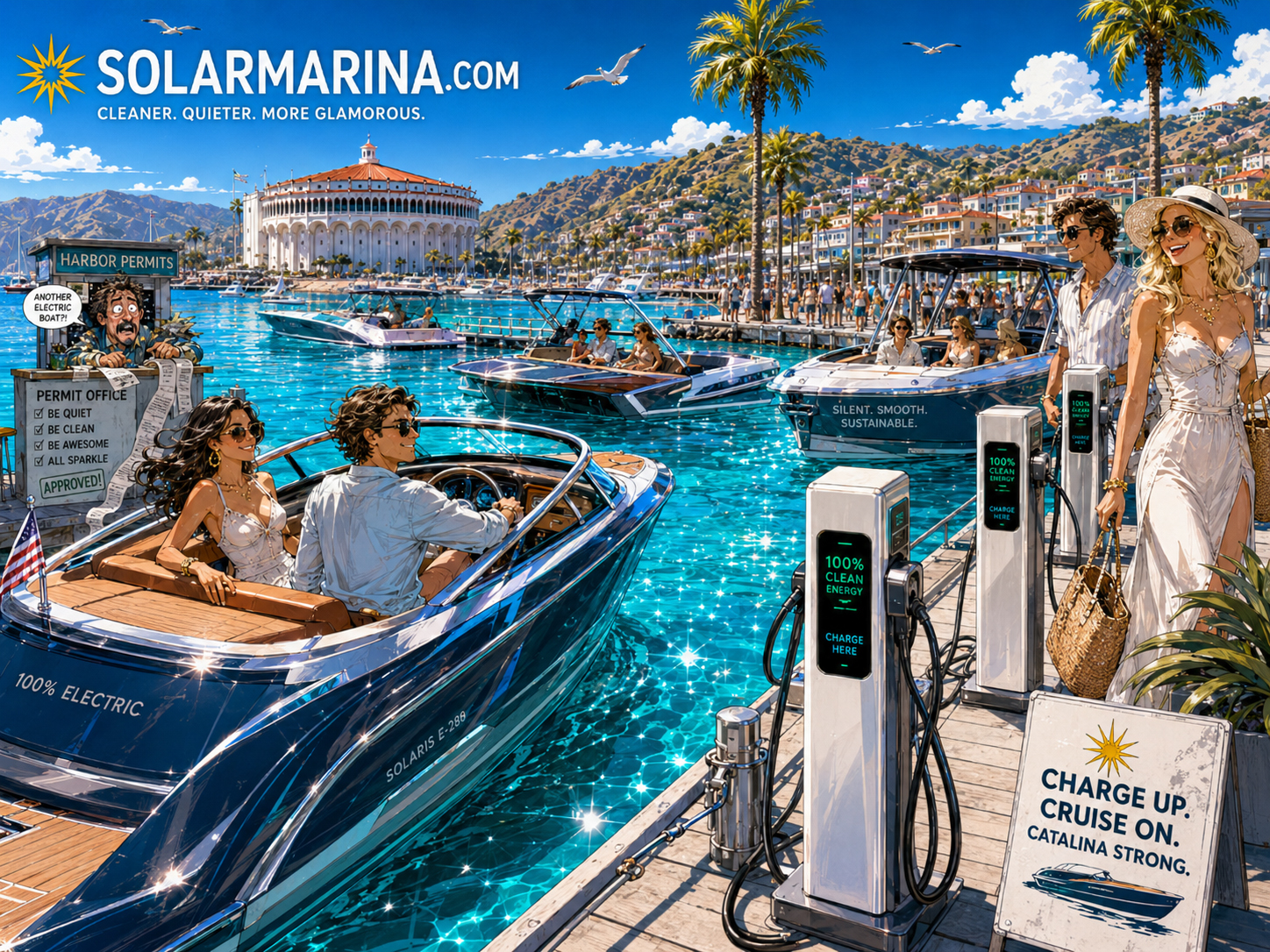
Stored energy helps the marina charge boats, support shore power, and keep generators from ruining the sunset.
The old quarry does not need to be a fossil-era leftover. In SolarMarina, it becomes the island’s hardhat battery: simple physics, big ambition, and one old engineer muttering at everyone’s spreadsheet.
Electric boat charging, no-generator shore power, lighting, pumps, communications, restaurants, and visitor comfort do not politely stop at sunset. Gravity storage gives SolarMarina a dramatic way to explain long-duration clean-energy support.
The clean marina becomes more believable when the island has more than one tool: solar by day, batteries for fast response, gravity for stored potential, and smart controls to keep every boat from acting like the only boat in town.
The joke is simple. The engineering is not.
Gravity storage depends on height difference, usable water volume, reservoir geometry, pumping capacity, turbine efficiency, and losses.
Water use, closed-loop design, evaporation, leakage, environmental impacts, and island water priorities must be addressed carefully.
The system needs durable mechanical design, safe controls, sensors, valves, protections, maintenance access, and qualified operators.
Pumping schedules must coordinate with solar generation, battery dispatch, marina demand, and island grid stability.
Quarry reuse must explain safety, visual impacts, environmental effects, water protection, emergency plans, and why gravity is not suspicious.
Real-world note: Gravity storage is site-specific infrastructure requiring hydrology, civil, mechanical, electrical, environmental, geotechnical, utility, fire, and permitting review. This page is concept storytelling, not engineering guidance.
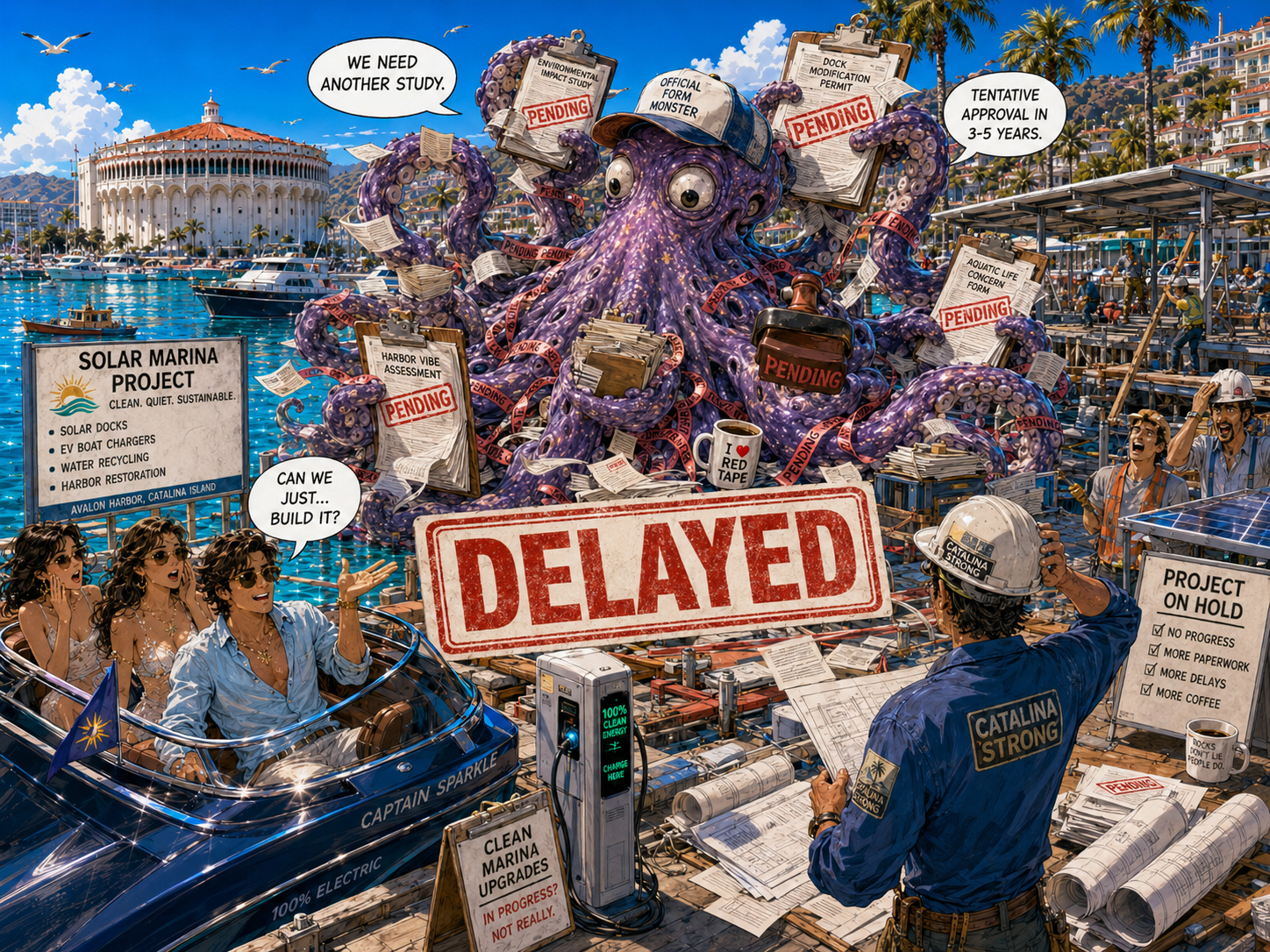
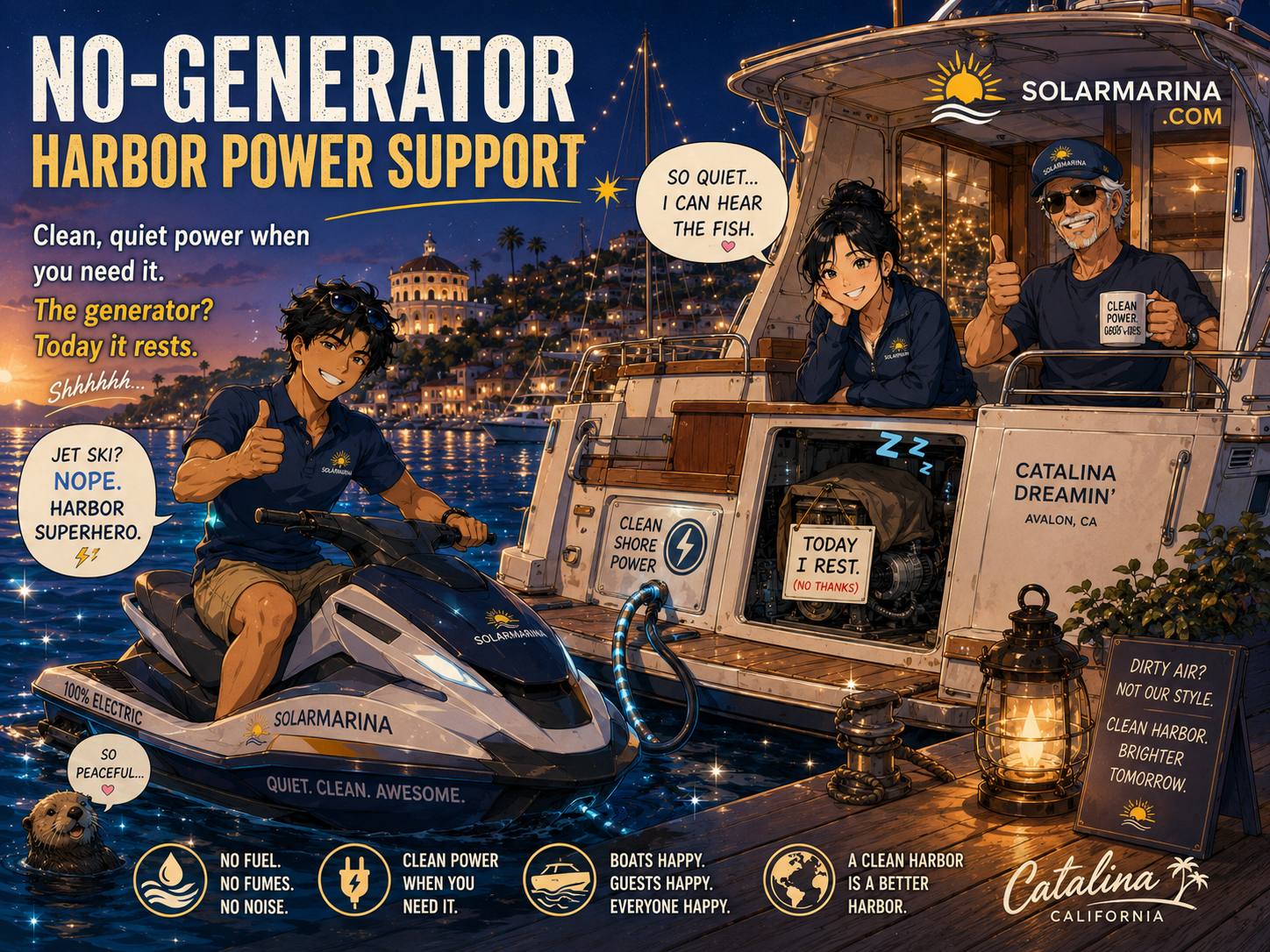
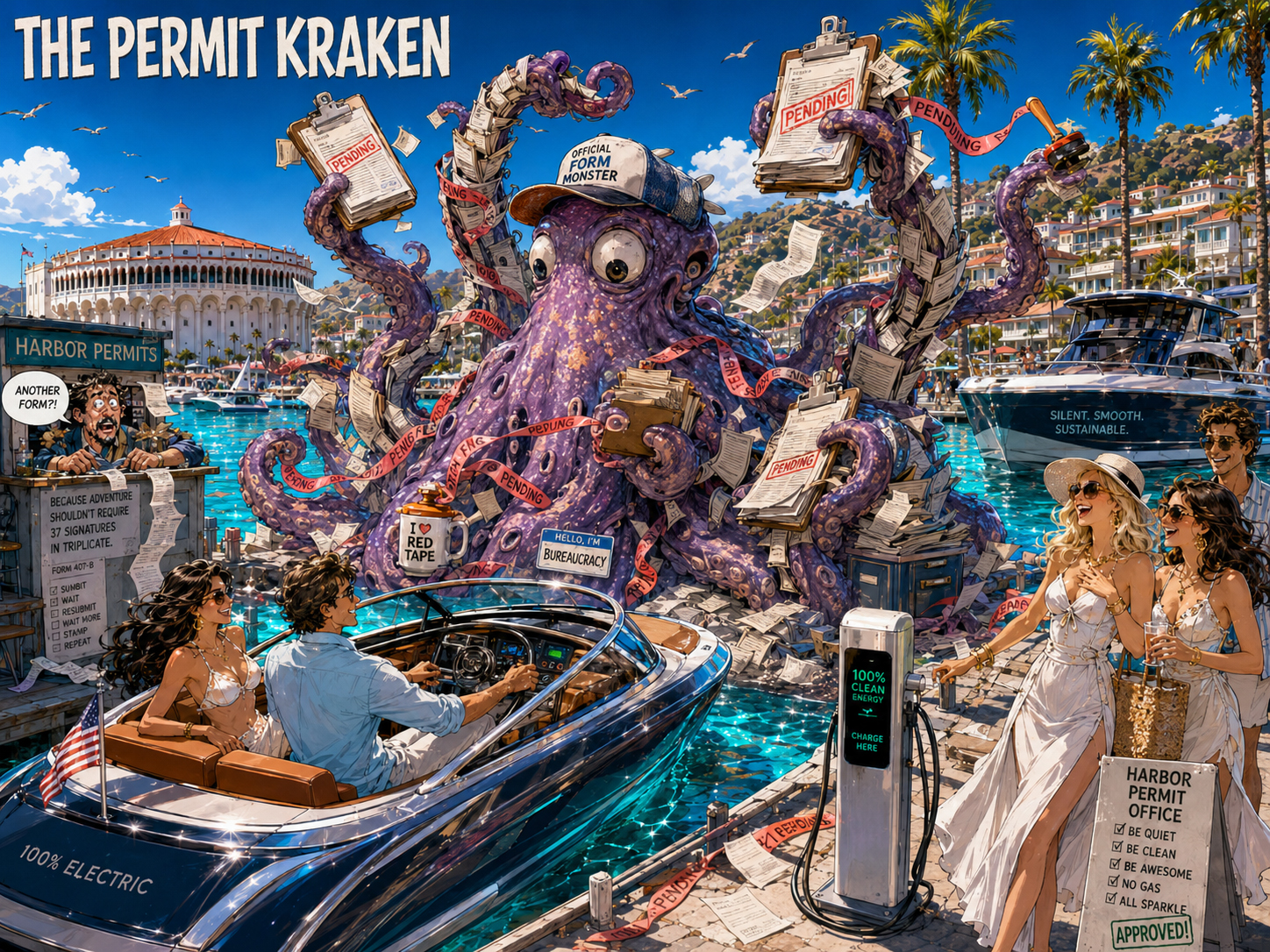
The moment Quarry Ojisan says “water falls downhill,” the Permit Kraken arrives with a clipboard and asks whether downhill movement has completed coastal review, community outreach, alternative analysis, and font compliance.
SolarMarina makes the fight funny because the physics is simple, the project is complex, and the paperwork monster has no sense of proportion.
Gravity storage is one piece of SolarMarina’s clean island system. Floating solar makes power. Ground solar and batteries manage daily energy. Tide docks add motion-based imagination. Electric boat chargers make the clean future visible. The quarry stores energy like an old worker who still knows how to lift.
Together, the story says Catalina does not have to think like an old fuel tank. It can think like an island with sun, water, elevation, beauty, and better jokes.
The old quarry is where SolarMarina turns island topography into a clean-energy punchline with real engineering underneath.