Slower Evaporation
Solar shade can reduce direct sun exposure on covered water areas. The reservoir gets shade and dignity.
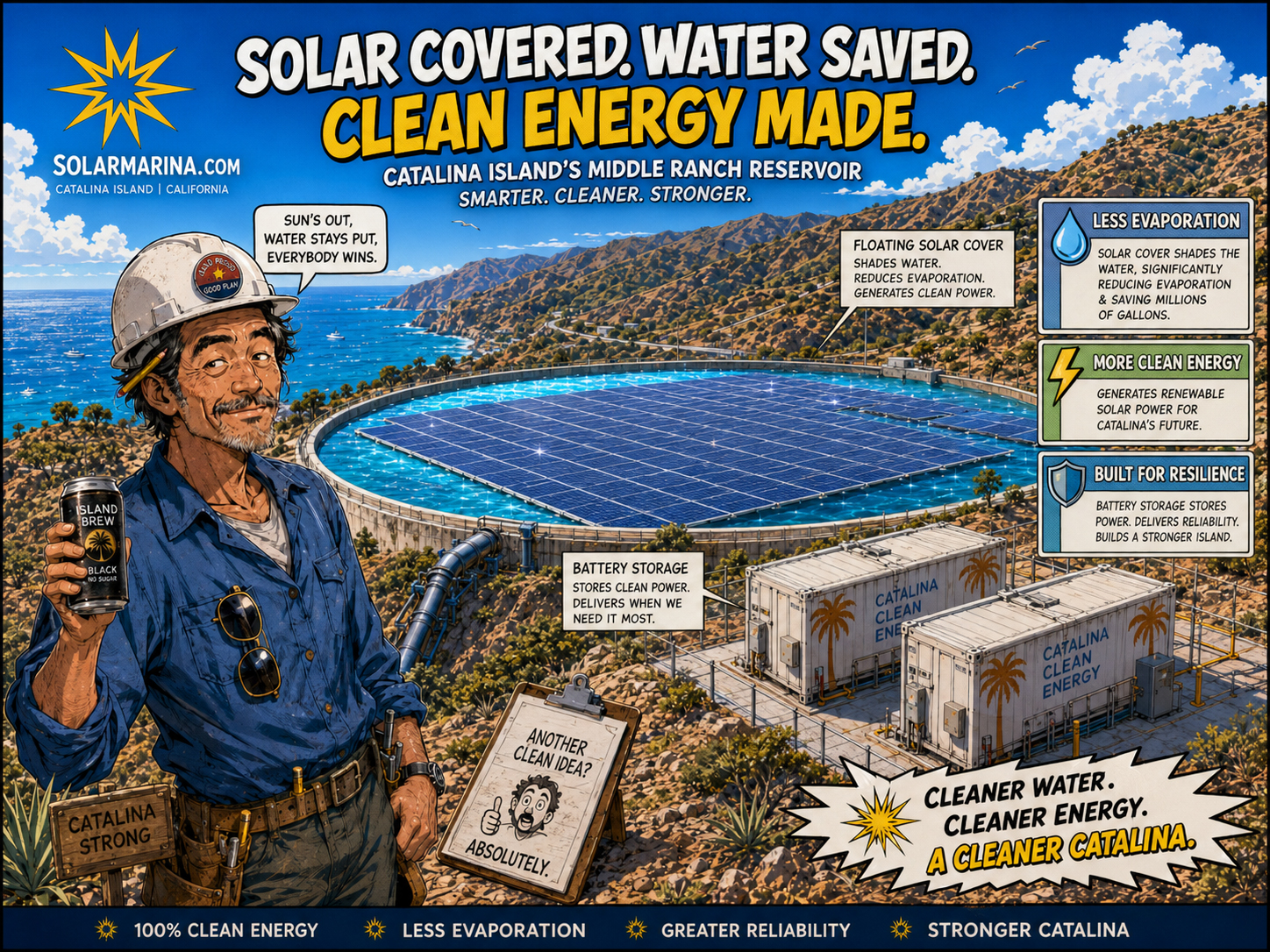
SolarMarina turns the reservoir into a clean-energy character: floating solar makes power, shades the water, helps slow evaporation, and gives the island a better story than burning fuel and calling it tradition.
A solar-covered lake is the kind of idea that sounds like a joke until Quarry Ojisan clears his throat and reminds everyone that shade, power, and limited land are all real island problems.
Floating solar can let a reservoir help produce electricity while reducing direct sun exposure on part of the water surface. SolarMarina turns that into a visual gag — the lake wears solar sunglasses — but the underlying idea is serious clean-island thinking.
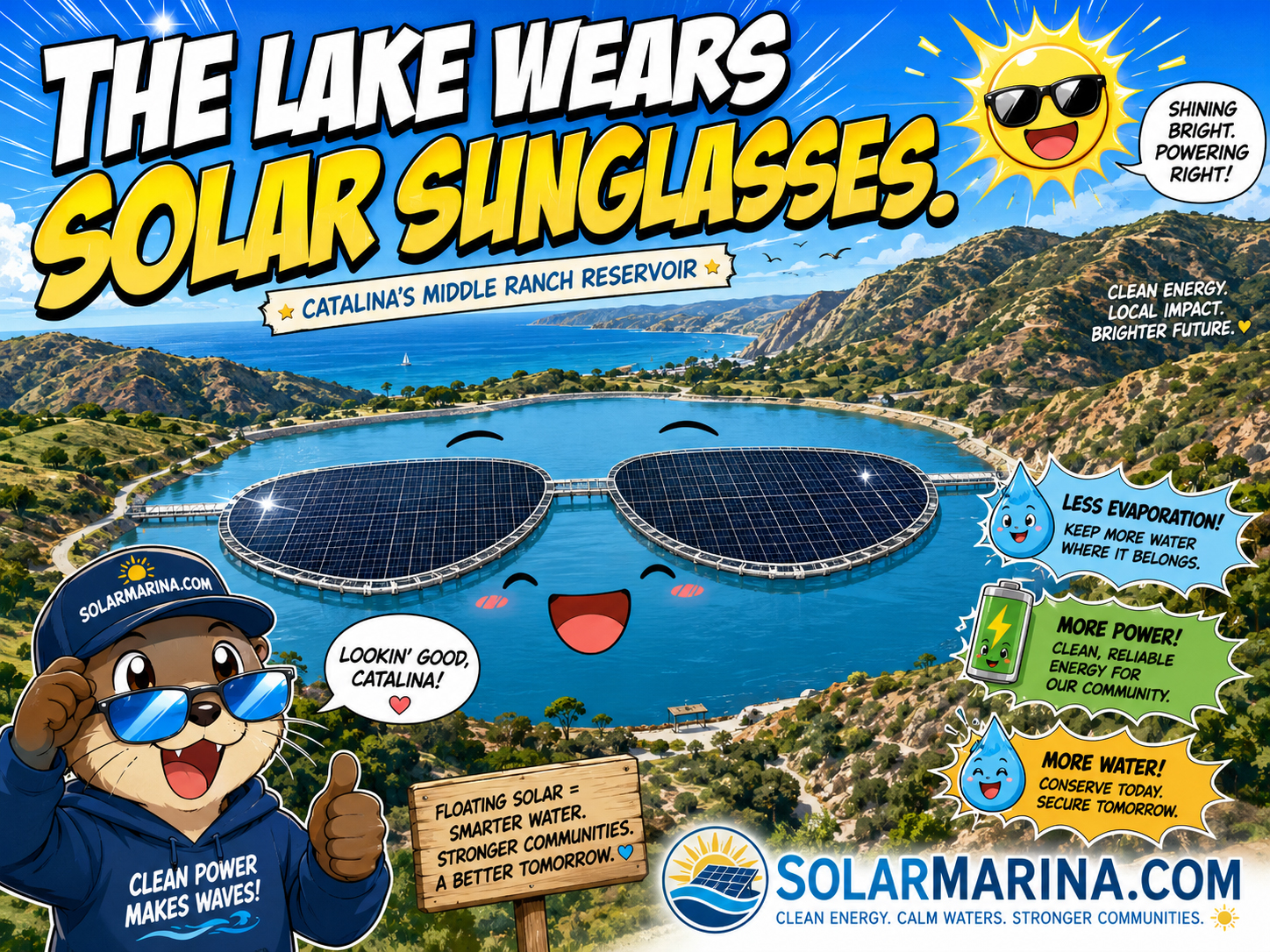
On an island, land is precious, water is precious, and fuel dependence is ugly. A solar-covered reservoir tells a better story: make clean power where the sun already hits, and help protect water where evaporation matters.
Solar shade can reduce direct sun exposure on covered water areas. The reservoir gets shade and dignity.
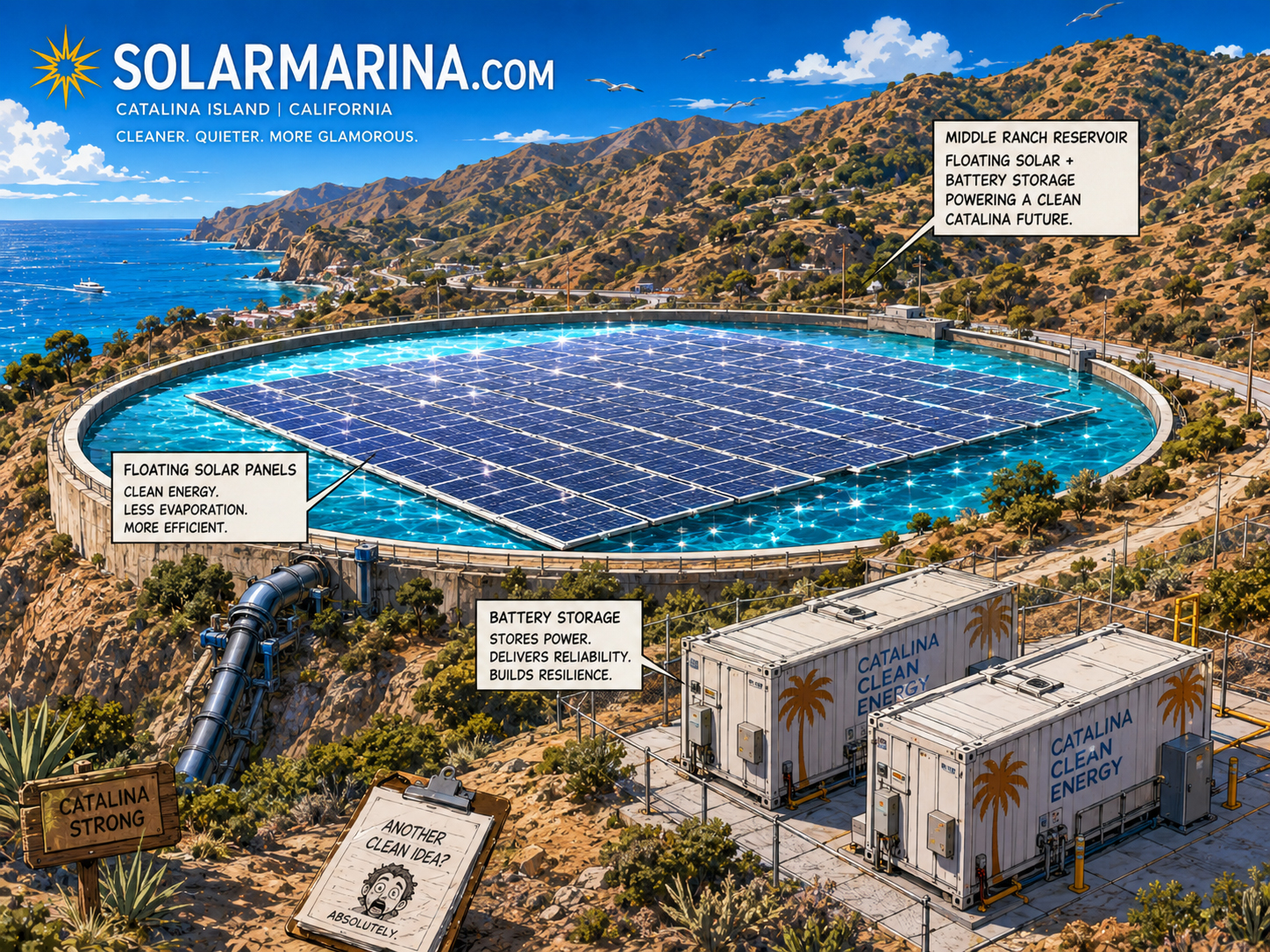
Floating solar lets the reservoir become part of the energy system instead of just watching the utility drama.
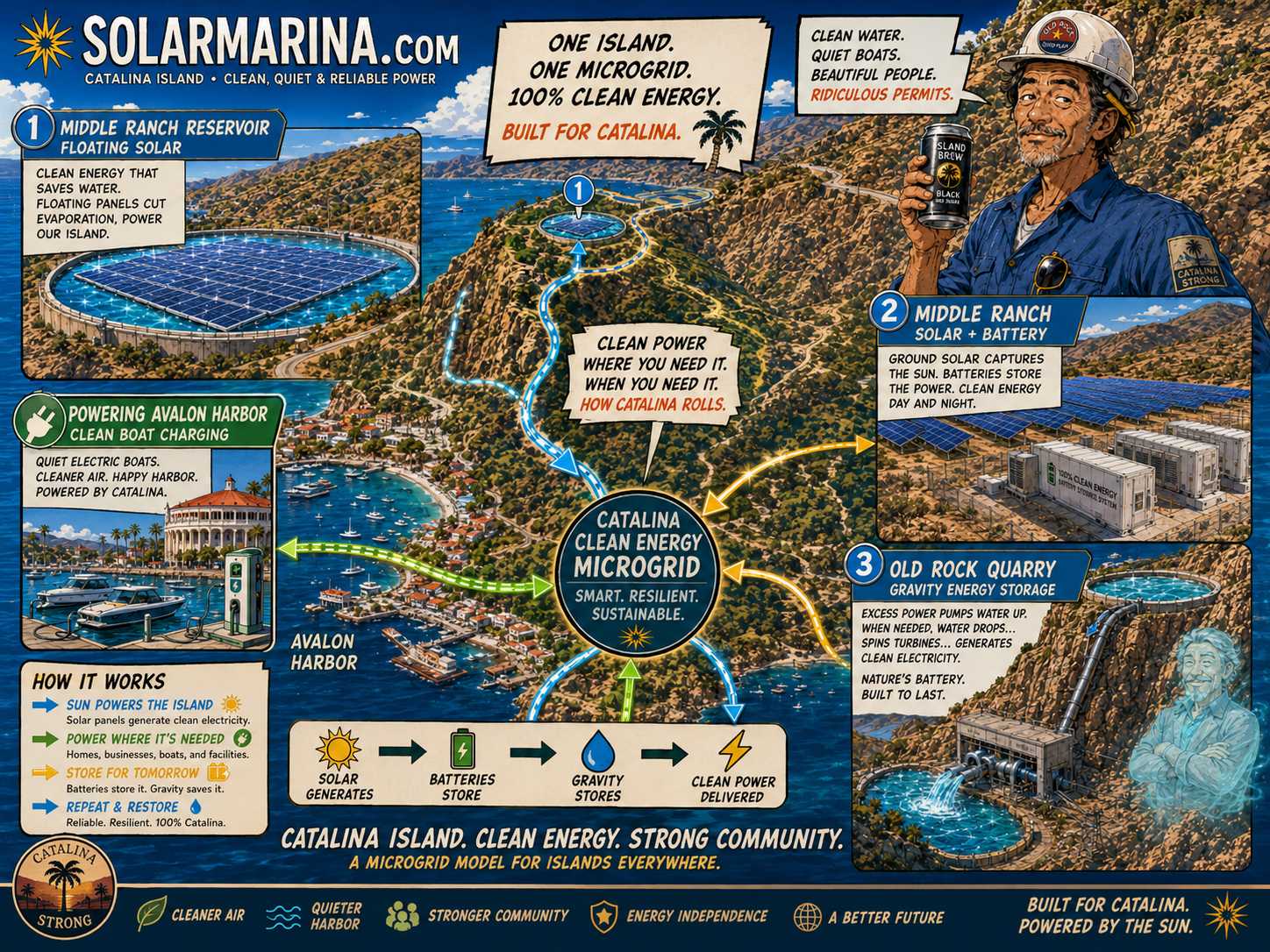
Paired with batteries and controls, solar-covered water can support the clean island power story.
It is the joke that sells the concept in one second: cover part of the reservoir with solar, make clean power, reduce sun exposure, and let the island stop pretending old fuel is the only adult in the room.
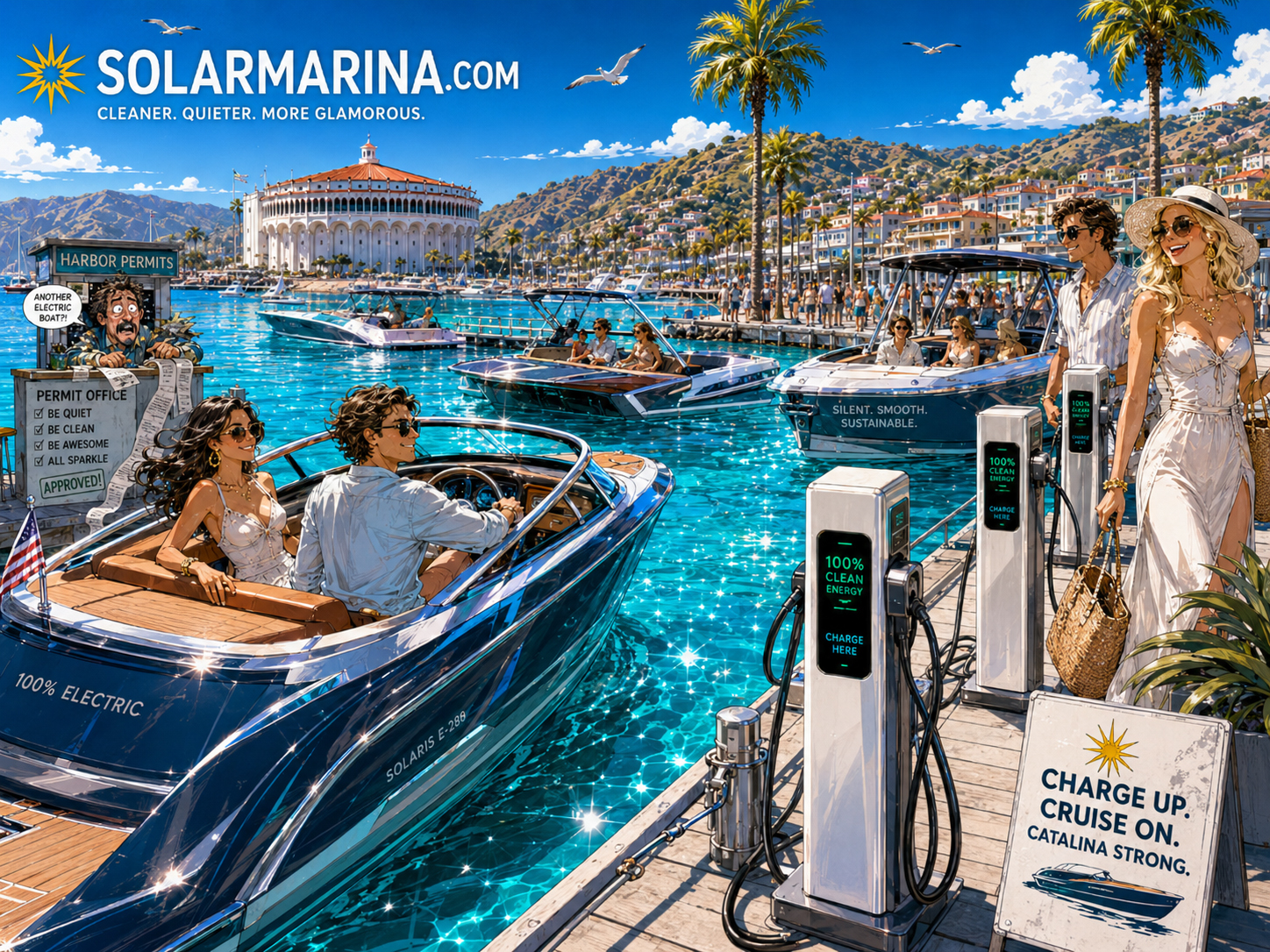
A solar-covered lake is not just a pretty clean-energy postcard. In the SolarMarina story, it helps support the electric harbor: charging docks, no-generator shore power, quiet arrivals, and the clean-water mission that makes Avalon worth protecting.
The chain is easy to understand: solar-covered water makes power, batteries help store it, the marina uses it intelligently, boats arrive quietly, and the Solar Mermaid has fewer reasons to threaten litigation.
Floating solar is elegant only when it is designed around the actual reservoir, actual water operations, actual weather, actual electrical safety, and actual maintenance humans who have to reach the equipment.
Water levels, reservoir use, access needs, water quality, and maintenance requirements determine what floating solar can do.
Floating arrays need anchoring, cable management, wind design, movement tolerance, and safe inspection access.
Water-adjacent PV requires robust grounding, corrosion protection, weather-resistant equipment, safe disconnects, and monitoring.
Solar power should be paired with storage and controls so the marina can use clean energy when boats actually need it.
The project must clearly explain visual impact, water benefits, safety, operations, and why the lake looks fabulous.
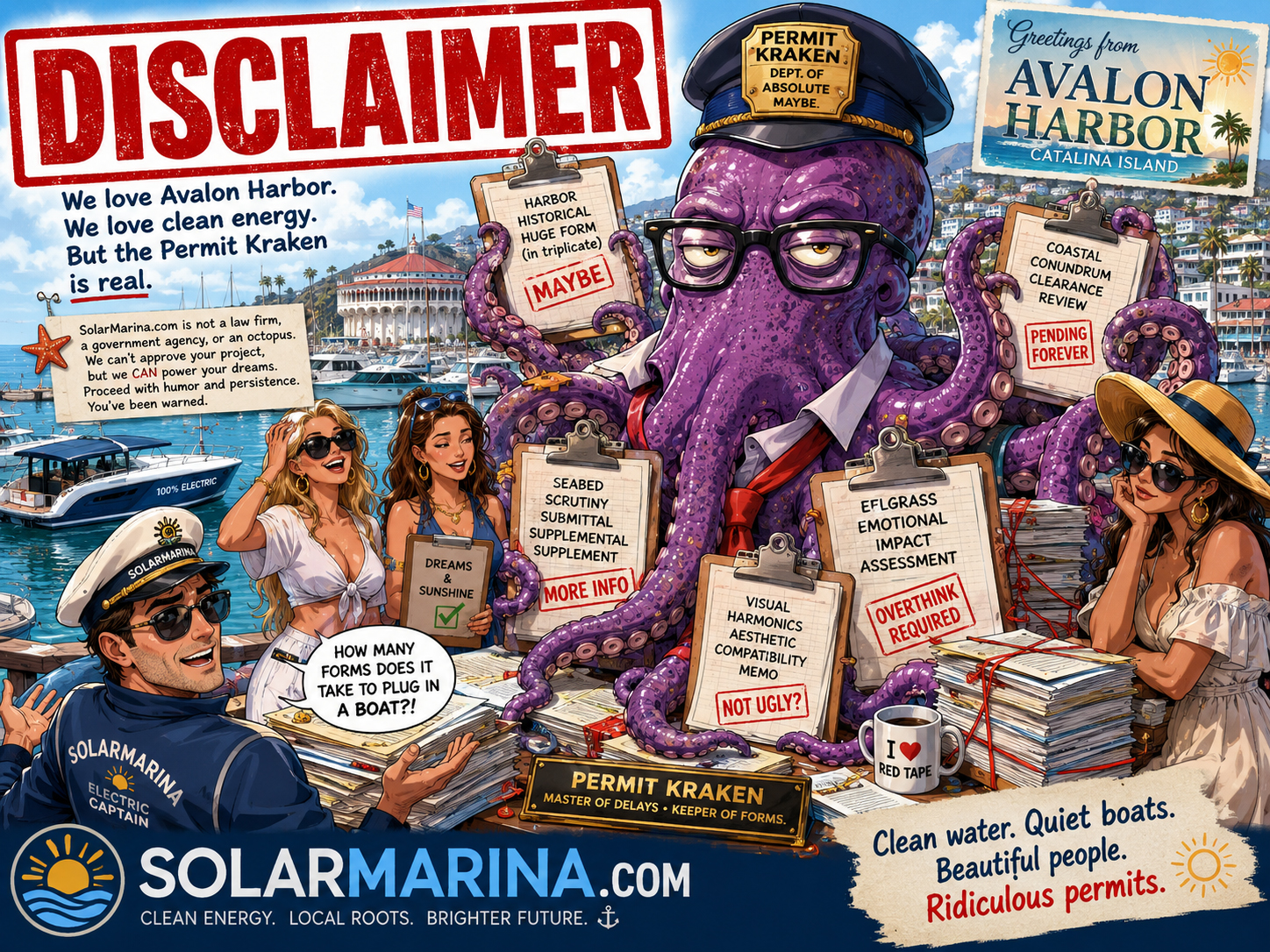
Real-world note: Floating solar on a reservoir requires site-specific engineering, environmental and water-operations review, electrical design, utility coordination, inspections, and permits. This page is concept storytelling, not installation guidance.
The moment the reservoir becomes useful, the Permit Kraken gets nervous. It asks whether the panels are floating too confidently, whether the shade has filed a notice, and whether the lake’s sunglasses are compatible with the island’s long-term aesthetic management plan.
SolarMarina keeps the joke alive because the public benefit is simple and the pathway is not: make clean power, protect water, support electric harbor charging, and survive the clipboard monster.
The solar-covered lake is one of SolarMarina’s best images because it makes the clean island future visible: the island uses its own sun, its own water, and its own intelligence to support the harbor’s clean transformation.
It is funny. It is glamorous. It is easy to explain. And it gives the electric marina story a clean-energy backbone that feels local, memorable, and worth fighting for.
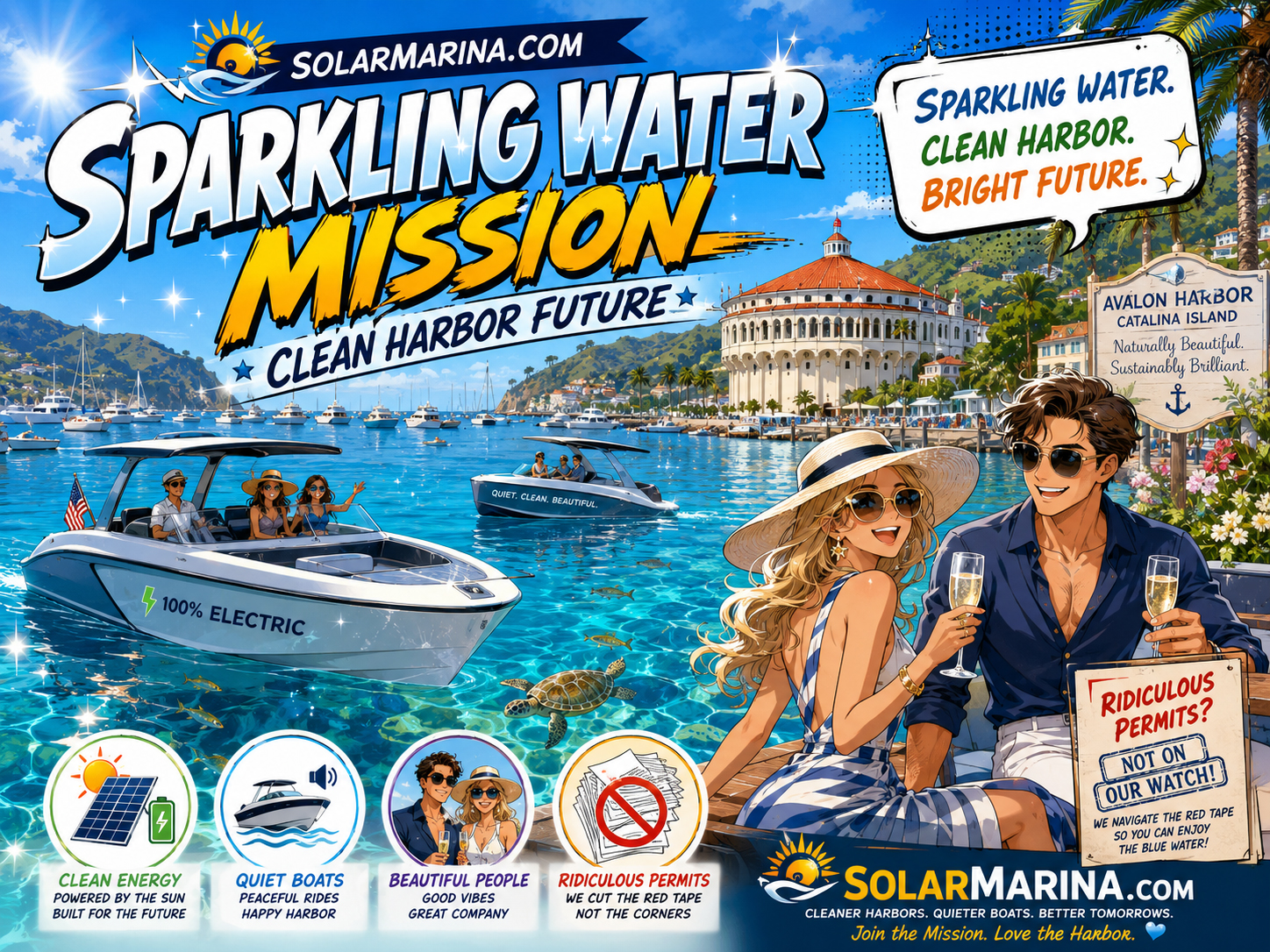
The solar-covered lake is where the water, the sun, and the marina story meet.