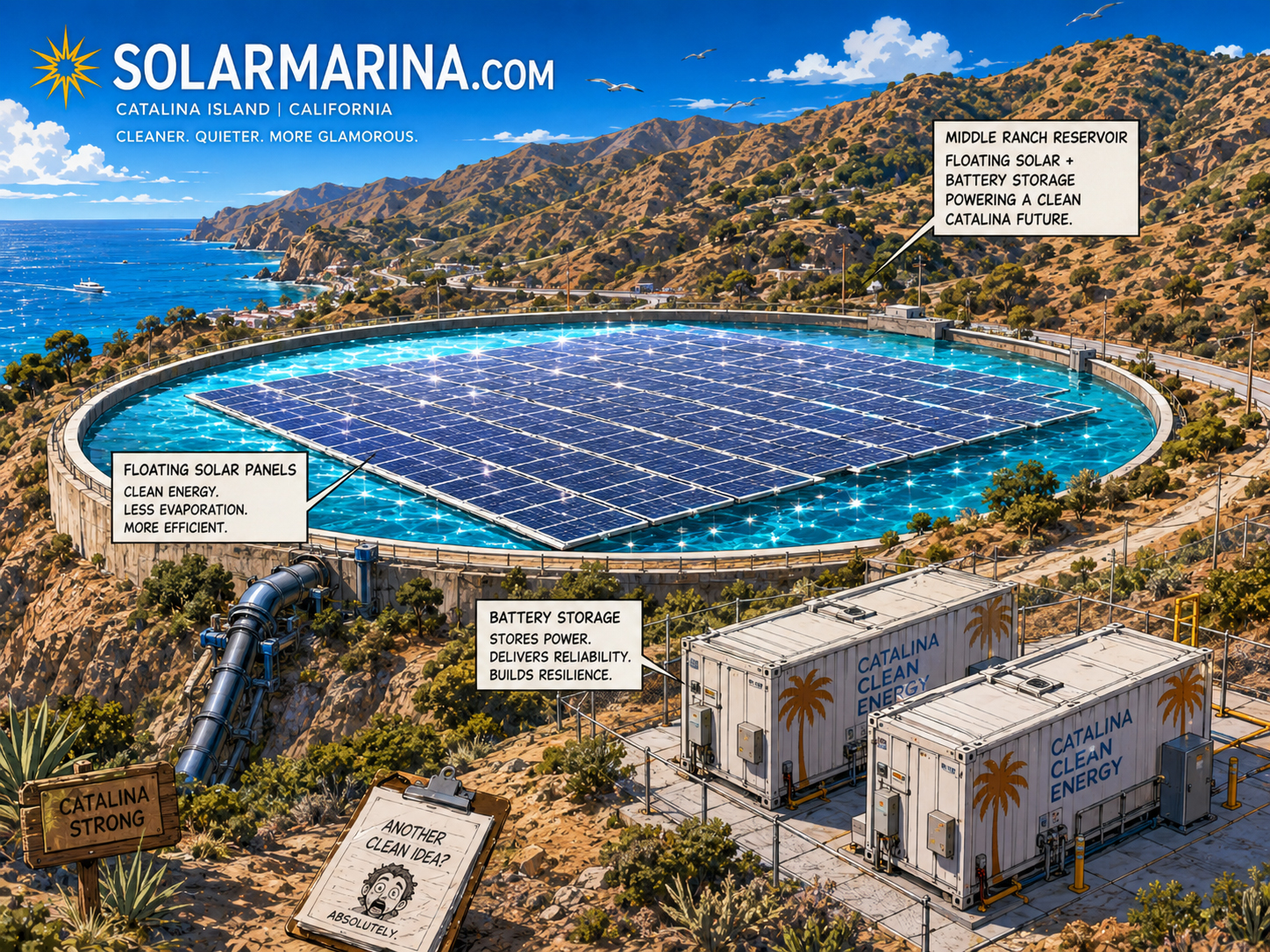
Floating Solar
The reservoir wears solar sunglasses, makes clean power, and helps slow evaporation where practical.
Floating Solar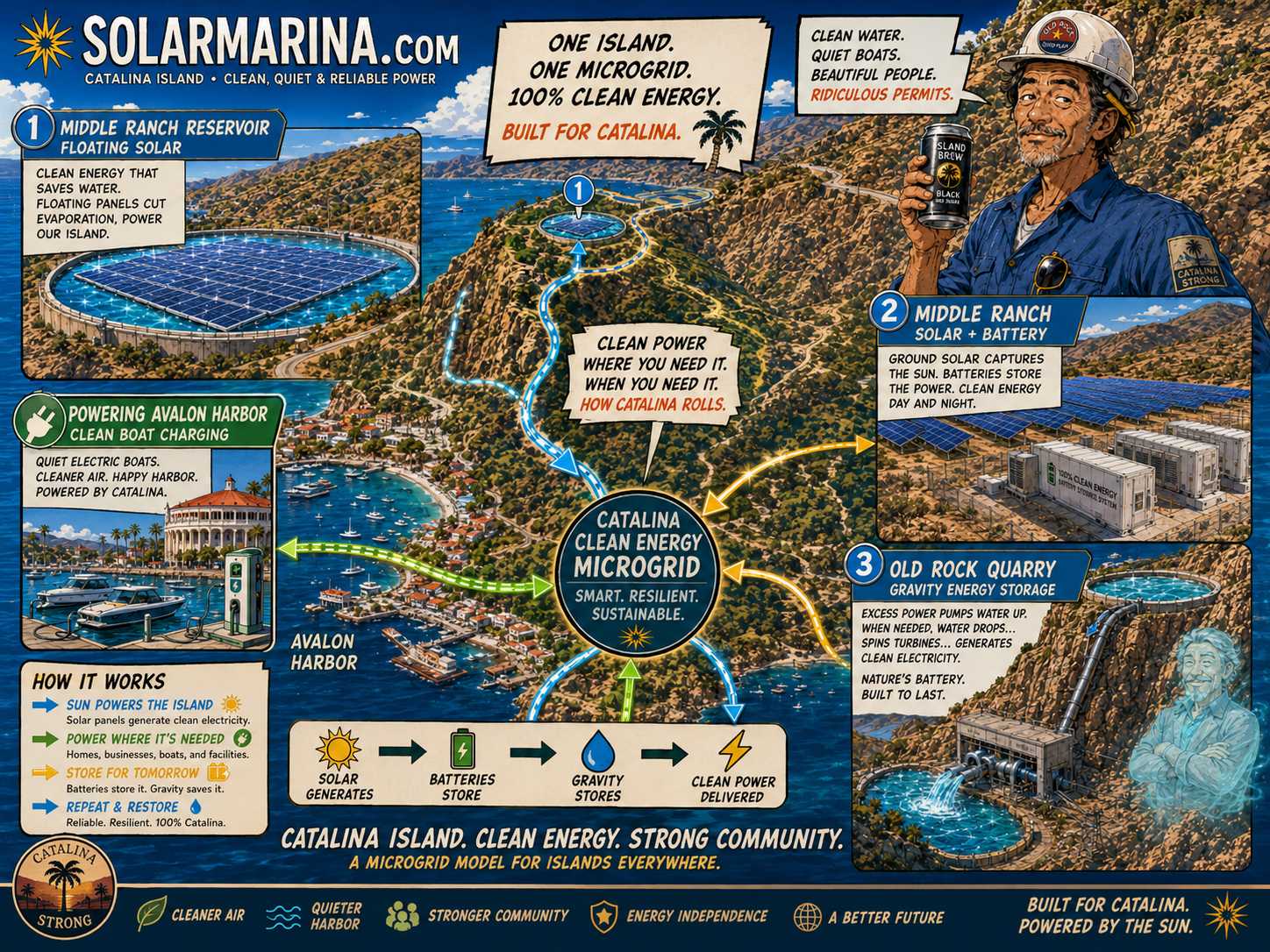
SolarMarina imagines Catalina as a clean-energy system: floating solar, land solar, batteries, tide-powered docks, old quarry gravity storage, smart controls, and electric boats gliding through Avalon without making the water apologize.
Electric boat charging is the public face of SolarMarina, but the real story is the energy system behind it. Catalina needs clean generation, storage, controls, and operating discipline so Avalon Harbor can become quiet, beautiful, and practical instead of just aspirational.
In the manga, Quarry Ojisan says the island must stop thinking like an old fuel tank and start thinking like a microgrid. Captain Sparkle says it should also look good at sunset. Both are correct.
The clean microgrid story works because each technology plays a role. No single hero carries the island. The island becomes a team.
The reservoir wears solar sunglasses, makes clean power, and helps slow evaporation where practical.
Floating Solar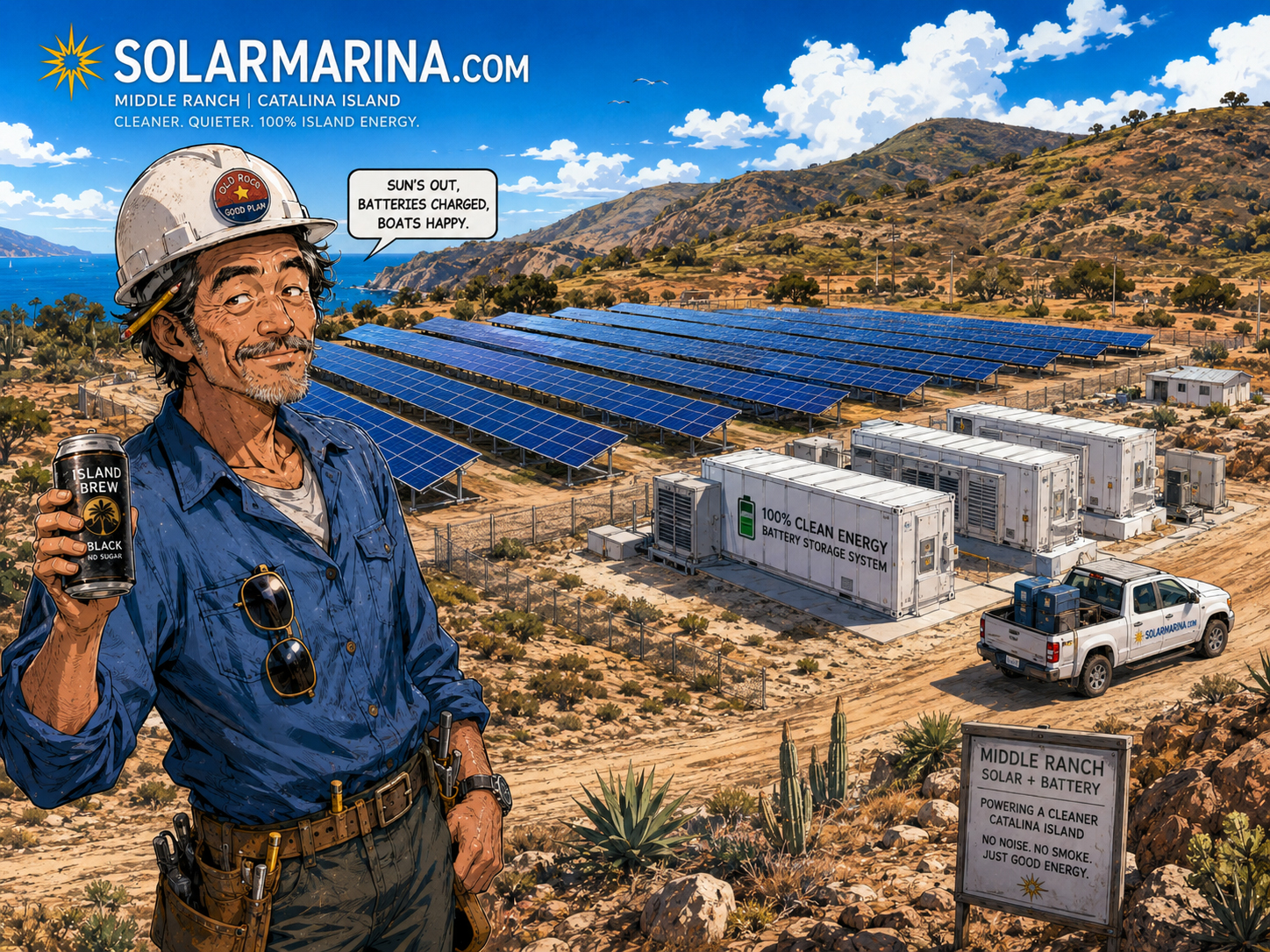
Daytime sunshine becomes evening harbor manners. Madame Kilowatt Marina hates this trick.
Solar + Battery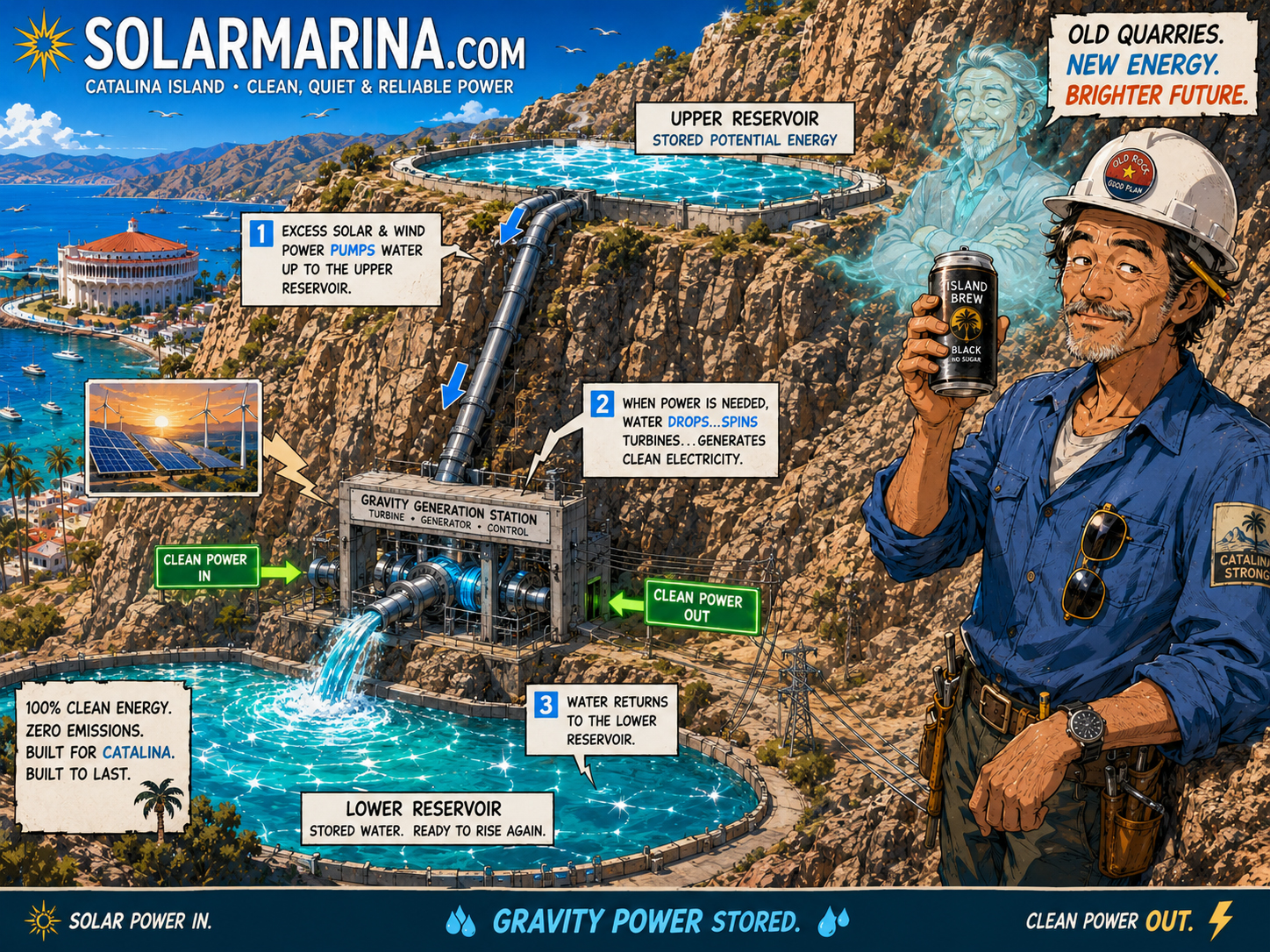
Water uphill when solar is rich. Power downhill when Avalon wants lights, charging, and margaritas.
Gravity Storage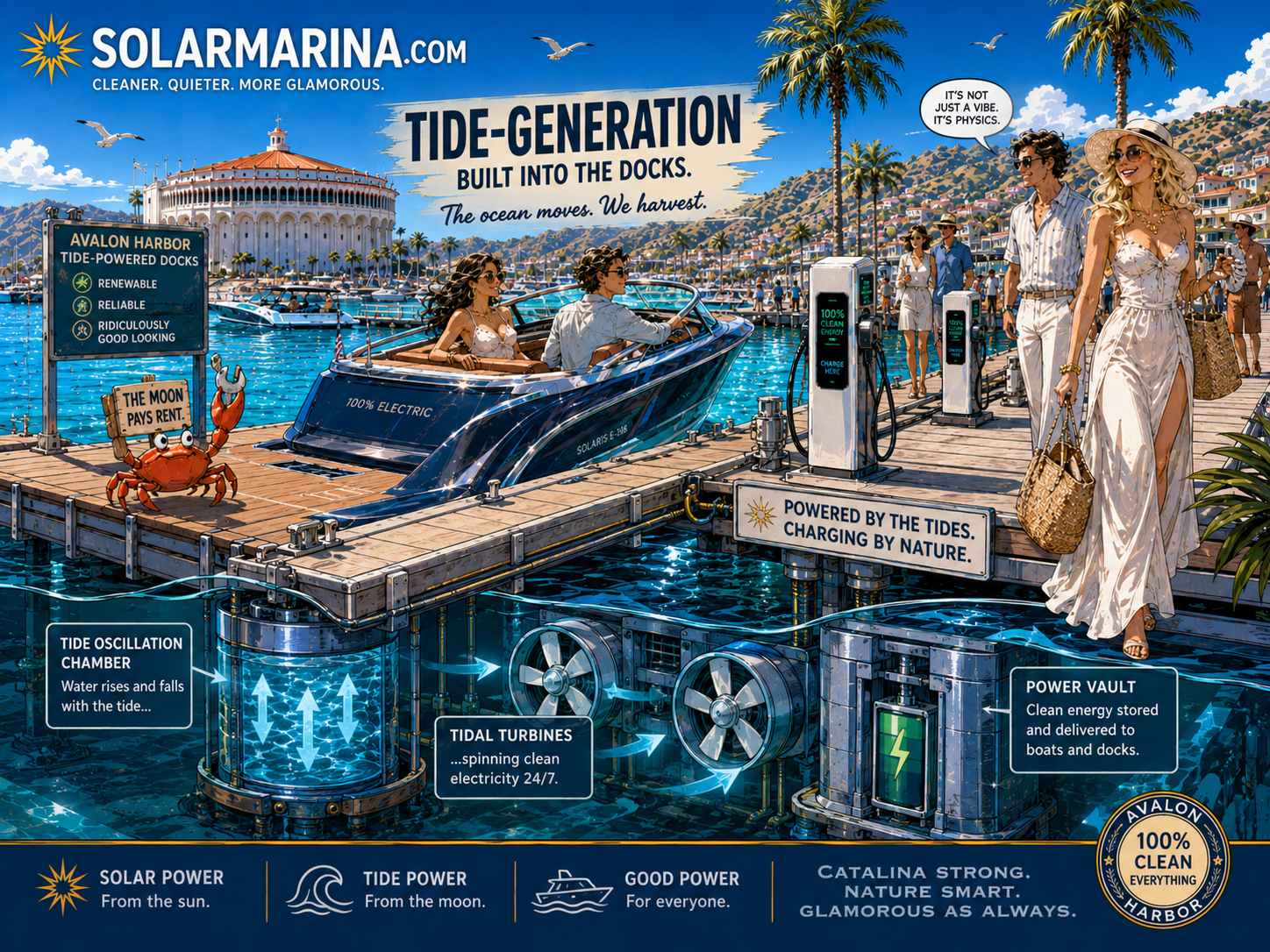
The moon pays rent through the dock. Quarry Ojisan approves only after checking maintenance access.
Tide Docks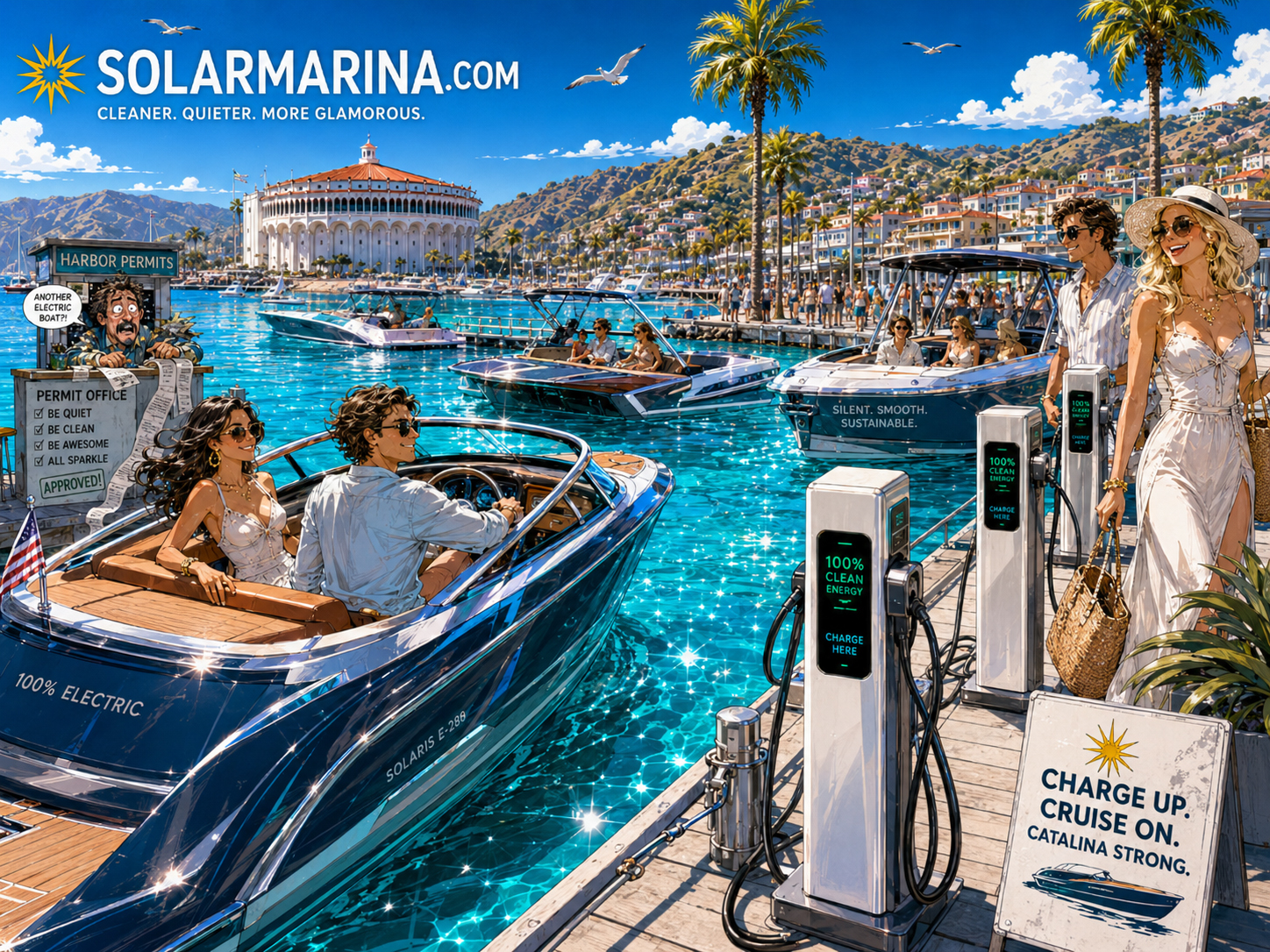
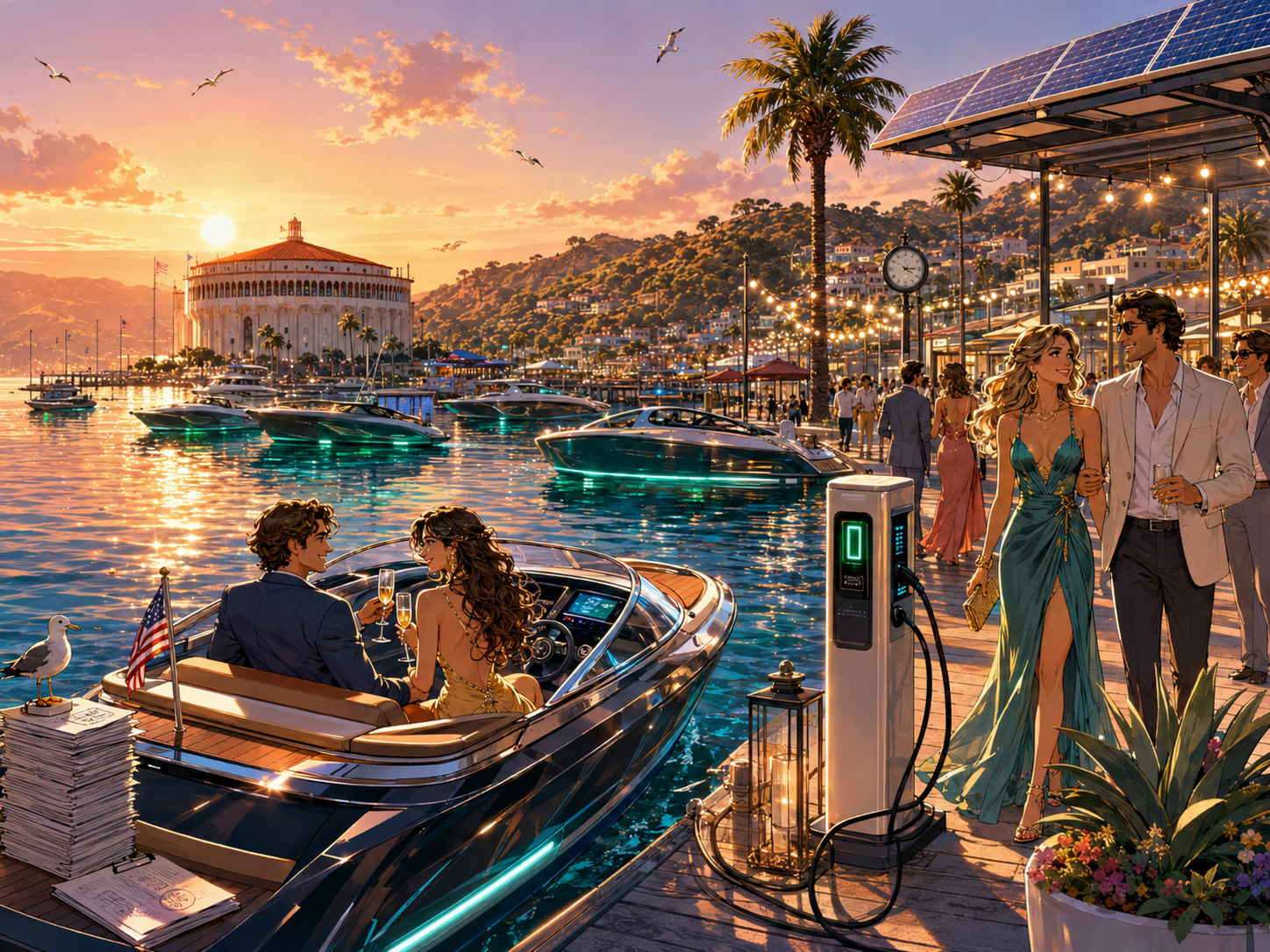
The clean microgrid becomes visible when boats plug in quietly and stop treating the harbor like a generator room.
Boat Charging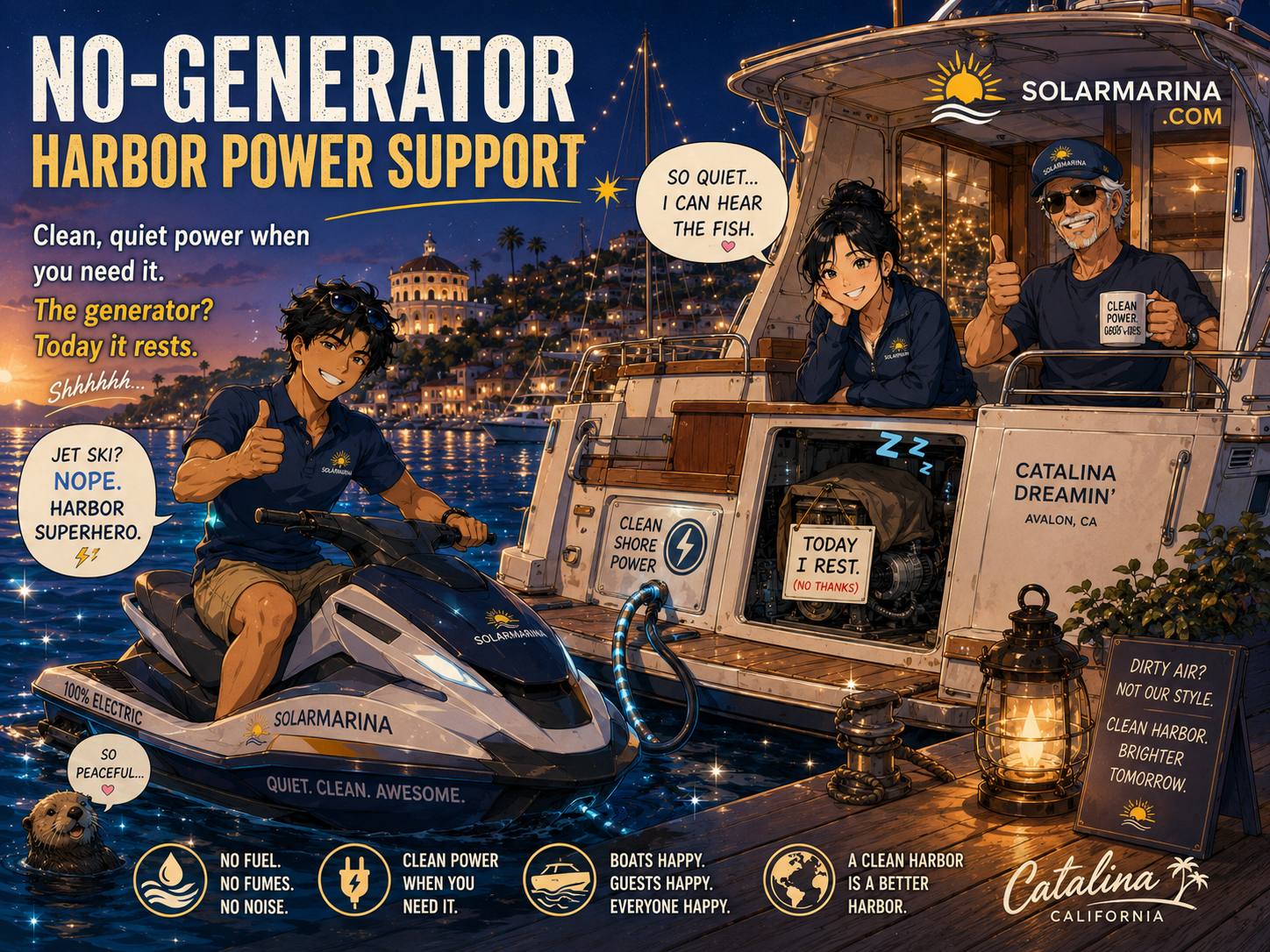
Clean shore power and smart controls help keep the evening soundtrack from becoming mechanical throat-clearing.
No Generator Power
The microgrid is the grown-up behind the comedy: solar generation, energy storage, dock power, load management, and the quiet confidence of a harbor that no longer needs to shout.
 Quarry Ojisan Explains
He calls it a microgrid. Everyone else calls it the first meeting that made sense.
Quarry Ojisan Explains
He calls it a microgrid. Everyone else calls it the first meeting that made sense.
 Madame Kilowatt Objects
Smart controls are bad for her dramatic peak-rate entrance.
Madame Kilowatt Objects
Smart controls are bad for her dramatic peak-rate entrance.
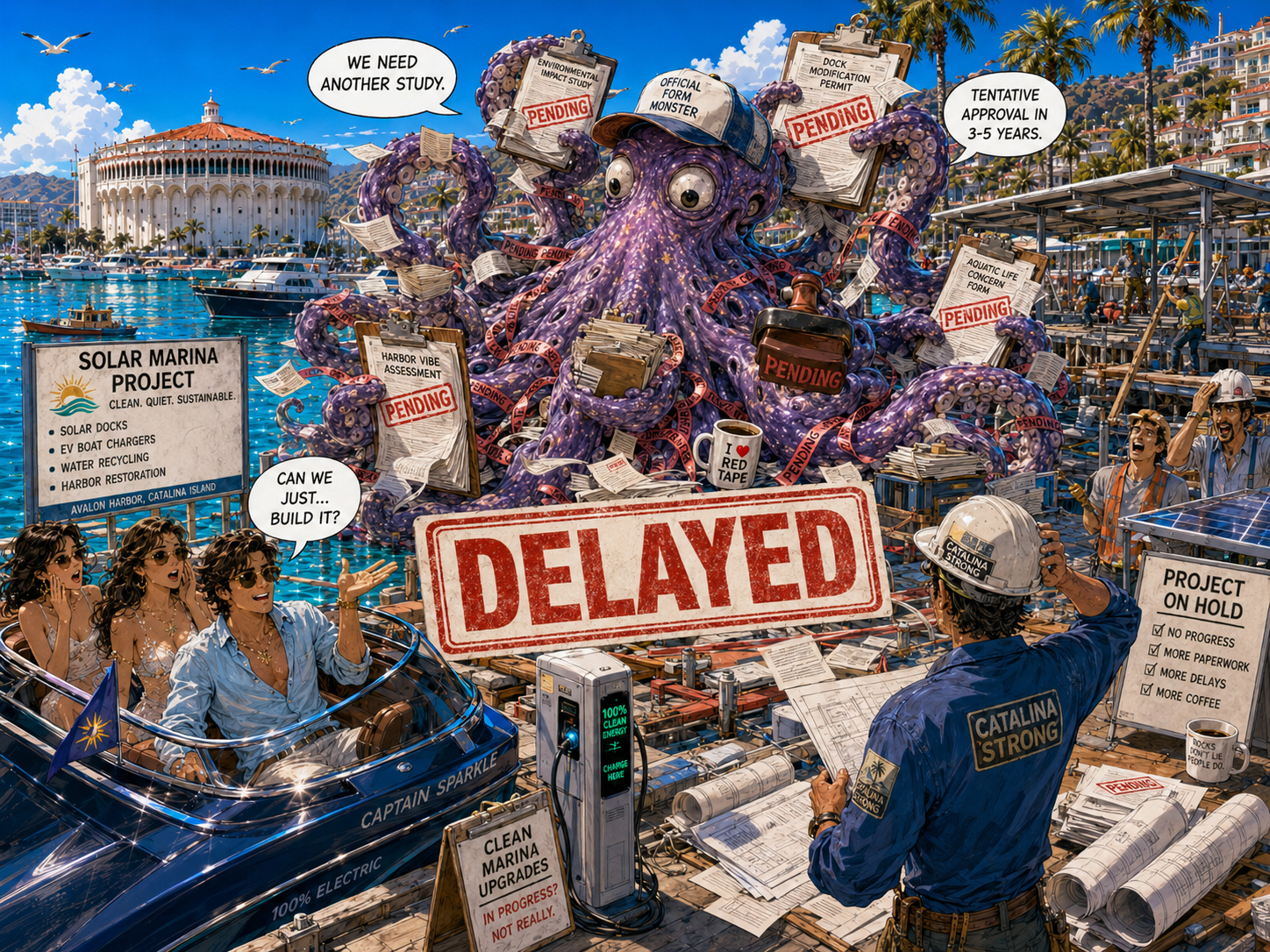
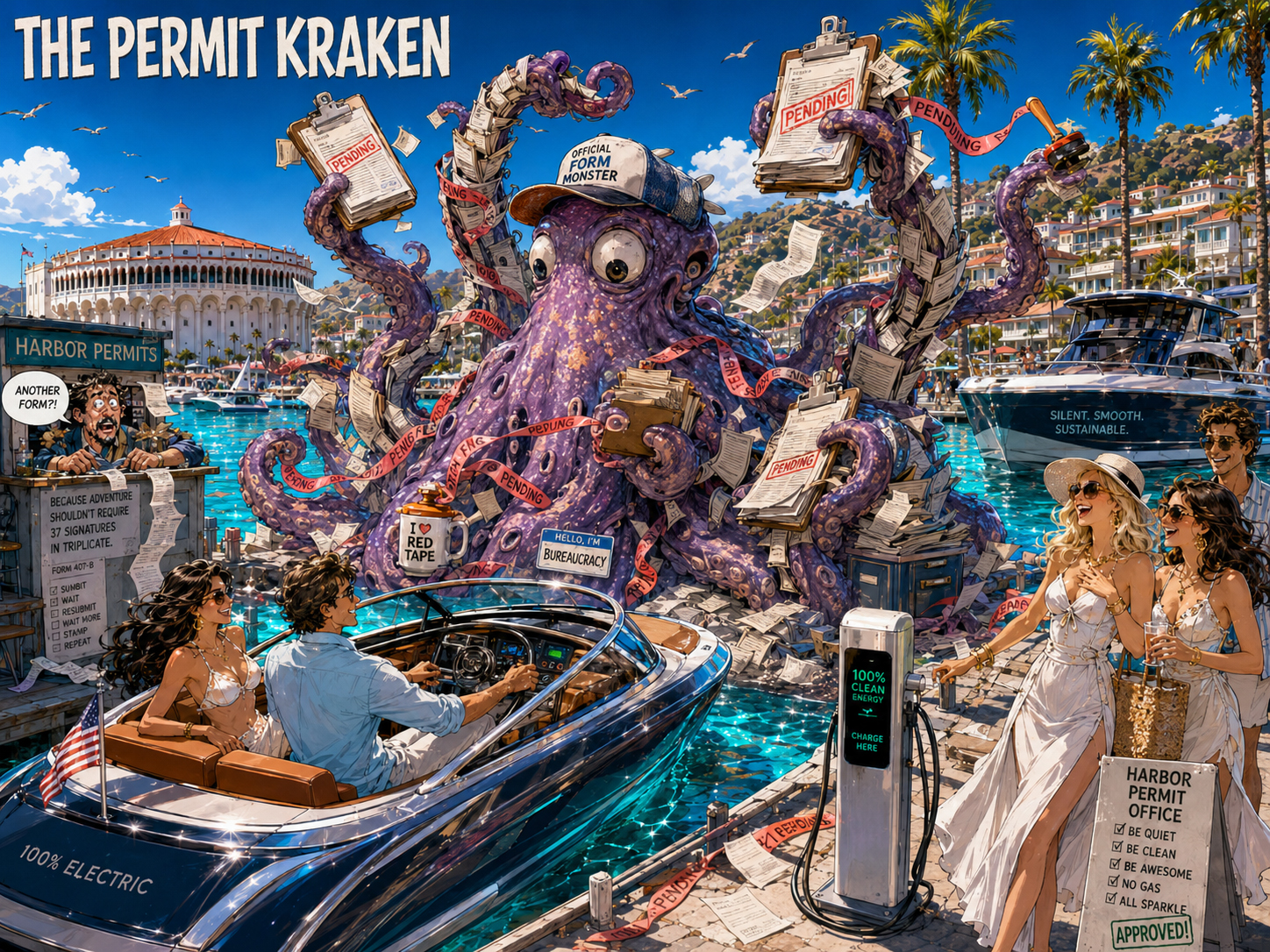 Permit Kraken Reviews Everything
“Please submit the island’s intentions in a searchable appendix.”
Permit Kraken Reviews Everything
“Please submit the island’s intentions in a searchable appendix.”
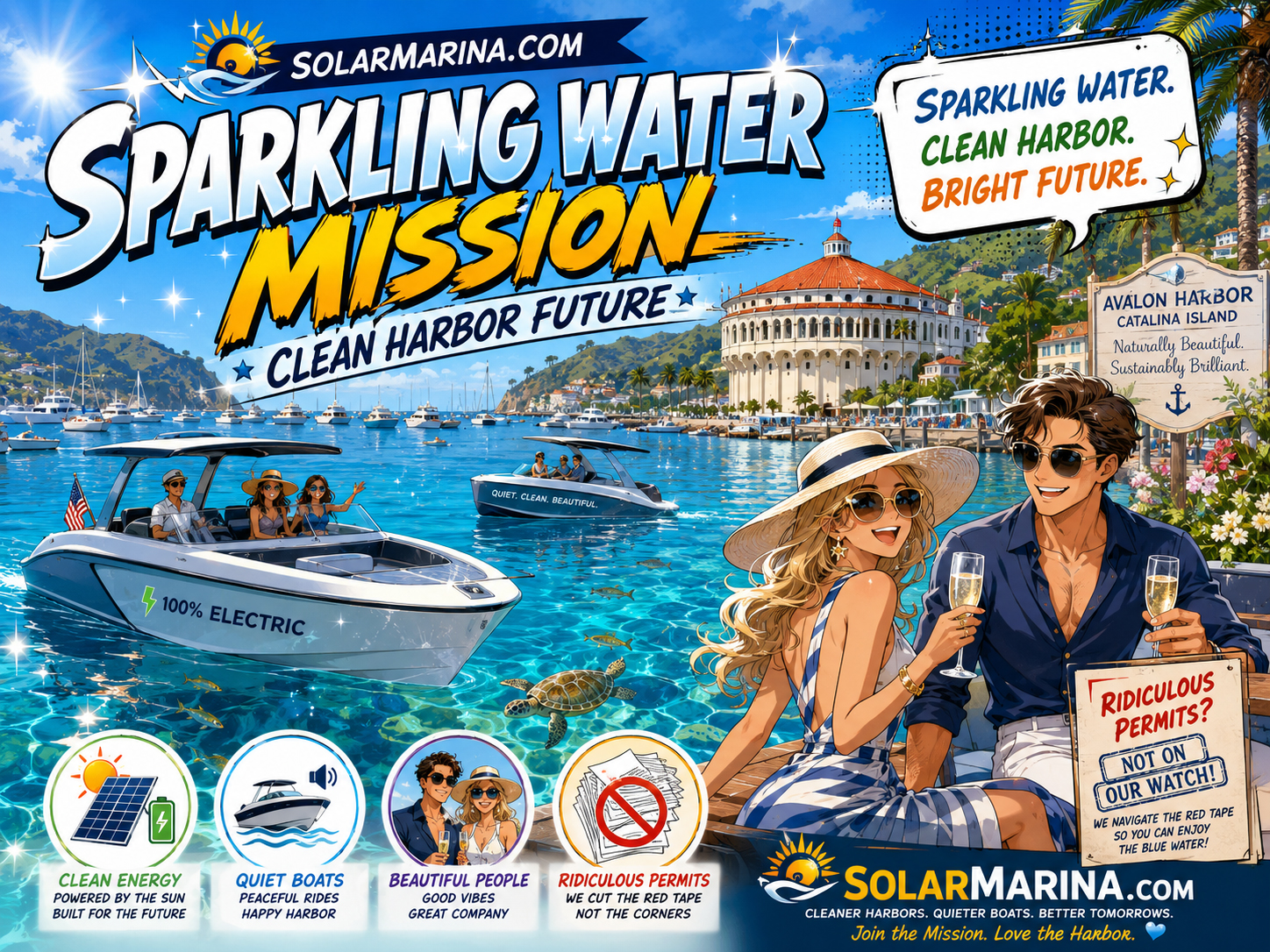 Sparkling Water Mission
The microgrid is the backstage crew for clean water.
Sparkling Water Mission
The microgrid is the backstage crew for clean water.
The clean harbor future needs a power system that matches the promise. Electric boats, shore-power support, and generator-free evenings are only credible when the island has cleaner, smarter energy behind them.
SolarMarina turns that serious idea into comedy because the transition will be messy. Old habits resist. Utility thinking drags. Permits multiply. Diesel Dan gets emotional. But the direction stays simple: clean power behind clean water.
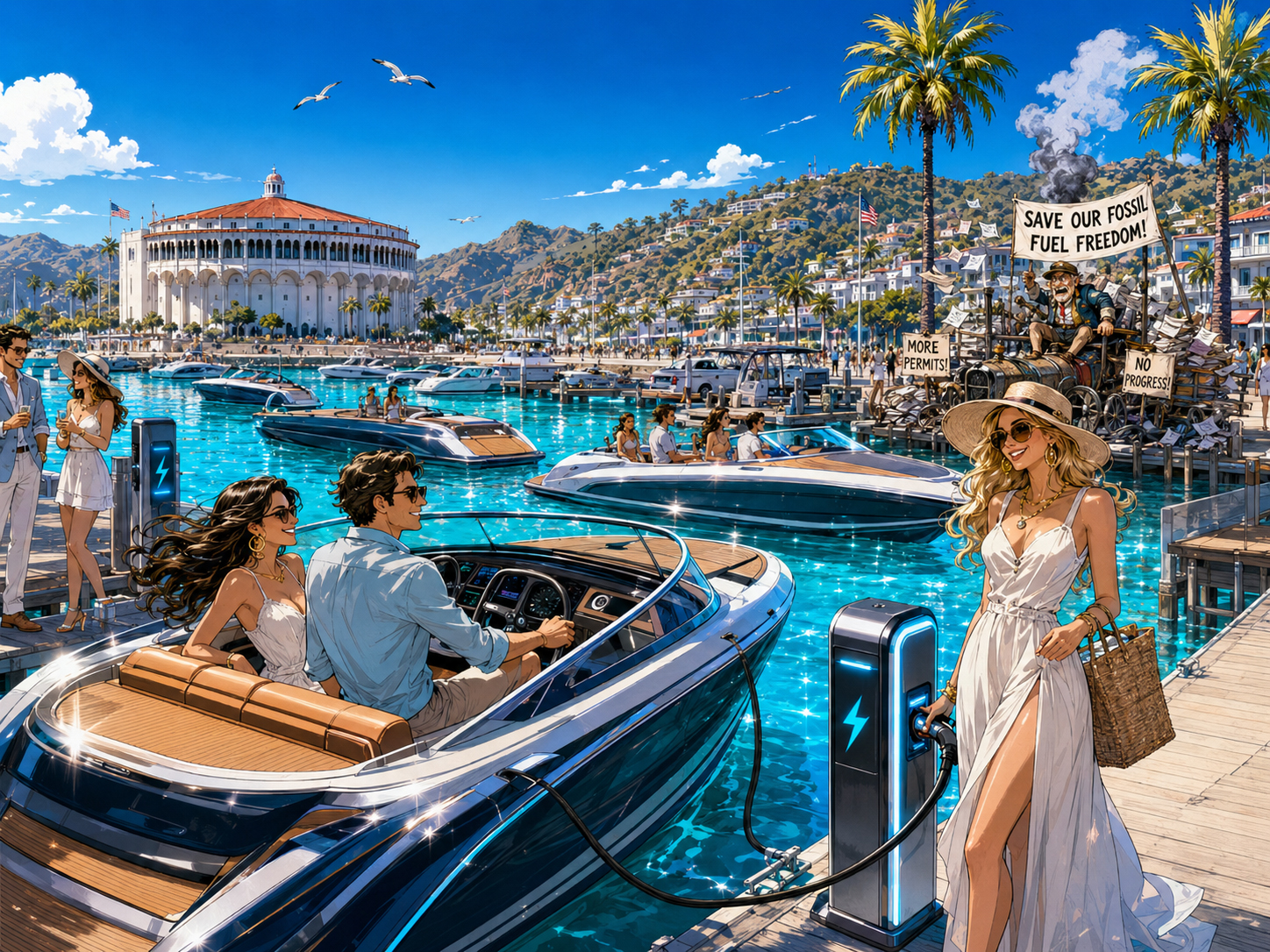
The manga can be wild. The microgrid design has to be sober, safe, and operated by people who know what they are doing.
Homes, tourism, marina loads, electric boat charging, shore power, pumps, communications, and emergency needs must be modeled realistically.
Floating solar, ground-mounted solar, tide systems, and other suitable resources should each be evaluated for real output, cost, and constraints.
Batteries can handle fast response and daily shifting. Gravity storage concepts may support longer-duration needs if site conditions pencil out.
Charging, shore power, storage dispatch, pumps, inverters, protections, metering, and emergency operations must be coordinated.
The system must survive environmental review, utility coordination, inspections, maintenance logistics, emergency planning, and the Permit Kraken’s appetite.
Real-world note: Microgrid design requires site-specific engineering, utility coordination, environmental and coastal review, electrical and fire code compliance, interconnection studies, emergency procedures, qualified operators, and long-term maintenance. This page is concept storytelling, not engineering guidance.
A good microgrid is not only technically sound. It is legible. The public should be able to see how the pieces connect: solar-covered water, solar and batteries, tide-powered docks, electric boat charging, generator-free evenings, and a harbor that feels cleaner than it did yesterday.
That is why SolarMarina is manga. The jokes make the system memorable. The characters make the technology understandable. The beautiful water makes the mission impossible to ignore.
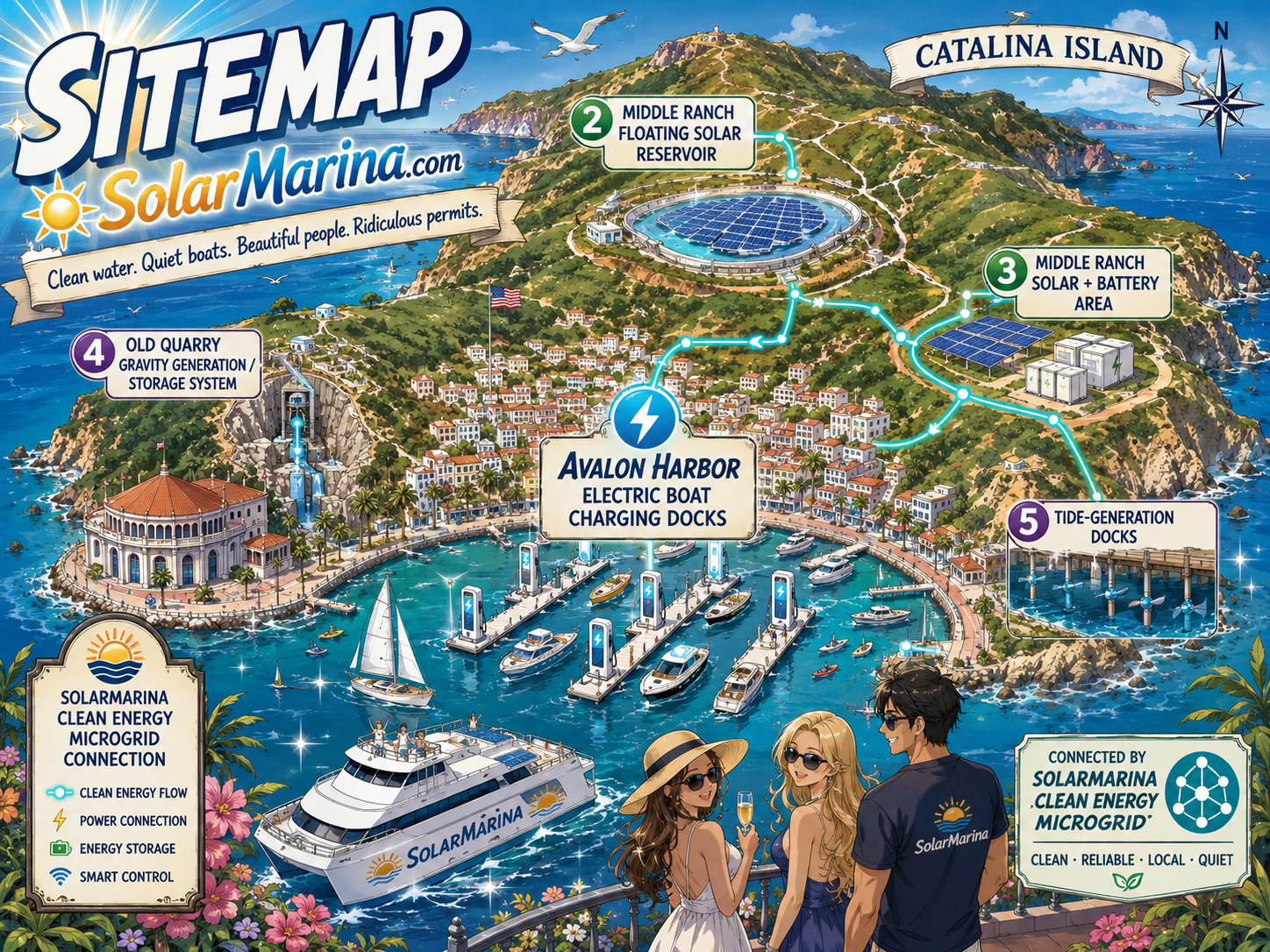
The clean microgrid is elegant because the pieces work together. The Permit Kraken hates this. It sees solar, batteries, docks, tide, gravity, boats, shore power, and public benefits — then asks whether each component has filed separate emotional paperwork.
The monster does not defeat the idea. It forces the idea to become clearer, safer, better documented, and funnier.
The Catalina clean energy microgrid connects every SolarMarina technology page.