Peak Demand Theater
Her favorite performance begins when every boat plugs in at once and someone says, “It’ll probably be fine.”
Clean Microgrid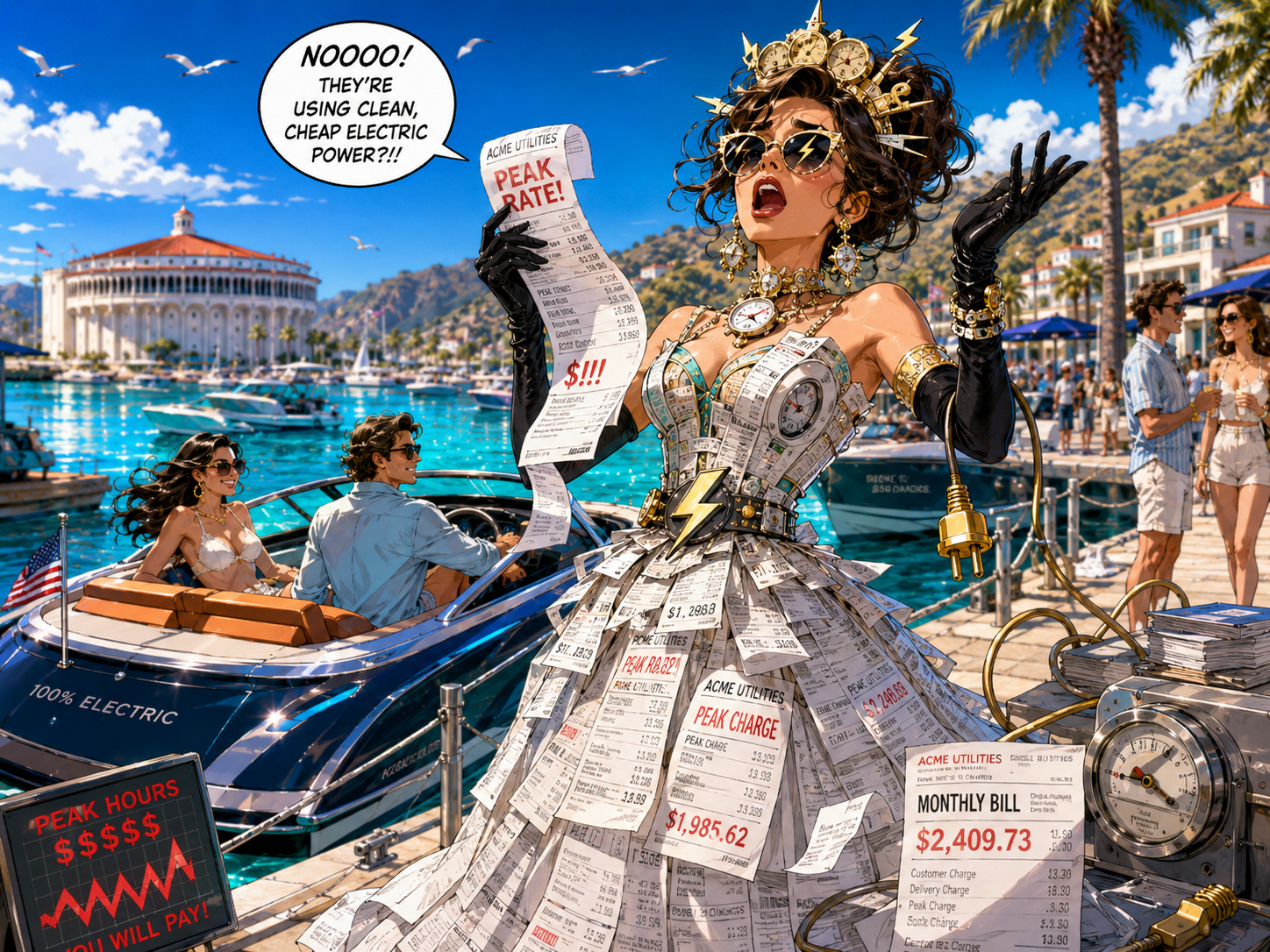
Madame Kilowatt Marina is the glamorous villain of electric harbor economics: dramatic invoices, peak-demand tantrums, utility-bill jewelry, and a deep hatred of smart charging, batteries, and anything that lets Avalon Harbor stay quiet without paying tribute.
Madame Kilowatt Marina is not just expensive electricity. She is theatrical expensive electricity. She appears whenever someone plugs in a boat at the wrong time, turns on every load at once, or forgets that clean power still needs smart controls.
In the SolarMarina manga, she loves confusion. She wants everyone charging at peak hours, generators rumbling, demand charges rising, and boat captains blaming “electricity” instead of planning.
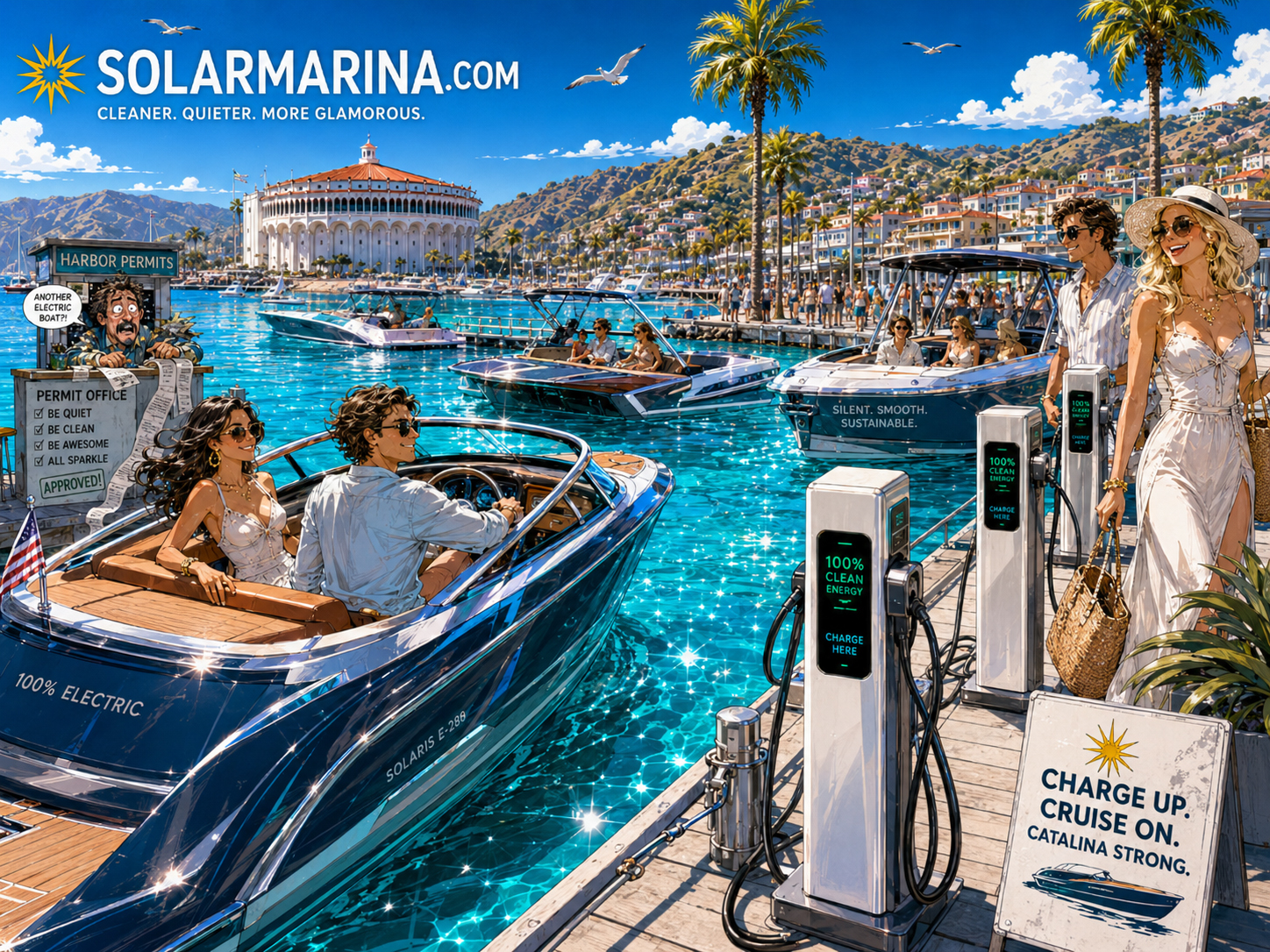
Clean marina power works best when solar, batteries, charging schedules, shore-power loads, and harbor operations are coordinated. Madame Kilowatt wants none of that. She wants panic charging, surprise loads, and one captain running three blenders during peak hours.
Her favorite performance begins when every boat plugs in at once and someone says, “It’ll probably be fine.”
Clean Microgrid
Batteries flatten drama. They store solar power, support evening loads, and ruin her grand entrance.
Solar + Battery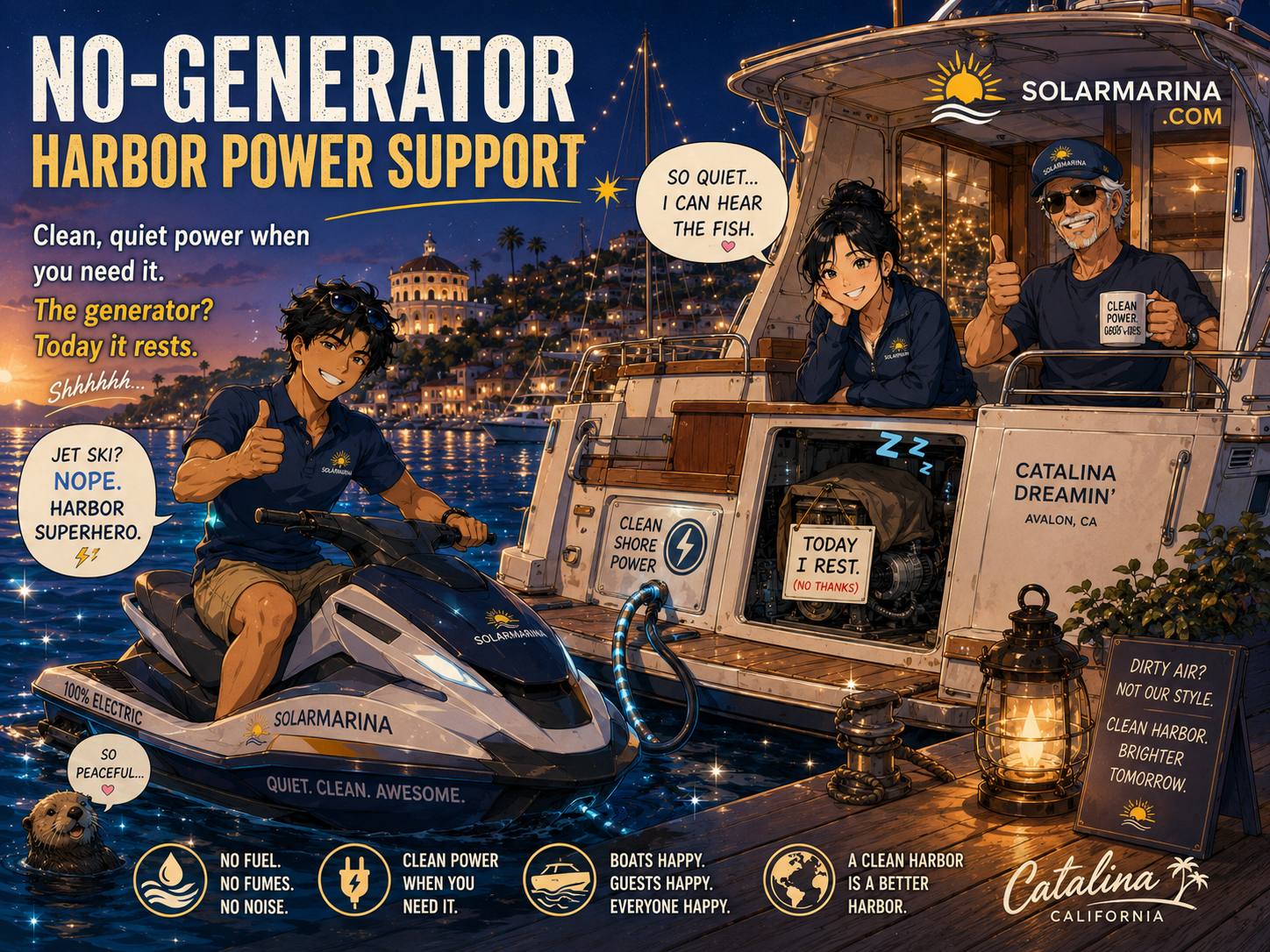
Load limits, smart controls, and proper shore power make her furious because the dock stays calm.
No Generator Power
Madame Kilowatt does not oppose clean water. She opposes clean planning. If the marina forgets batteries, controls, and schedules, she arrives smiling.
Electric boat charging is powerful only when it is managed. The marina needs load controls, scheduling, metering, battery coordination, safety limits, and clear user rules. Otherwise, the clean harbor future becomes a very attractive way to create a very unattractive bill.
Madame Kilowatt wants chaos. SolarMarina wants choreography. Boats charge when solar is strong, batteries support evening loads, critical needs are prioritized, and nobody gets to run a floating nightclub from a single mystery adapter.

The villain is theatrical. The counterattack is disciplined engineering.
Control boat charging, shore-power support, and dock loads so the marina does not create avoidable peak demand.
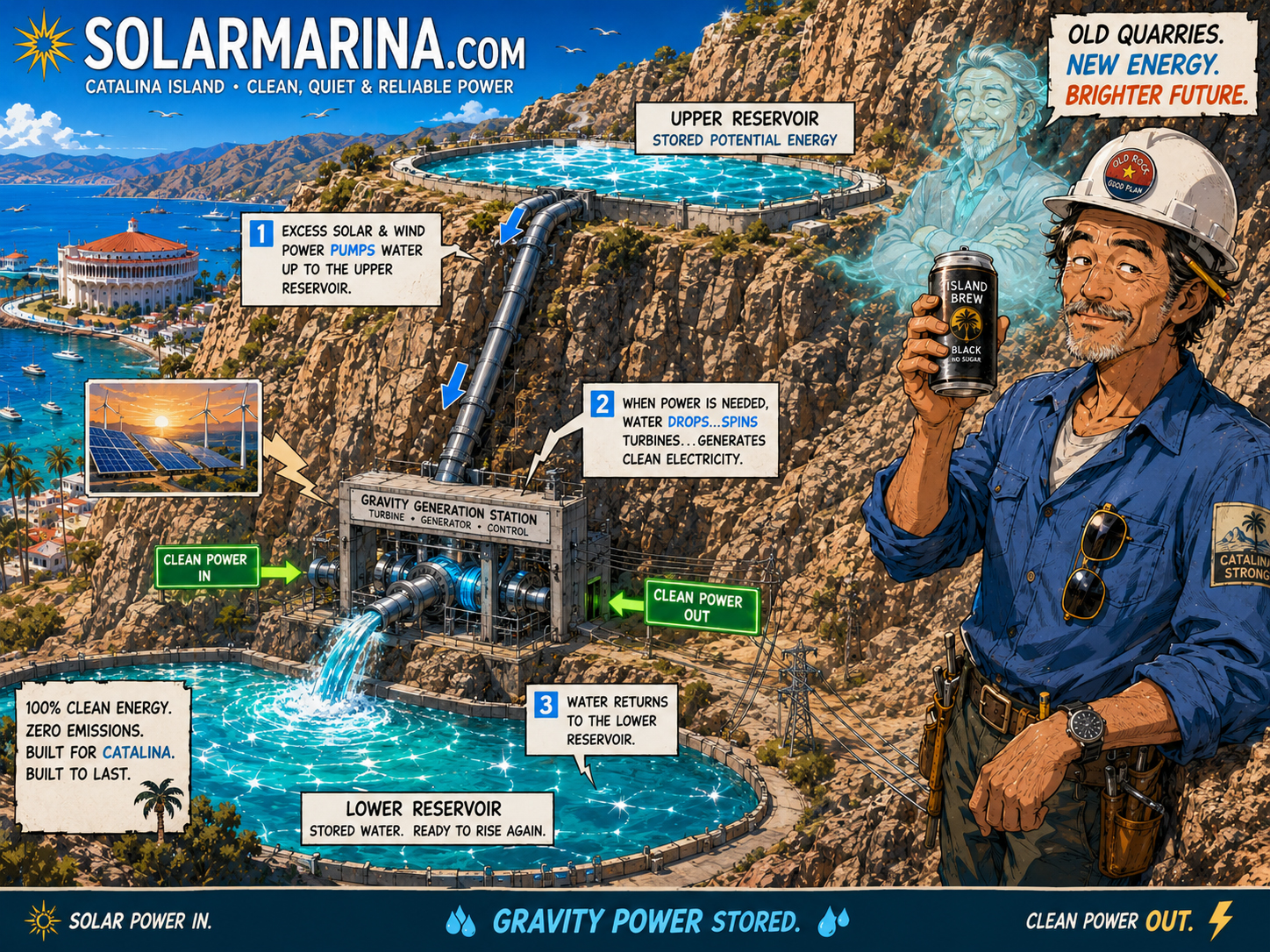
Solar generation and storage can shift energy into the hours when the harbor wants quiet power most.
Not every boat load is equal. Safety, refrigeration, lighting, communications, and basic comfort come before vanity chaos.
Users need clear rules: when to charge, what loads are allowed, what costs more, and why the blender cannot declare independence.
Marine-rated equipment, grounding, isolation, GFCI/ELCI protection, interlocks, and qualified operators keep the clean marina boringly safe.
Real-world note: electric boat charging, battery storage, marina shore power, and load management require site-specific engineering, utility coordination, permitting, inspections, and code-compliant marine electrical design.
Madame Kilowatt sells fear: peak charges, complexity, and the idea that clean marina power must be financially painful. Catalina Catalina sells beauty: sparkling water, quiet boats, and a system elegant enough to make the bill behave.
Their rivalry is perfect: one wears utility bills, the other wears white linen. One wants drama. The other wants the harbor to sparkle without needing a financial support group.

You do not defeat electricity costs with wishful thinking. You defeat the drama with design: charge at better times, store solar, manage loads, avoid peaks, and make the marina’s energy behavior as elegant as its harbor view.
In the manga, Madame Kilowatt does not disappear. She gets a calendar invite, a battery dispatch schedule, and a smaller stage.
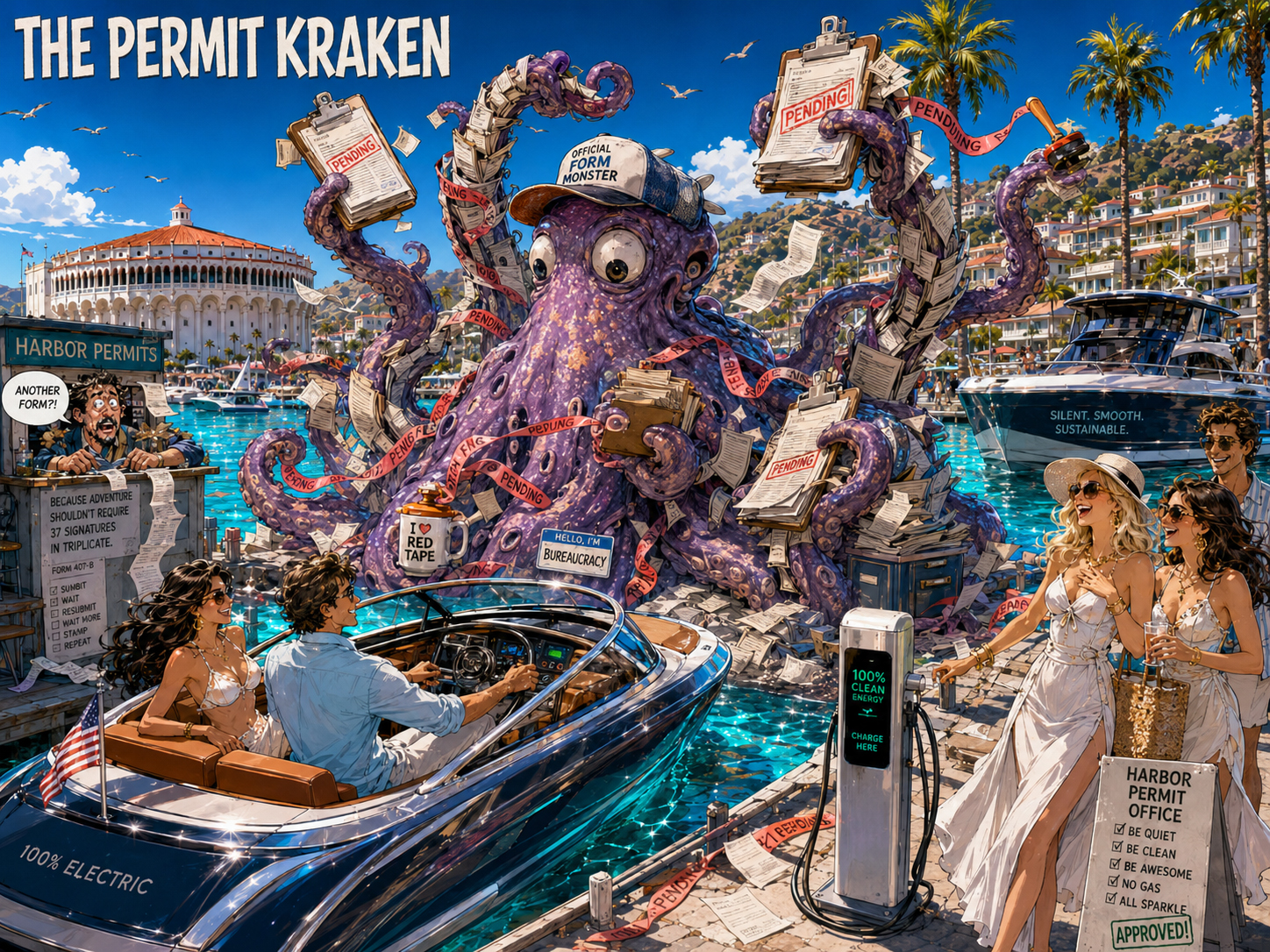
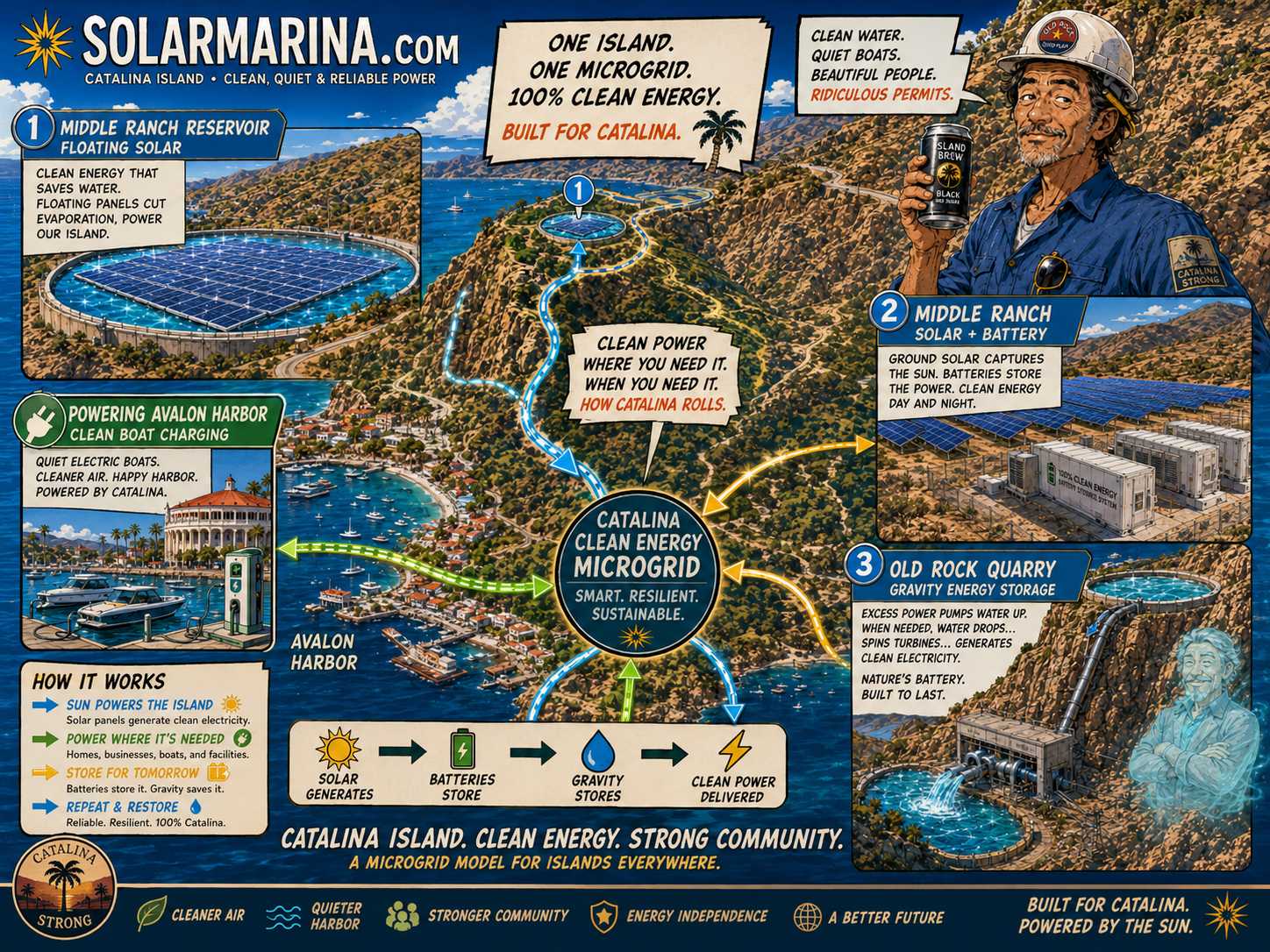
Madame Kilowatt is one villain. The full SolarMarina story includes batteries, floating solar, gravity storage, tide docks, clean boats, beautiful people, and one very stubborn Permit Kraken.