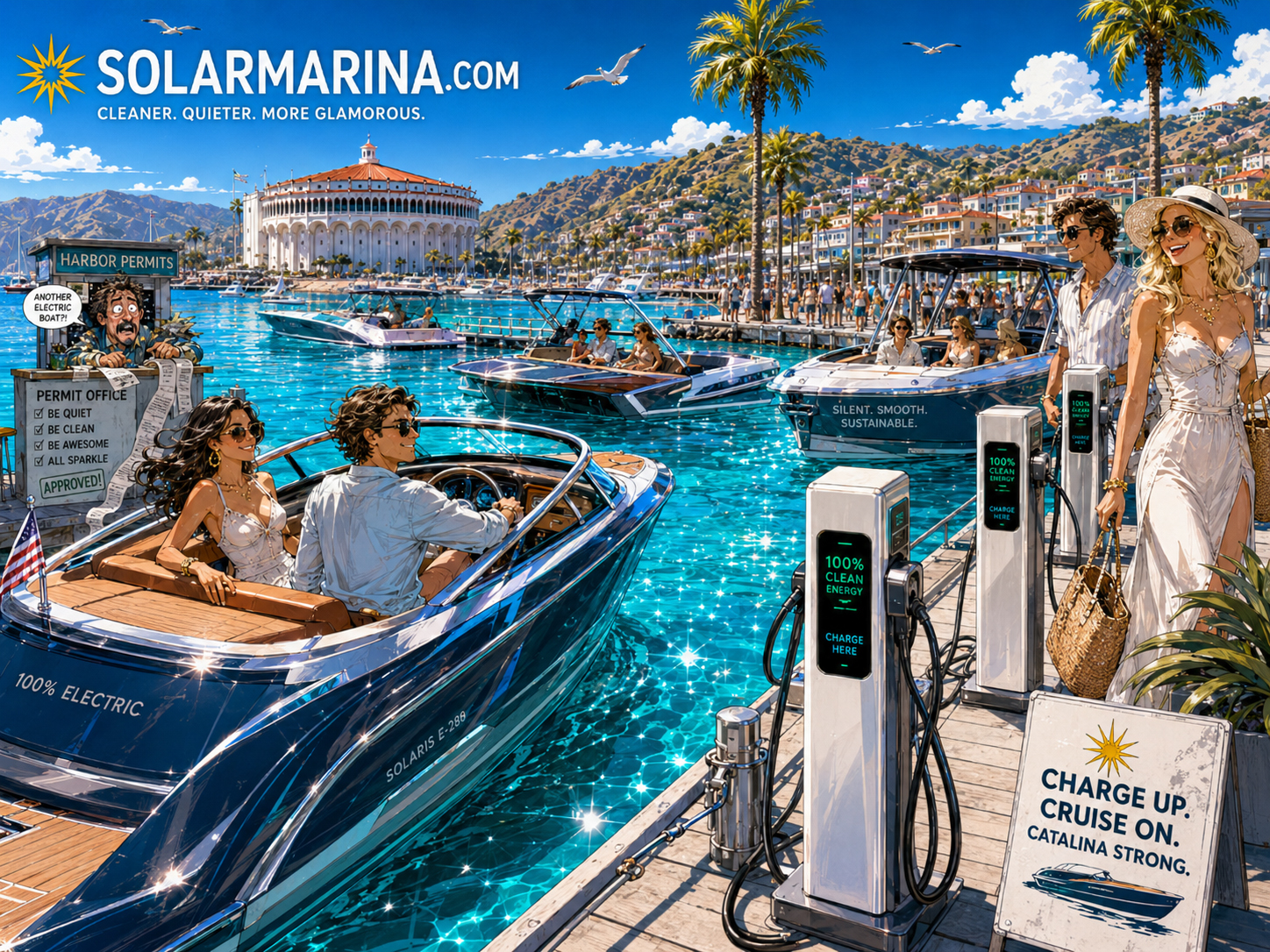
Electric Boat Charging
Quiet boats need clean plugs, smart controls, and dockside safety.
Boat Charging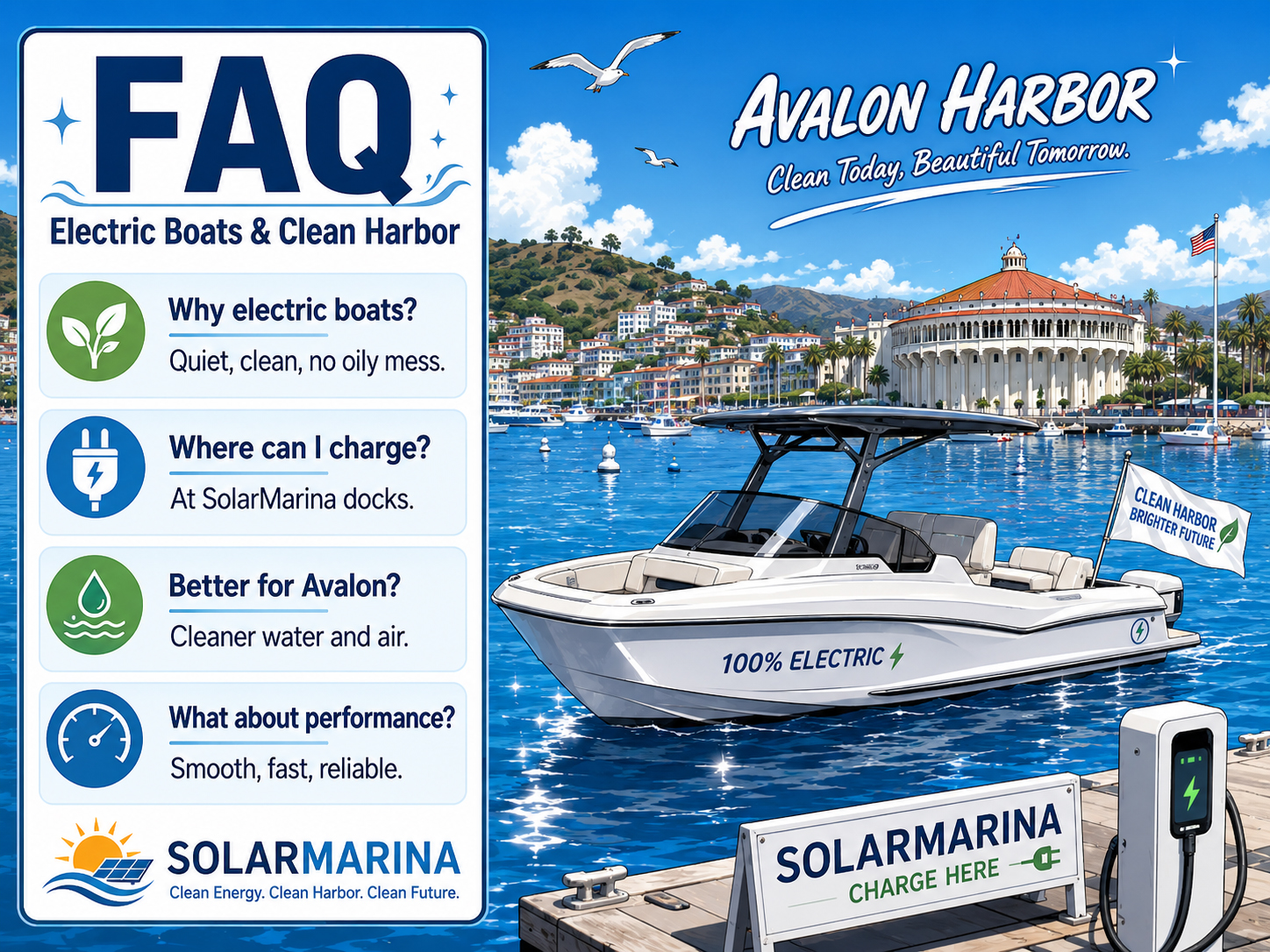
SolarMarina is a manga comedy about a clean electric marina future, but the questions are real: how do boats charge, what happens to old boats, how do generators stay off, where does the power come from, and why does the Permit Kraken keep asking for Appendix 47-B?
The short version: SolarMarina imagines Avalon Harbor and marinas worldwide moving toward cleaner water, quieter boats, electric charging, generator-free dock power, solar-backed infrastructure, and enough comedy to survive the permitting process.
SolarMarina.com is a manga comedy concept site about a potential clean energy future for Catalina Island and marinas worldwide. It uses characters, jokes, and beautiful images to talk about real technology: electric boats, clean shore power, floating solar, batteries, tide docks, gravity storage, and smarter marina operations.
It is the whole SolarMarina formula. Clean water is the mission. Quiet boats are the behavior. Beautiful people make the future feel glamorous instead of like homework. Ridiculous permits are the comic obstacle every clean infrastructure idea eventually has to survive.
No. SolarMarina’s transition concept is more practical and funnier than that. Older fossil-fuel boats can be assisted into the harbor by electric Jet Ski harbor valets, use clean shore-power support where properly engineered, and reduce engine and generator use in sensitive harbor areas. The old boat can visit. The fumes cannot.
It is the SolarMarina transition service: electric Jet Skis help guide or tow older boats into the clean harbor zone quietly. In the story, they also help provide properly engineered clean temporary shore-power support so onboard generators can stay off. In the manga, Captain Sparkle calls this “marina manners.”
Conceptually, a mobile marine-rated battery/inverter support system could provide power through a boat’s shore-power inlet, but only with proper engineering. It would require marine-rated equipment, correct voltage and frequency, isolation, grounding, GFCI/ELCI protection, interlocks, load limits, safe connectors, qualified operators, and code-compliant design. SolarMarina treats the idea as a concept, not installation instructions.
Because dockside generators can ruin the clean harbor experience with noise and exhaust. The SolarMarina joke is that sunset should sound like waves, gulls, dinner, music, and conversation — not a generator coughing through dessert. No-generator harbor power makes the marina feel cleaner and more luxurious.
SolarMarina imagines a layered clean island system: floating solar over reservoir surfaces, ground-mounted solar with batteries, tide-powered docks where practical, old quarry gravity storage concepts, smart controls, and electric boat charging. The island becomes the power plant. The harbor becomes the proof.
It is the idea that reservoir surface area can support floating solar where conditions allow. SolarMarina calls this “the lake wears solar sunglasses.” The serious part is that floating solar can make clean electricity and may help reduce direct sun exposure on covered water areas, slowing evaporation pressure where properly designed.
It is the idea of using elevation as energy storage: use excess clean power to pump water uphill, then release water downhill through turbines when power is needed. In the story, Quarry Ojisan explains it this way: “You pump water uphill when the sun is rich. You let it fall when Avalon wants margaritas.”
No. SolarMarina does not pretend tide-powered docks are a magic answer. They are one possible clean-energy layer. The serious idea is that dock or tidal movement may support small generation, sensors, lighting, or storage where practical, but it must be based on real site data, marine engineering, maintenance access, and safety.
The Permit Kraken is the bureaucracy monster: half sea monster, half paperwork, fully annoying. It represents the forms, reviews, approvals, studies, meetings, resubmittals, and delays that clean infrastructure projects must survive. SolarMarina mocks the absurdity while still respecting real safety and permitting requirements.
SolarMarina is not primarily anti-anyone. It is anti-fossil-fuel thinking. The target is the old assumption that an island’s reliable future must keep extending yesterday’s combustion logic. The site argues, through comedy, that Catalina deserves a stronger clean-energy imagination.
Marine electrical safety is non-negotiable: marine-rated hardware, grounding, isolation, GFCI/ELCI protection, interlocks, load management, fire safety, emergency procedures, inspections, trained operators, and code compliance. The comedy can be wild. The engineering cannot be.
Yes. Avalon is the story stage, but the idea applies to every marina that wants cleaner water, quieter docks, better shore power, electric boat charging, and a more beautiful visitor experience. SolarMarina is a Catalina comedy with a worldwide marina message.
Go straight to the part of the clean harbor future that is making Diesel Dan nervous.
Quiet boats need clean plugs, smart controls, and dockside safety.
Boat Charging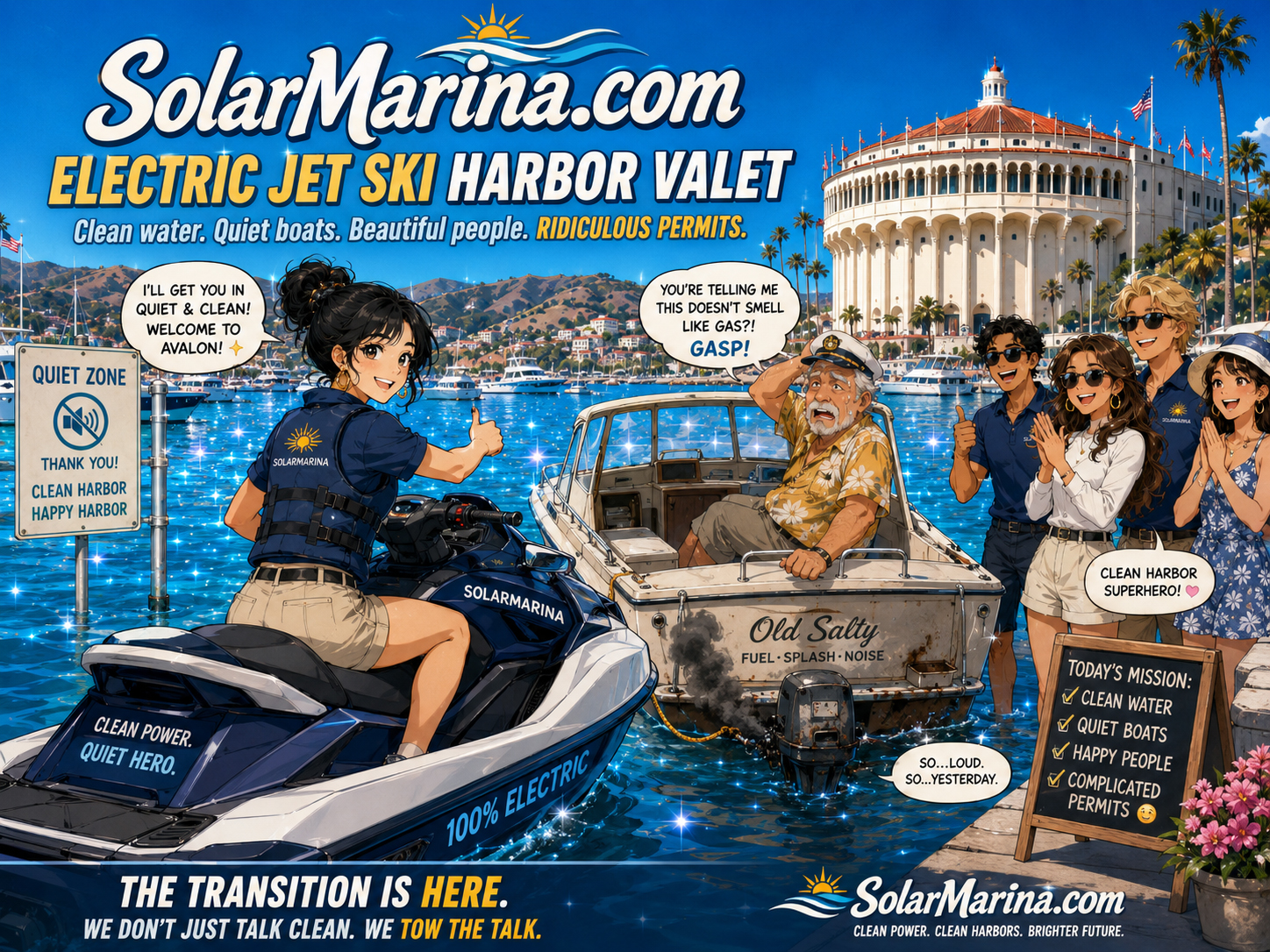
Old fossil boats get escorted by the future while trying to look dignified.
Jet Ski Valet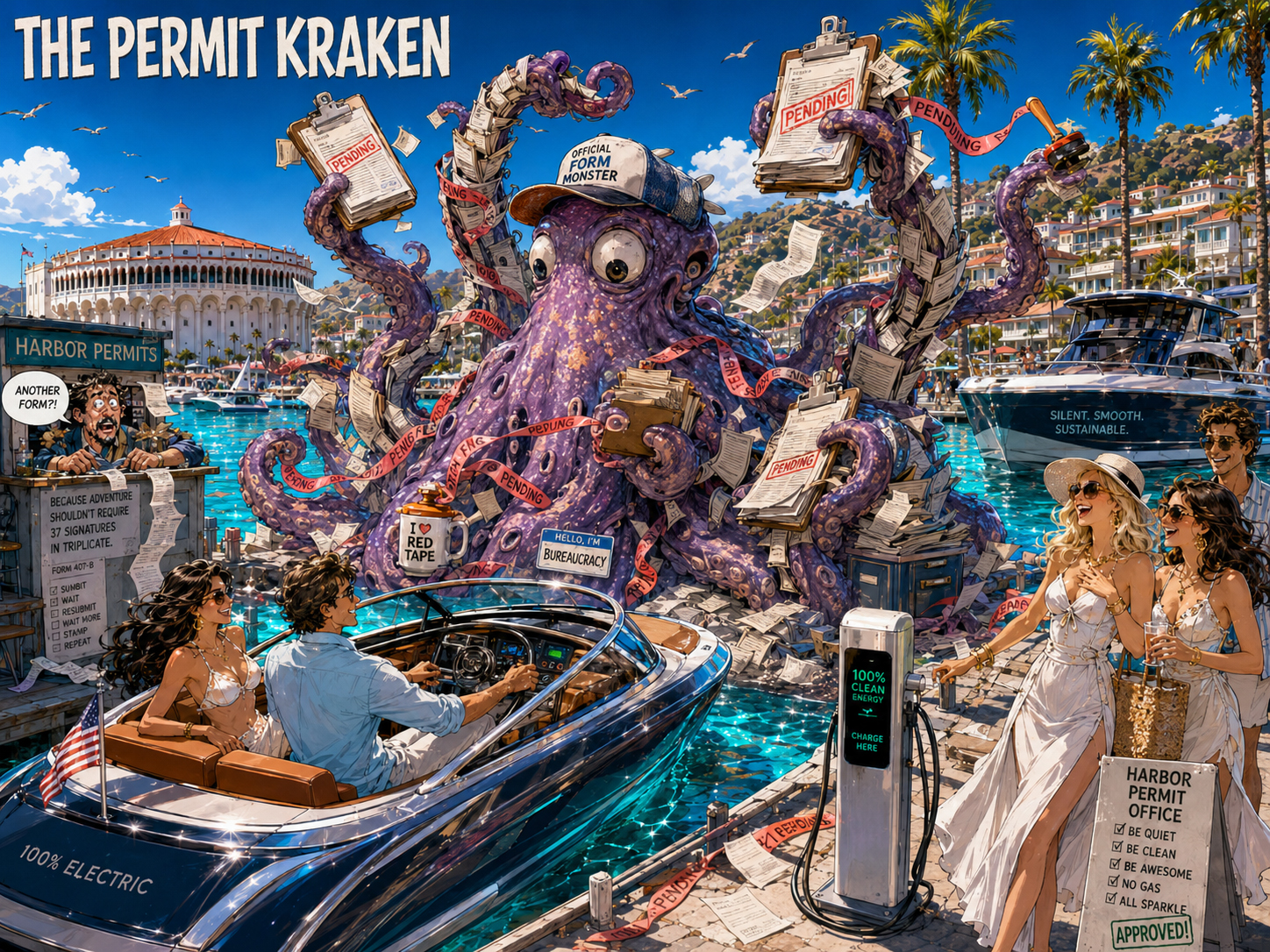
The clean marina system can sound complicated because it combines boats, docks, electricity, water, solar, storage, tide, gravity, safety, permitting, and public behavior. That is why SolarMarina uses characters. They make each part easier to remember.

Each SolarMarina page answers one part of the larger clean harbor question.