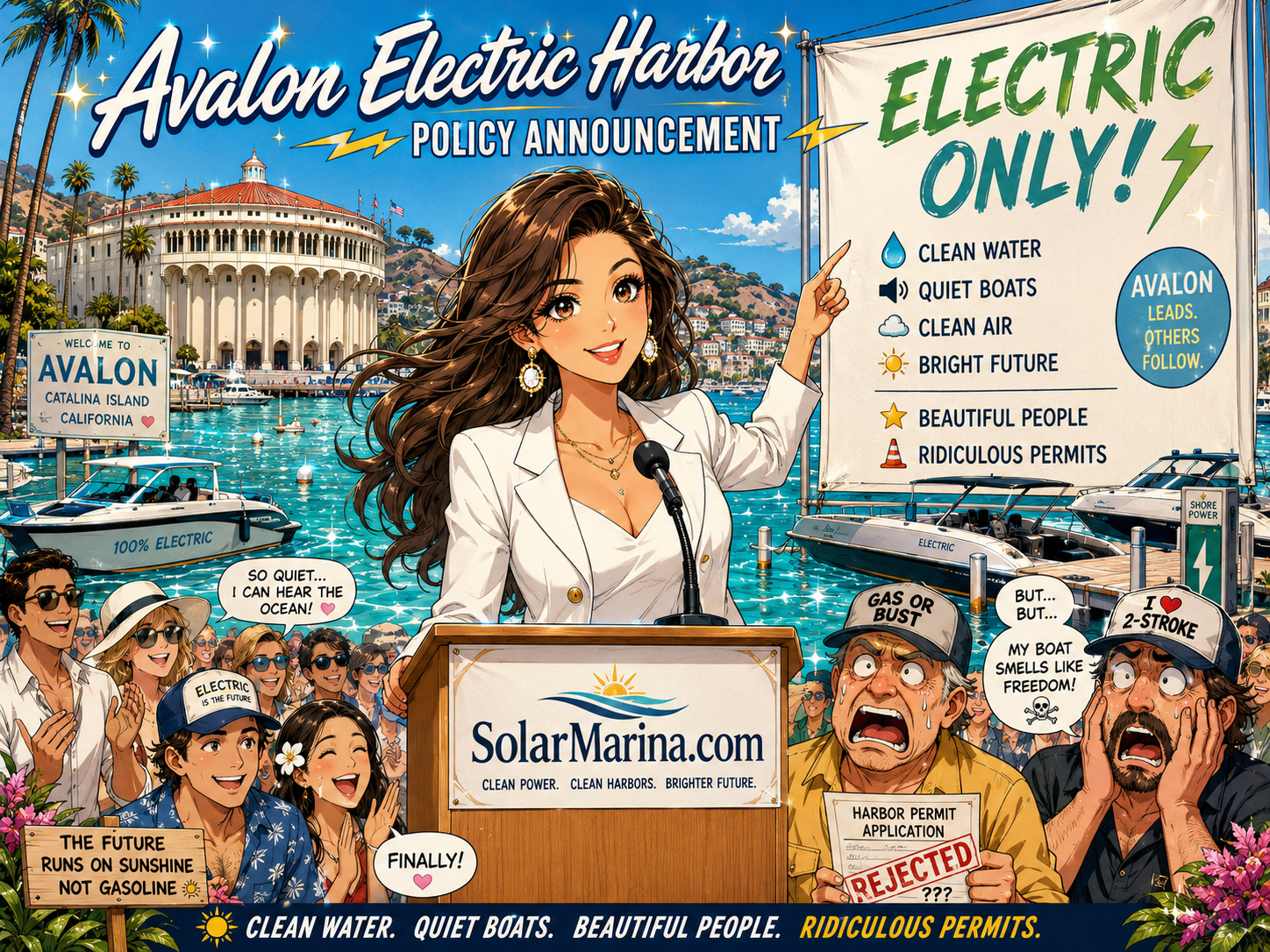
Declare the Goal
Avalon’s future harbor is clean, quiet, electric-friendly, generator-light, and built around sparkling water.
Avalon Electric Harbor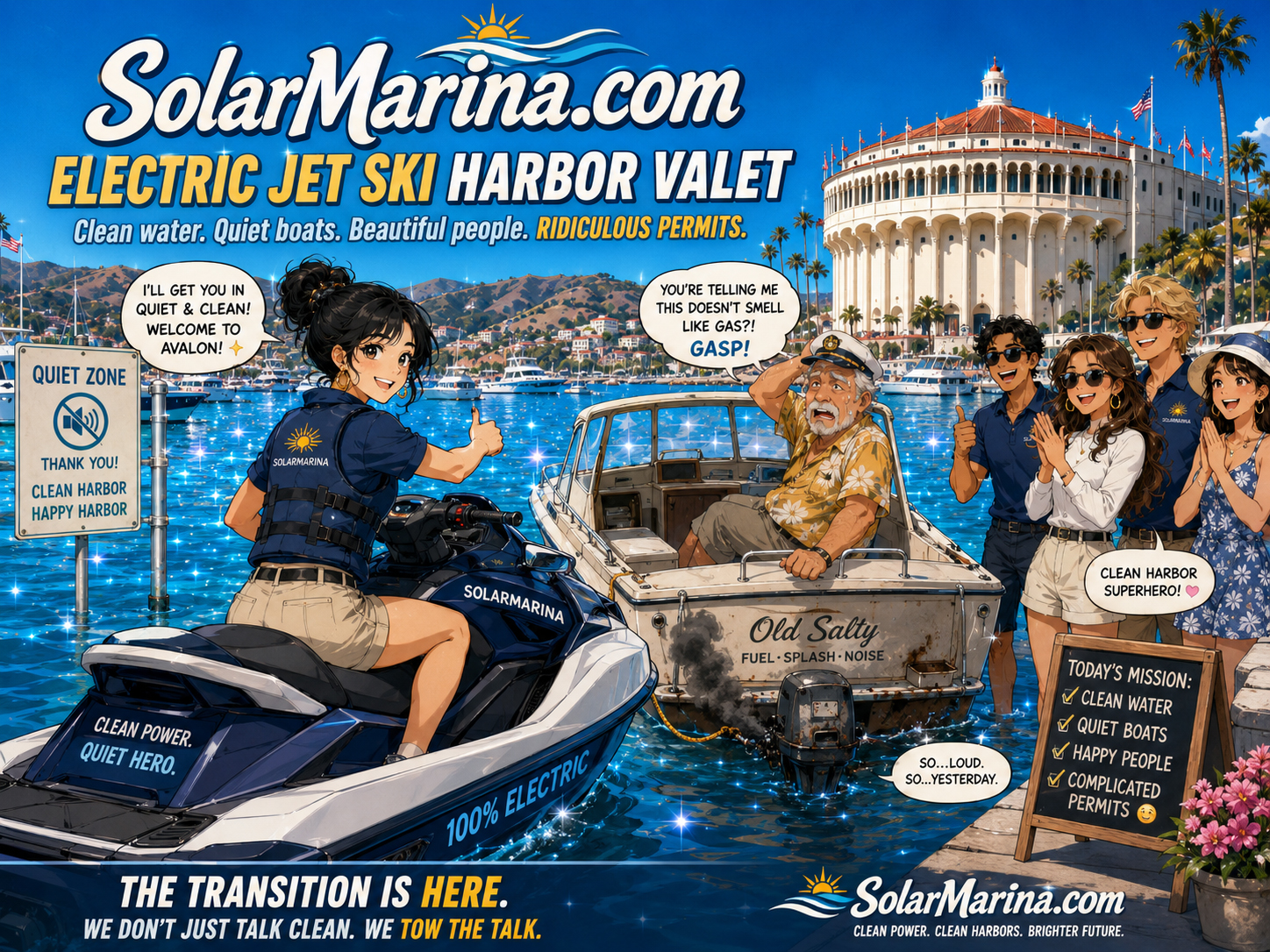
SolarMarina’s transition plan is firm, funny, and practical: use electric Jet Ski harbor valets, clean shore-power support, electric boat charging, no-generator dock rules, and clean island power to move Avalon Harbor toward quiet electric boating without turning every dock into a shouting match.
A clean electric harbor cannot arrive by yelling at every existing boat owner. Avalon needs a transition plan that helps older boats behave better while the marina builds out charging, shore power, storage, clean generation, and harbor operating rules.
That is where SolarMarina becomes funny and useful. Diesel Dan does not get thrown into the sea of shame. He gets escorted by the future, plugged into clean power, and gently informed that his generator is not a personality.
The first transition step is cultural: Avalon Harbor should sparkle, boats should be quiet, and onboard generators should not own the evening. Everyone needs to understand the destination before the rules harden.
Avalon’s future harbor is clean, quiet, electric-friendly, generator-light, and built around sparkling water.
Avalon Electric Harbor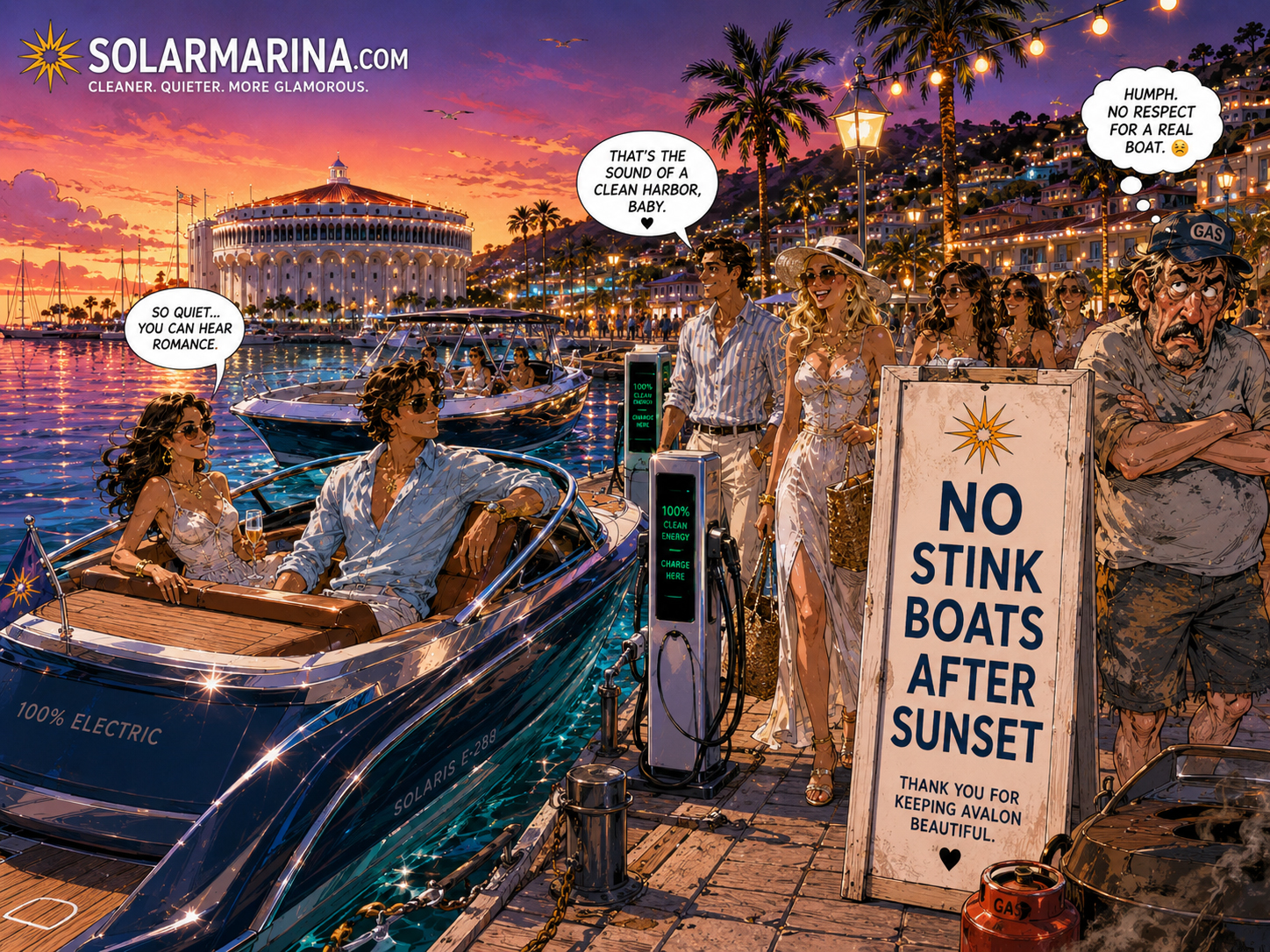
“No Stink Boats After Sunset” turns clean harbor behavior into a phrase everyone remembers immediately.
No Stink Boats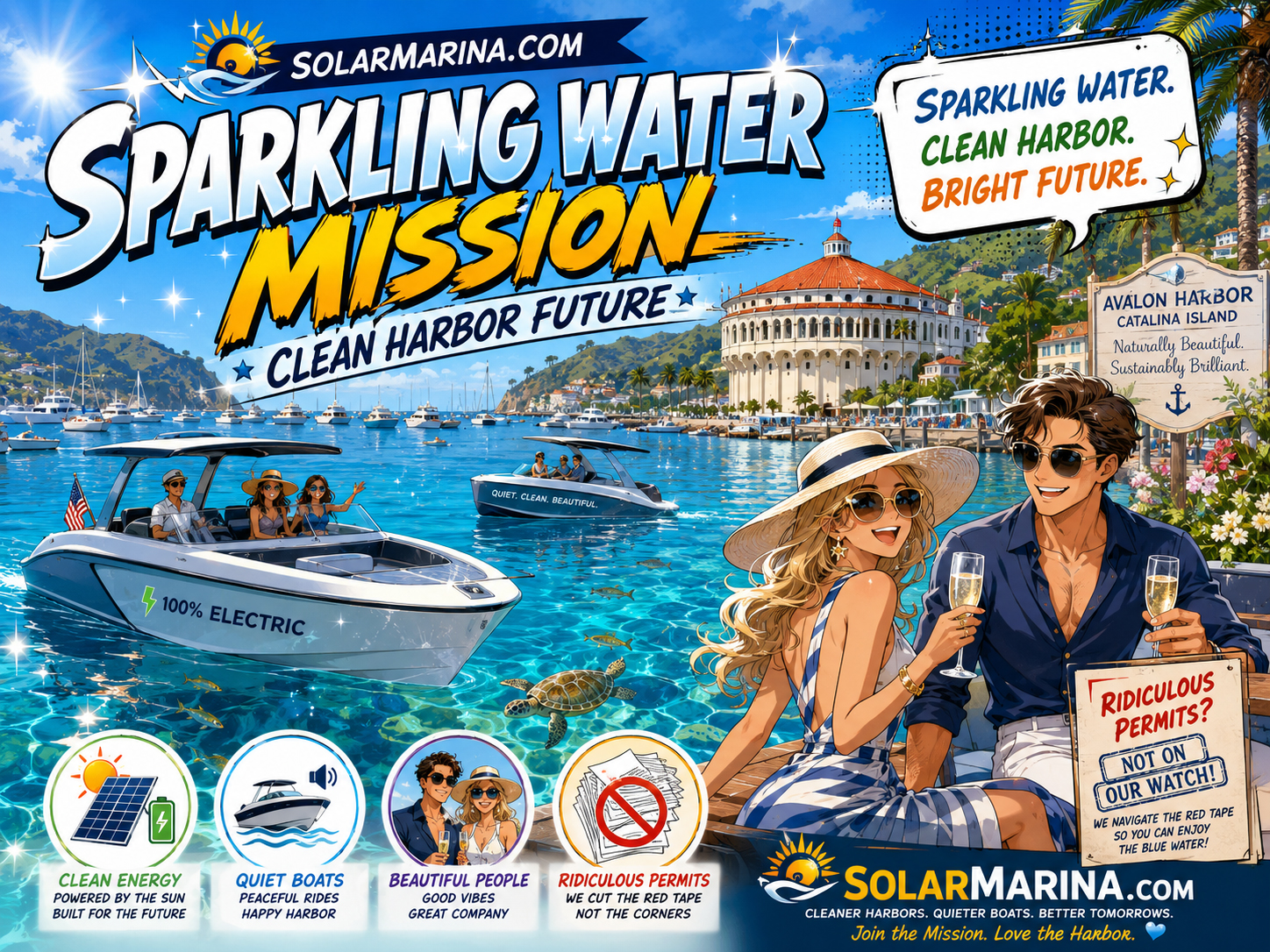
The harbor is the reason. The boats are guests. The rules must protect the jewel.
Sparkling Water Mission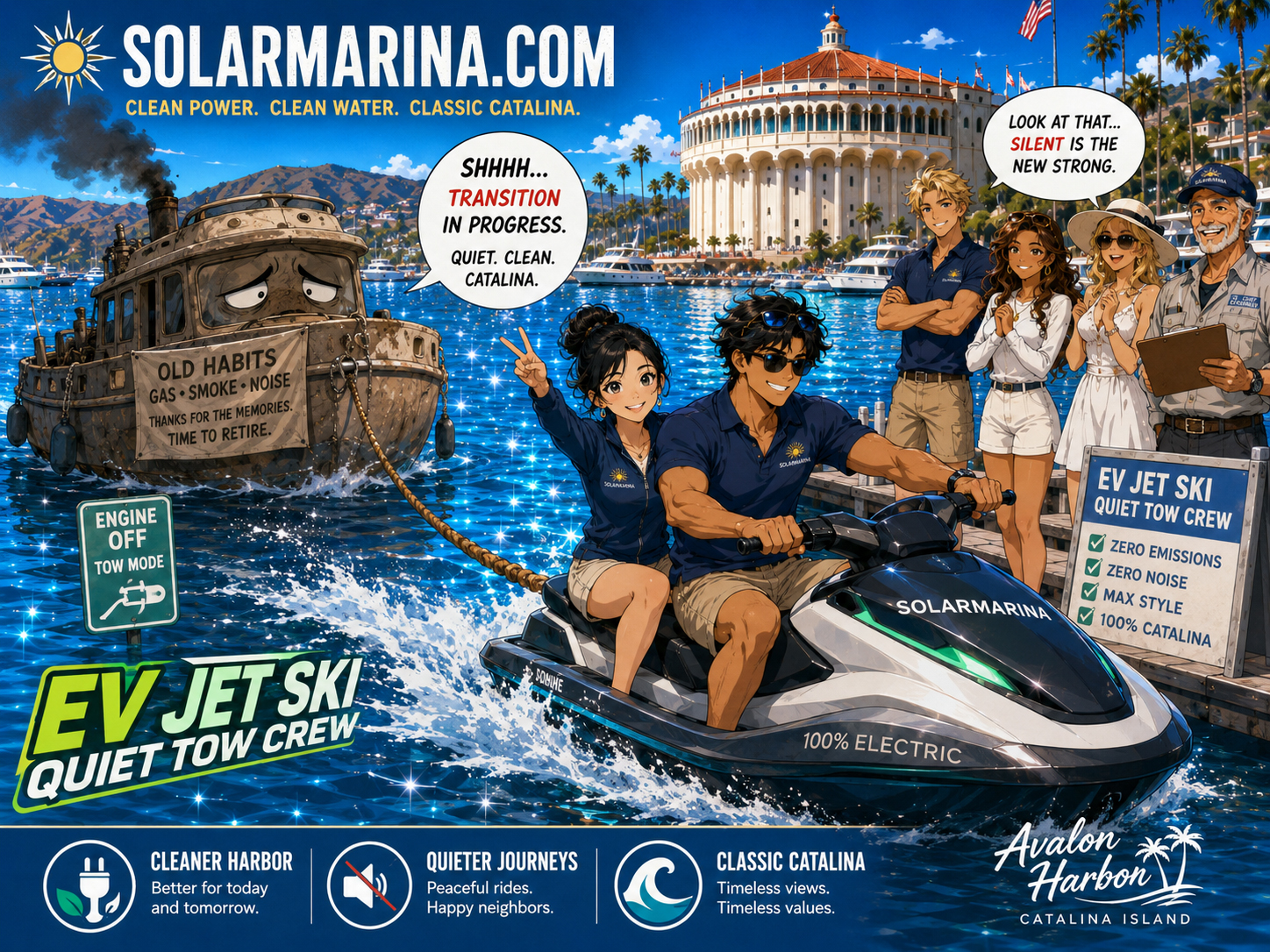
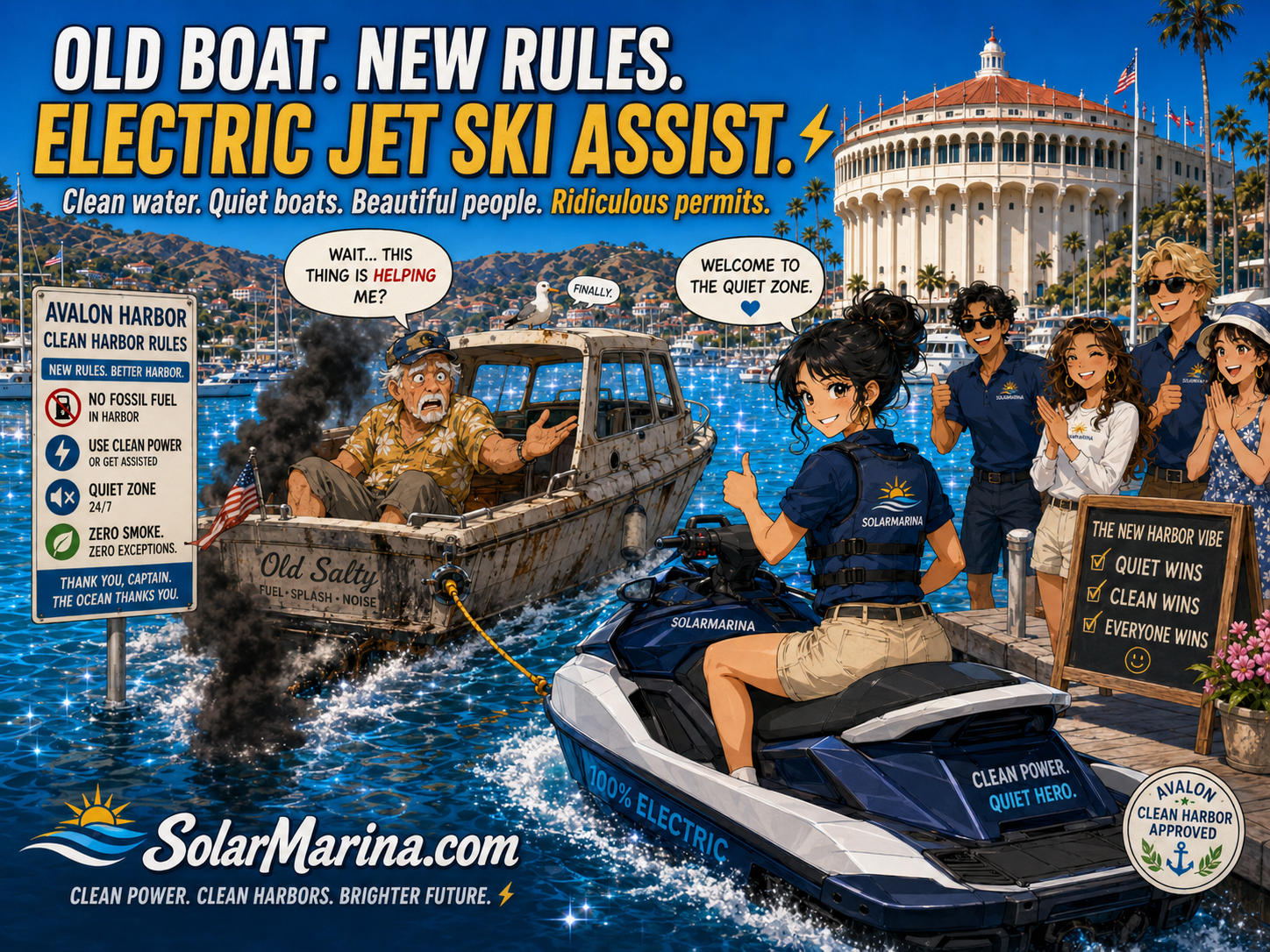
Electric Jet Ski harbor valets turn the transition into a service instead of a fight. Old boats enter quietly, engines stay reduced where practical, and the harbor gets a little more peace.
Electric Harbor Valet
Electric Jet Skis help older boats cross into the clean harbor future.
Old Boat, New Rules
The classic boat can visit. The dirty behavior cannot.
 Diesel Dan Panics
Every transition needs one person who says “but tradition” near a fuel stain.
Diesel Dan Panics
Every transition needs one person who says “but tradition” near a fuel stain.
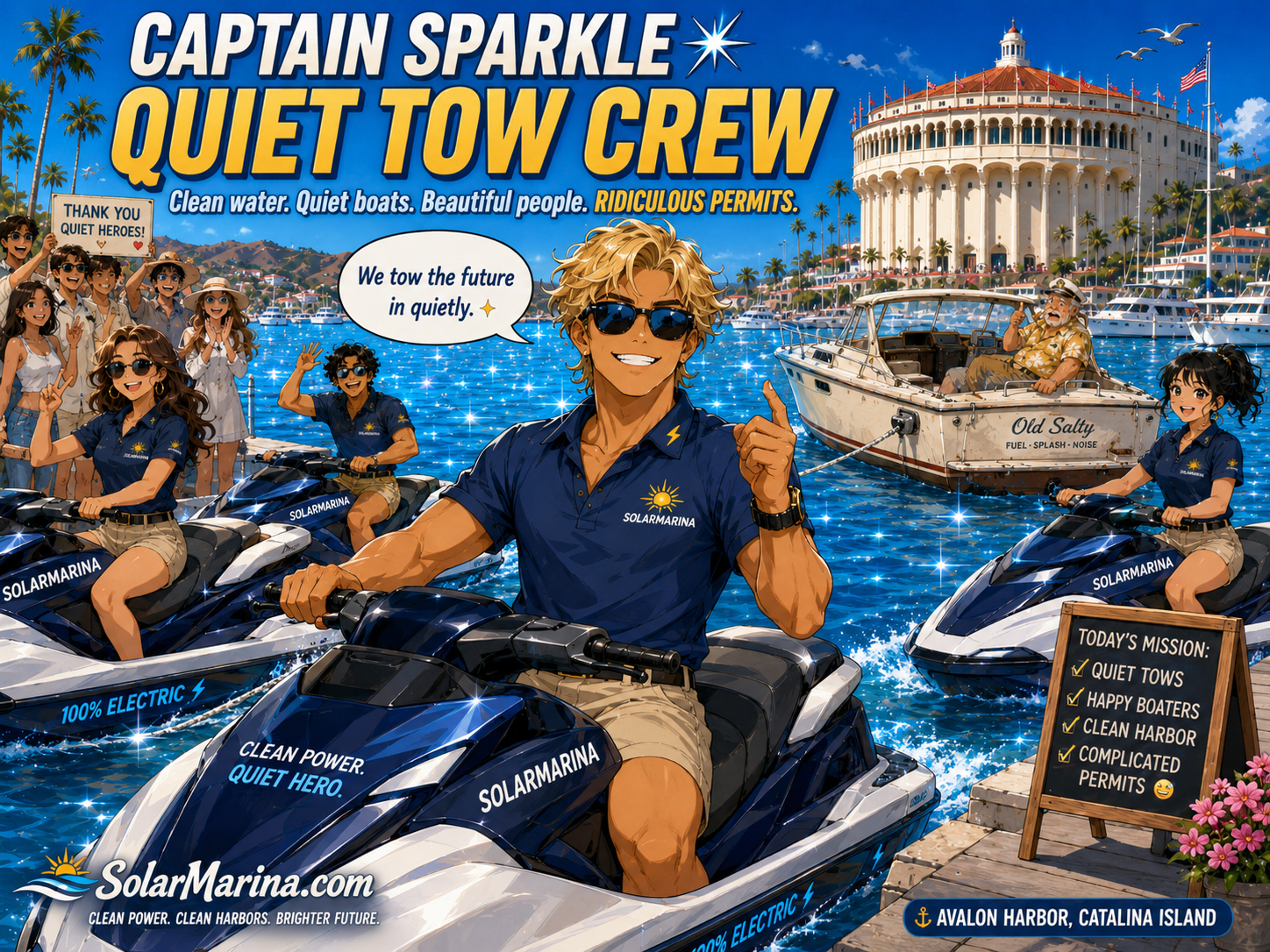 Captain Sparkle’s Quiet Tow Crew
Helpful, handsome, silent, and impossible for Dan to ignore.
Captain Sparkle’s Quiet Tow Crew
Helpful, handsome, silent, and impossible for Dan to ignore.
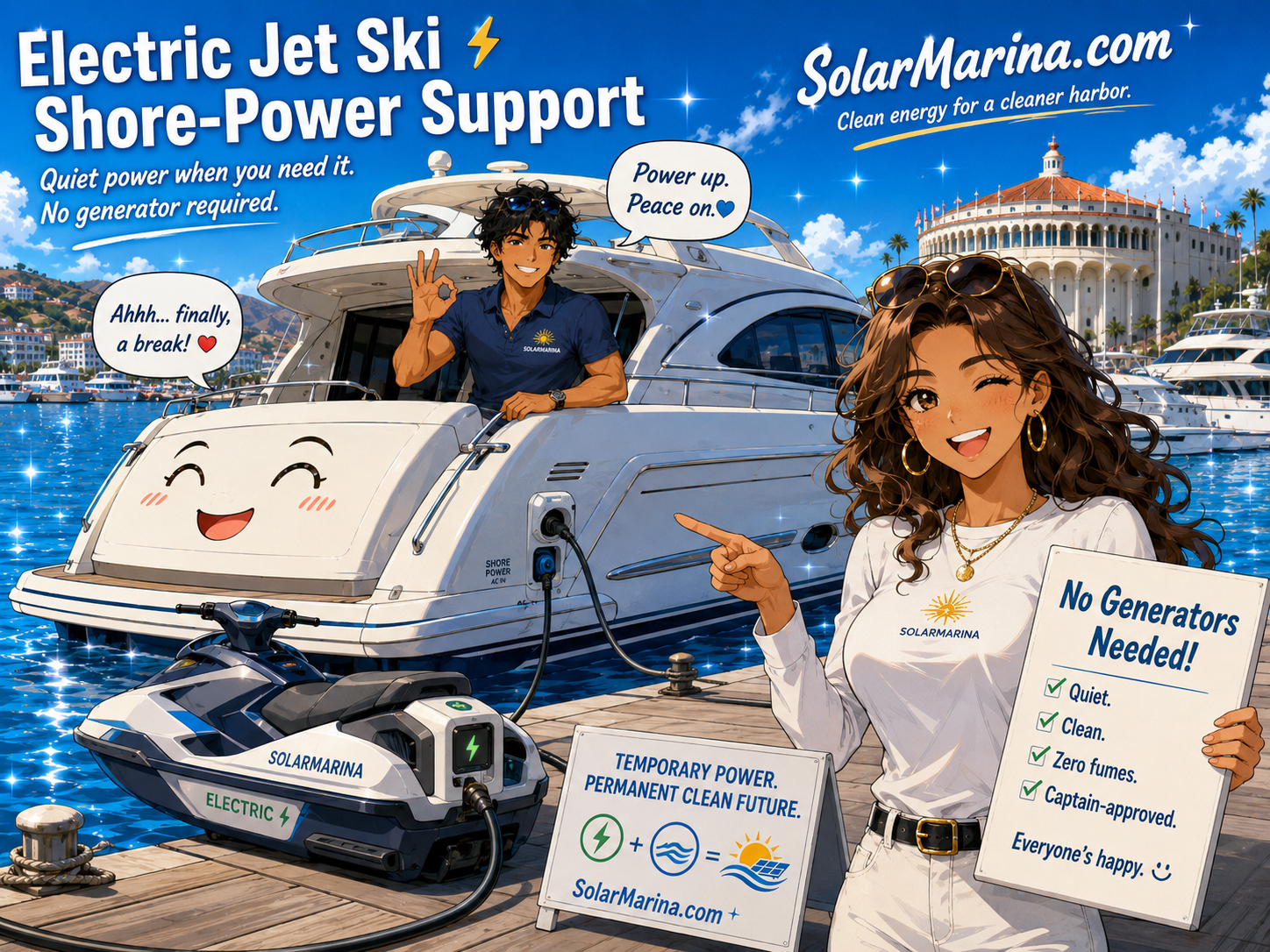
The transition plan must address the dock, not just the boat in motion. Older boats often need power while loading, waiting, entertaining, or overnighting. If shore power is not available, the generator becomes the default villain.
SolarMarina imagines properly engineered clean shore-power support — including electric Jet Ski support units where safe and practical — so boats can remain comfortable without making the dock sound like a machine room.
The transition becomes durable when the harbor’s clean behavior is supported by clean island power: solar, batteries, floating solar, tide docks, and gravity storage concepts all working behind the scenes.
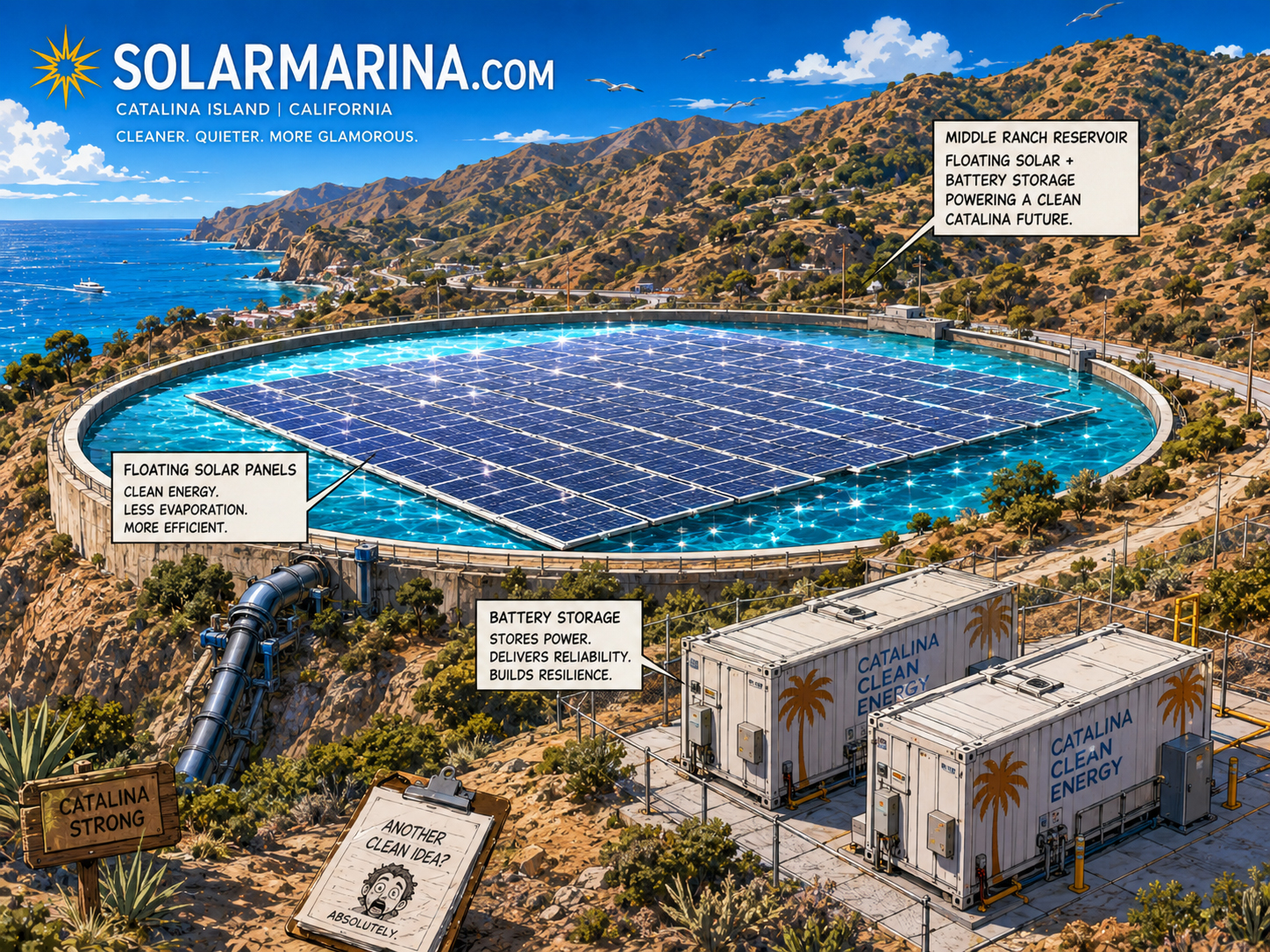
The lake wears solar sunglasses, makes power, and helps tell the clean island story.
Floating Solar
Daytime sunshine becomes nighttime harbor manners, and Madame Kilowatt loses a little sparkle.
Solar + Battery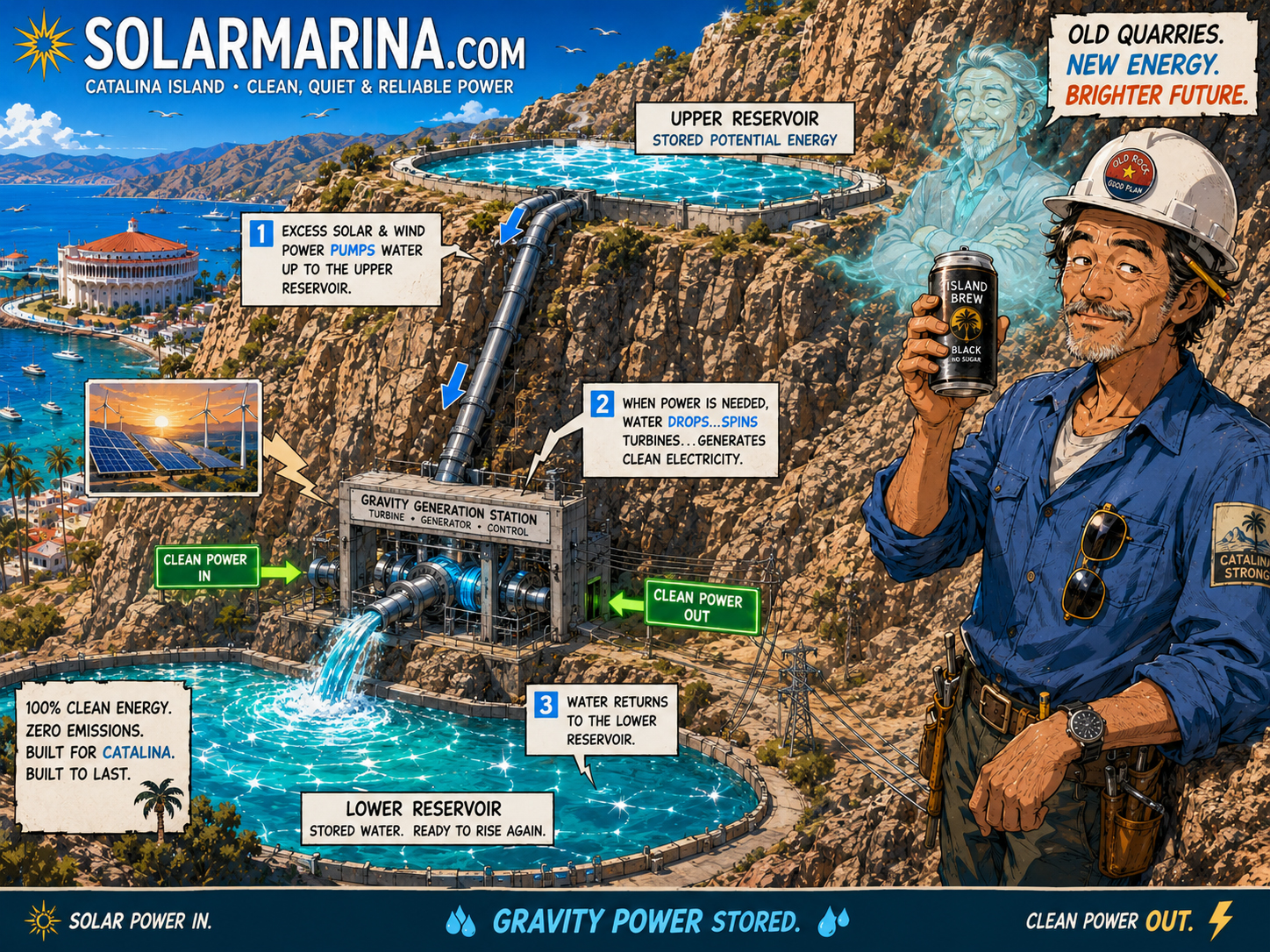
The old quarry becomes a clean battery: pump uphill when solar is rich, generate downhill when the harbor needs power.
Gravity StorageThe transition plan starts with help: electric escorts, clean power support, clear signage, practical rules, and old boats learning new manners. Over time, the clean harbor standard becomes normal.
Quiet boats stop looking special. Generators start looking rude. Electric dock power becomes expected. The mermaid returns. Diesel Dan calls the silence “not terrible,” which is his highest compliment.

A transition plan still needs permits, operating rules, insurance, safety protocols, harbor coordination, electrical review, environmental review, and utility coordination. The Permit Kraken will appear.
The answer is clarity: clear phases, clear safety logic, clear public benefits, clear engineering boundaries, and humor sharp enough to keep the meeting alive.
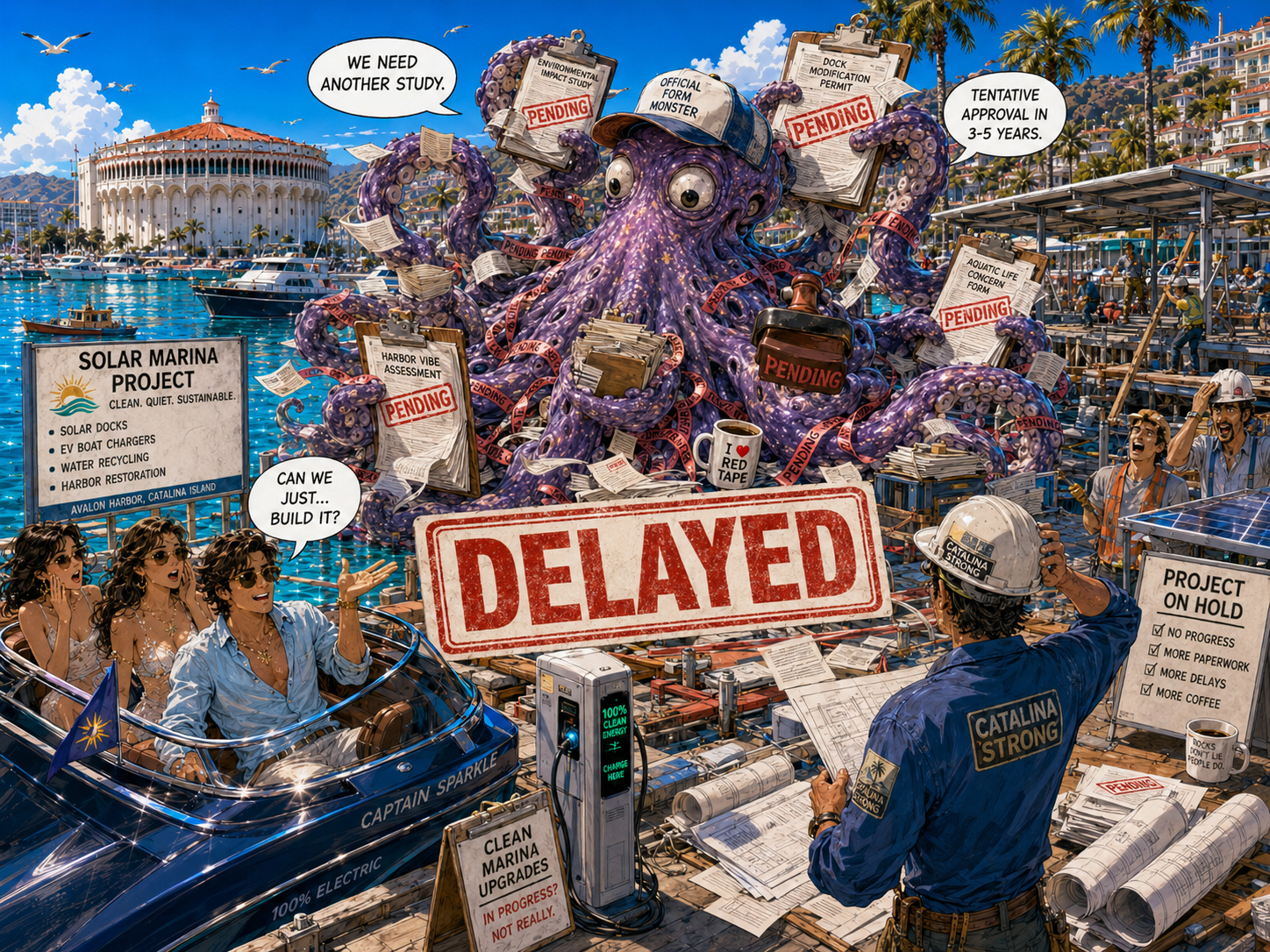
The comedy is glamorous. The transition must be sequenced.
Identify where engines idle, where generators run, where boats load and wait, and where clean-power support would create immediate benefit.
Test quiet harbor escort procedures, operator training, safety zones, communications, tow limits, and visitor experience.
Install or deploy marine-rated, code-compliant systems with grounding, isolation, GFCI/ELCI protection, interlocks, and clear load limits.
Coordinate electric boat charging with solar, batteries, microgrid controls, and utility requirements so the harbor gets cleaner, not just electrified.
After education, pilots, infrastructure, and support, the harbor can tighten rules around engines, generators, and electric operation.
Real-world note: This transition plan is conceptual. Actual harbor operations, towing, electric watercraft use, shore-power support, charging, and marina electrification require qualified professionals, marine safety review, electrical engineering, environmental review, permitting, insurance, operator training, inspections, and code compliance.
Each page develops one part of the transition from old harbor habits to clean electric marina culture.